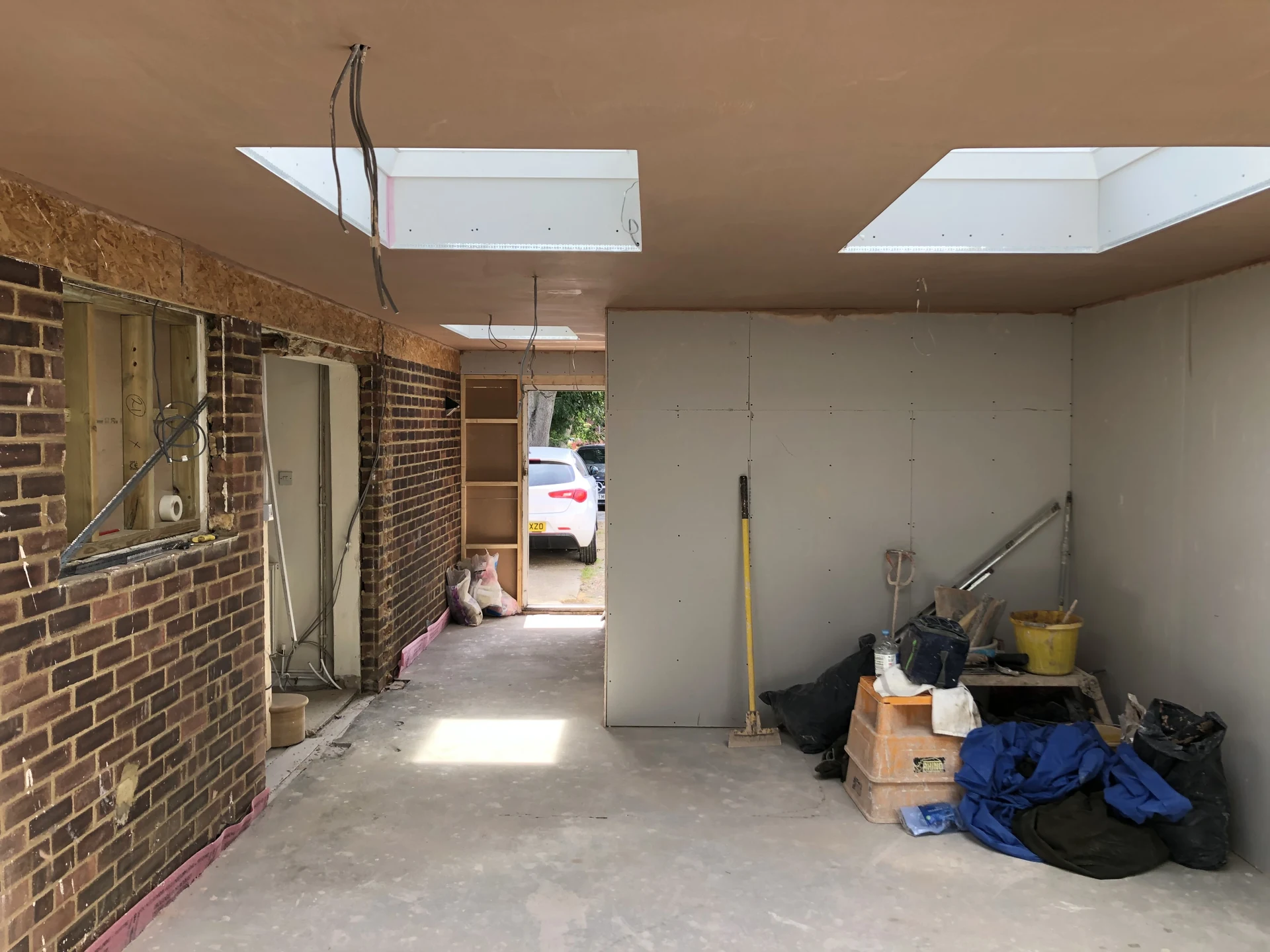
List what stays and what is changing
Begin with each fitting on the affected wall: sockets, switches, radiator pipes and other fixed items. Identify which will remain in the same place and which are being moved, replaced or removed. These are different starting points for a plaster repair, even when the final wall is intended to look similar.
Give the plasterer the actual alteration plan rather than a photograph alone. A socket that appears complete may still need electrical work behind it, while an exposed channel may already be ready for making good. Say what has happened and what remains outstanding.
Separate protection from electrical work
The plastering guidance describes sockets and switches being isolated and protected, rather than automatically removed. Masking and covering help protect fittings during plastering, but they should not be confused with disconnecting, relocating or reconnecting electrical equipment. Agree exactly which tasks are required before the job begins.
Electrical work should be carried out by a qualified electrician. Do not assume that a general request to plaster a wall includes changing a socket position or taking a fitting apart. If removal has been agreed, clarify who will do it and when.
Finish alterations before closing channels
Channels made for cables or pipes need to fit into the wider sequence of work. Before they are filled, establish whether the trade responsible for the installation has completed the work that requires access. Closing a channel too early can mean opening the new plaster again.
Ask the electrician or relevant trade what remains to be done, then pass that information to the plasterer. Do not describe a wall as ready solely because the new fitting is visible. Other work may still need access behind the surface. Equally, a completed alteration can leave different depths and backgrounds to repair.
Explain the depth and background of each repair
A shallow mark, a deep chase and an opening through plasterboard are not the same plastering task. The repair method depends on the wall construction, the missing depth and the stability of the surrounding material. A thin finishing coat should not be treated as the complete answer to every channel.
Photograph the opening with enough surrounding wall visible to show its extent. If the background is known, say whether it is board or plaster over masonry rather than guessing. Damaged plasterboard may need a boarding repair as part of making good. On other backgrounds, the build-up depends on what has been removed.
Check the soundness of edges around the opening
The boundary of a repair matters as much as its centre. Loose material around a channel or socket opening can affect how well the new plaster attaches. A suitable repair needs stable edges rather than a finishing layer bridging over plaster that is already failing.
The completed repair may therefore extend beyond the first visible damage. Discuss that possibility instead of assuming the original channel outline determines the final scope. Do not remove a broad area simply to find a tidy rectangle or a matching edge. Show any crumbling, cracking or hollow areas to the plasterer so the necessary preparation can be assessed.
Account for several backgrounds on one wall
A wall altered for services can contain old plaster, exposed masonry, new board and previous repairs. These areas do not necessarily absorb moisture at the same rate. Their differences still matter when the final aim is one continuous surface around several fittings.
Explain older work as well as the latest channel. A redundant pipe chase or previously filled opening may not be obvious after decorating, but it can be relevant to preparation. Ask how the different areas will be made suitable before the finishing coat is applied. That is more useful than assuming a wall-wide skim will conceal every change beneath it.
Plan access around radiators and exposed pipes
Radiator pipes and other fixed services can restrict access to a wall. Tell the plasterer what is staying and identify any radiator or pipework changes planned with another trade. Do not assume that a fitting will be removed simply because the plaster behind it needs attention.
Agree whether the intended work can be completed around retained items or whether another arrangement is required first. If plumbing changes are part of the project, coordinate them before the finishing stage rather than leaving them as a later decision. Include the less visible areas in the discussion, particularly where furniture or a radiator normally hides the surface.
Decide between a local repair and wider finishing
A repair around one socket may be local, while several channels across a wall can create a broader finishing question. The right choice depends on the soundness and condition of the surrounding plaster, not simply the number of fittings. Ask which work is needed to rebuild missing areas and which is intended to improve the overall surface.
A local patch can be appropriate where the rest remains sound. A wider skim may be considered where the background is suitable but a consistent finish is wanted across the wall. Neither approach removes the need to prepare the openings properly.
Check the finished junctions without disturbing fittings
When reviewing the work, look at the continuity of the wall around the repair and where it meets retained fittings. Use daylight and identify any visible raised line, recessed area or damaged edge. A wide photograph and a closer view are useful if a particular junction needs discussion.
Do not loosen a socket or move a pipe to investigate the plaster behind it. The appropriate trade should deal with any fitting that needs attention. Keep the finish check separate from electrical or plumbing inspection: a smooth surface does not establish that a service installation has been checked. Ask the plasterer about visible plasterwork concerns and the responsible trade about their own completion tasks, including any agreed return visit for refitting.
When to call a professional
Use a qualified electrician for electrical changes and agree safe arrangements before plastering near sockets or switches. If a fitting needs removing or moving, make that explicit rather than assuming it is included in surface preparation. Plumbing alterations and unresolved leaks also need the appropriate trade before affected plaster is renewed.
Ask for a plastering assessment where a channel has loose edges, several backgrounds meet or deeper damage is visible around an opening. Recurring cracks and continuing damp need consideration beyond a cosmetic patch. Where water has reached an electrical fitting, keep away and arrange the relevant safety checks rather than treating it as ordinary plaster damage. The priority is to resolve the underlying work and risks before a new surface closes the area.
Make the enquiry a trade-sequencing brief
Send photographs showing the whole wall, each opening and the retained fittings. State whether the work follows a rewire, plumbing change or removal of an old fitting. Include what is complete, what still needs access and which trades are already involved, alongside the room and postcode.
For the next step, ask whether the likely scope is local making good, boarding repairs, wider skimming or a combination. Confirm who will arrange isolation, removal and refitting where needed. Identify any area you expect to remain untouched so the finish boundary is clear. This turns an enquiry about awkward sockets and pipes into a practical plan for completing the services first and finishing the wall without immediately reopening the same repair.
More about this topic
Are sockets normally removed for plastering?
Not automatically. The preparation guidance describes isolation and protection, with removal only where agreed. Electrical work belongs with a qualified electrician. Clarify the arrangement before plastering rather than assuming removal is included.
Can a cable chase be covered with the final skim alone?
The required build-up depends on its depth, background and surrounding condition. A skim is a thin finishing layer, so deeper making good may be needed first. Confirm the electrical work is ready to close before repairing the channel.
Why might a repair extend beyond the original opening?
Loose or damaged edges may need attention to establish a stable boundary. The visible hole does not always show the full preparation needed. The plasterer should assess the surrounding material rather than bridge over an unsound edge.
Will the plasterer take a radiator off?
Do not assume removal is part of the plastering. Explain any radiator or pipework changes and agree responsibilities with the relevant trade. The plastering scope should reflect what can be accessed and what depends on separate work.
What should I confirm before a channel is filled?
Check that the trade responsible for the cables or pipes has finished the work requiring access. Tell the plasterer about outstanding alterations and arrange any agreed refitting. Closing the area prematurely can mean disturbing the new finish again.