Cracked, sagging or uneven ceilings
Hairline cracks are common and often cosmetic, but wider cracks, bulging patches or a ceiling that feels soft when gently pressed can point to failing plaster or a plasterboard fixing that's come loose. These are usually repaired by removing the affected area and replastering or overboarding it, rather than just filling over the top.
Skimming ceilings
Where a ceiling is structurally sound but rough, marked or dated, a skim coat gives a smooth, even finish without needing to take the ceiling down. This is one of the more common ceiling jobs and is covered in more depth on the skimming page.
Overboarding tired ceilings
If an existing ceiling is sound enough to build on but not worth skimming directly, new plasterboard can be fixed over the top and then skimmed, avoiding the mess of stripping the old ceiling out. This is covered in detail on the overboarding and skimming page.
Artex ceilings
Textured artex ceilings are a frequent request, usually to be skimmed over for a smooth, modern finish rather than removed. General safety points around older artex and asbestos testing are covered on the skimming over artex page.
Coving to finish
Coving can be fitted once a ceiling is plastered or skimmed, giving a neat, finished join between wall and ceiling and covering any slight unevenness at that edge. See the coving page for more on styles and fitting.
Common ceiling problems in older homes
Sagging ceilings are usually a sign that the plasterboard or old lath-and-plaster has come loose from the joists above, often from age, a water leak, or the original fixings failing over time. Cracks that run along the line of a ceiling join, particularly where an extension meets an older part of the house, are often linked to minor structural movement rather than a plastering fault, though they still need addressing properly.
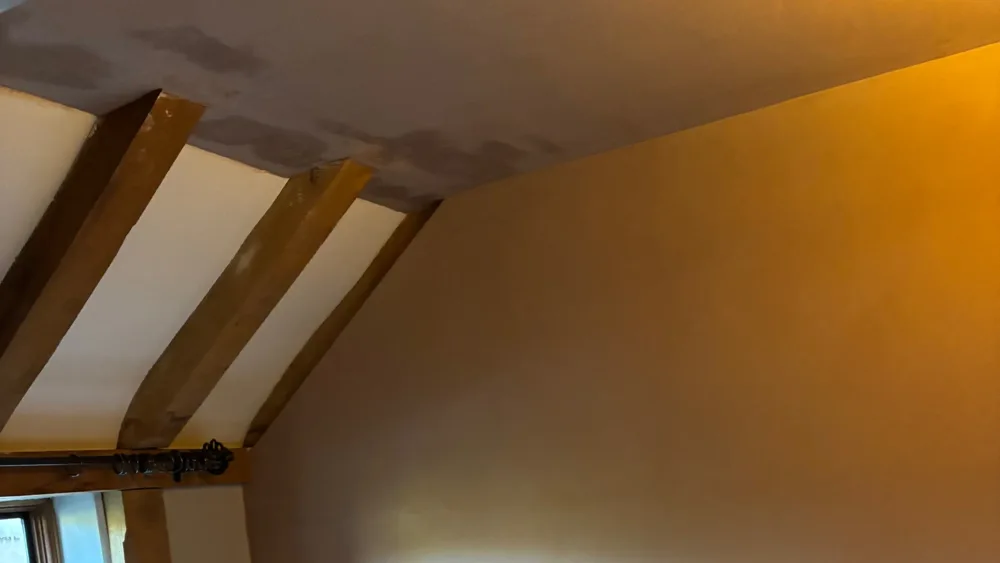
Ceilings below a bathroom or loft conversion are more prone to staining and damage from past leaks, even once the leak itself has been fixed. In these cases, the stained area usually needs to be sealed with a stain block before any new plaster or skim goes over it, otherwise the mark can bleed through the new finish.
Working safely at ceiling height
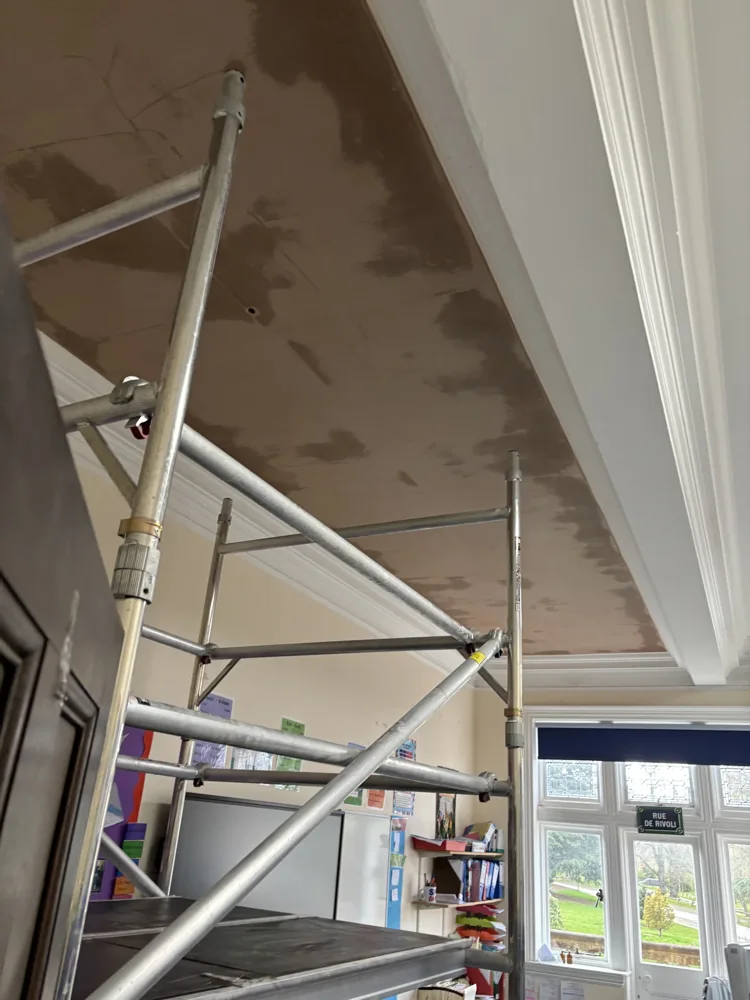
Ceiling work requires a suitable, stable working platform and clear floor space. The access method should be planned for the room and the task. Keep the area below work clear and do not attempt ceiling repairs from unstable furniture. Discuss restricted access when arranging the assessment.
Lighting, roses and ceiling fittings
Pendant lights, ceiling roses and smoke alarms are taken down or carefully protected before ceiling plastering starts and refitted once the new plaster has dried and been painted. Where a ceiling rose is being kept, it's usually removed, the ceiling finished underneath, and the rose refitted afterwards so the join sits flush rather than being skimmed around.
Cornices, roses and period ceiling features
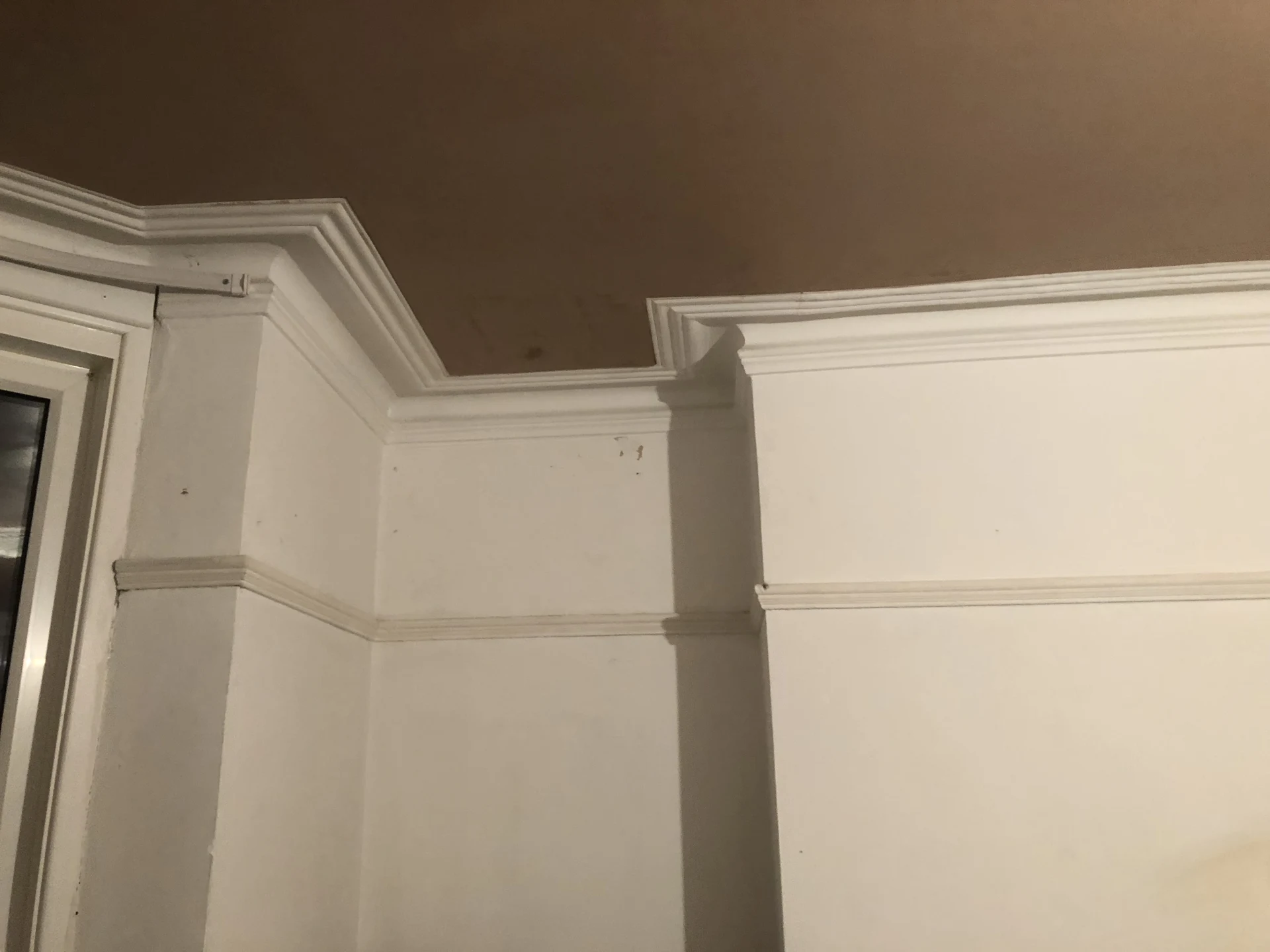
Older houses sometimes have decorative cornicing, ceiling roses or other plaster detailing that's worth preserving rather than skimming over. Where a ceiling has features like this, they're worked around carefully, with the flat areas of ceiling skimmed or replastered while the detailing is protected, or repaired separately if it's been damaged.
Noise and timing for shared or terraced houses
In terraced or semi-detached houses, ceiling work can sometimes be heard next door, particularly during the noisier stripping-out stage of a replaster. Letting neighbours know in advance when a bigger ceiling job is planned is generally appreciated, and most of the noisier work is finished within the working day rather than running into the evening.
Combining ceiling work with other jobs
Ceiling plastering is often carried out alongside other work happening in the same room, such as new coving, a lighting change, or wall plastering below. Planning these together means the room is only out of action once rather than disrupted on separate occasions, and the ceiling and wall finishes can be matched and decorated at the same time.
Water damage needs more than a cosmetic finish
A ceiling below a leaking pipe or overflowing bath can look dry before the damage has been fully assessed. The source of the water should be resolved before new plastering, and any weakened background checked. A new skim is not a substitute for repairing damaged board or addressing ongoing moisture.
If a ceiling appears to sag, has loose material or shows a sudden change in cracking, keep people clear of the affected area and seek appropriate professional advice. Do not press on a suspect ceiling to test it. The assessment should establish whether repair, new boarding or a different specialist investigation is needed before finishing work starts.
A room-wide view of the repair
A small patch can stand out under side lighting if its level differs from the surrounding ceiling. Depending on the condition, finishing a larger area may give a more consistent result than treating only the visible crack. This is a choice to discuss after the ceiling has been inspected, not a reason to assume the whole surface must be replaced.
Show where lights, access hatches and room divisions sit when sending photographs. A ceiling that runs into an adjoining space may require a clear stopping point for the work. Thinking about those edges before the quote helps define the area involved and avoids confusion about what the finished surface should include.
Questions homeowners ask
My ceiling has a crack, does it need replastering?
Hairline cracks are often cosmetic, but wider cracks or a ceiling that feels soft underneath usually need the affected area replastered or overboarded rather than just filled over.
What's the difference between skimming and overboarding a ceiling?
Skimming applies a smooth finish coat directly over a sound ceiling. Overboarding fixes new plasterboard over a tired ceiling first, then skims that, which suits a ceiling that isn't quite good enough to skim directly.
Can an artex ceiling be smoothed over?
Yes, skimming over the artex is the usual approach. See the skimming over artex page for detail, including general advice on older ceilings and asbestos.
Do you fit coving after ceiling work?
Yes, coving is often fitted once a ceiling has been plastered or skimmed, finishing the join with the walls.
Is ceiling plastering messier than wall plastering?
Ceiling work can involve more dust and debris, particularly where old plasterboard or artex is involved, so the room is protected beforehand in the same way as for wall plastering.