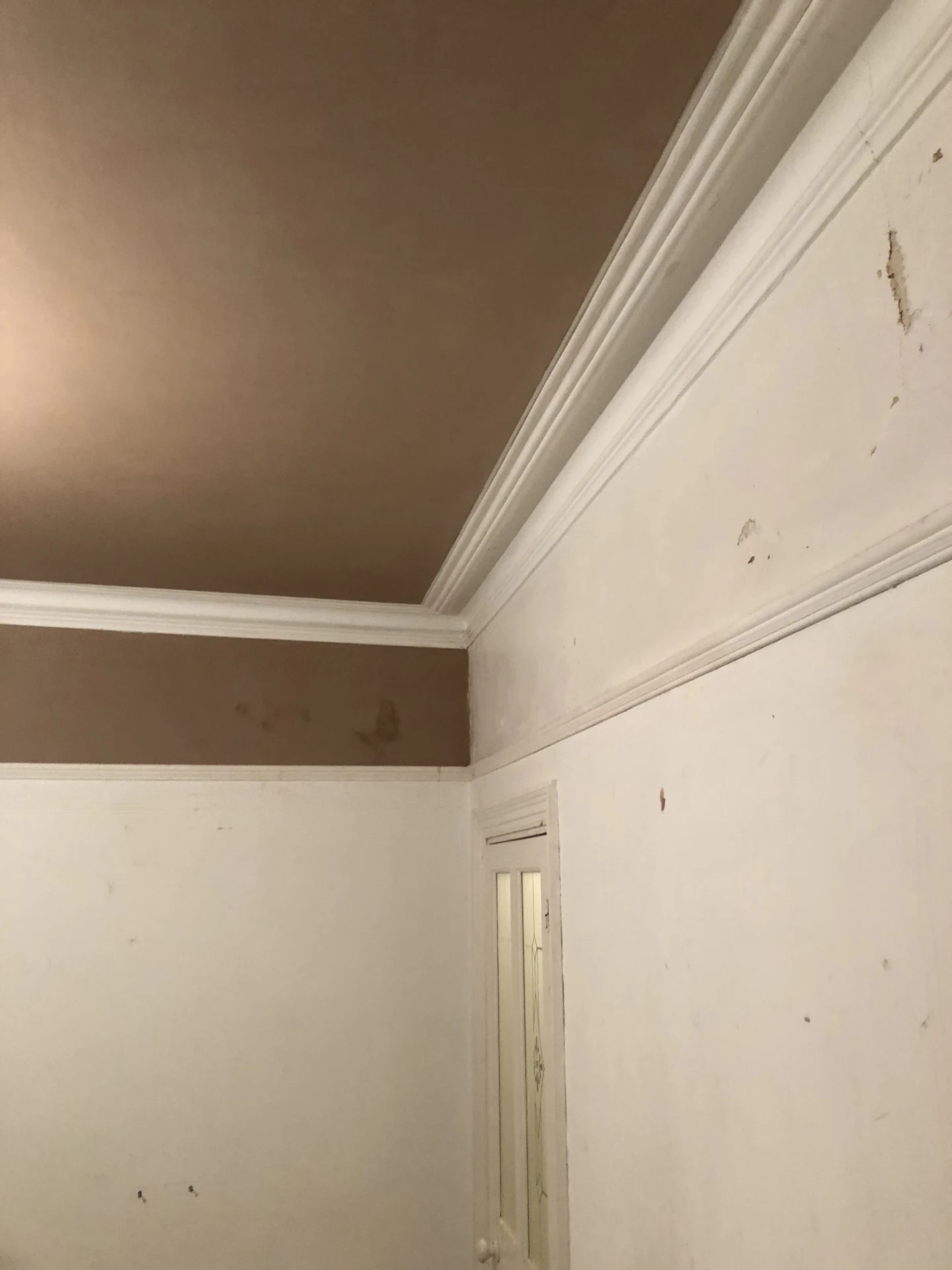
What coving does
Coving sits at the angle where the wall meets the ceiling, covering the join with a continuous, even profile. It gives a tidy, finished look to a room and can cover small cracks or gaps that tend to appear at that junction over time.
Styles in general terms
Coving comes in a range of profiles, from plain and simple to more decorative patterns, and the choice usually comes down to the style of the room and personal preference rather than anything structural. A simple profile suits most modern rooms, while period properties sometimes call for a more detailed style.
Covering cracks at the wall-ceiling join
Small gaps at the junction can be concealed by a decorative profile. However, coving should not be used to disguise a growing crack or loose background. Those conditions need assessment before a cosmetic finish is fitted.
Fitting alongside a ceiling skim
Coving can be planned alongside ceiling plastering so the finish and its edges are considered together. Ask about the order of fitting and drying when discussing the proposed work. It can also be considered as a separate decorative change where the existing surfaces are suitable.
Measuring and planning coving runs
Coving is measured and planned around the room before fitting starts, working out how the runs meet at each corner and where joins will fall along longer walls. Internal and external corners are mitred so the coving continues round the room in one consistent line, and the run is planned to avoid an awkward short offcut landing somewhere obvious, such as above a doorway.
Fitting coving around existing features
Ceiling roses, light fittings, curtain poles and bay window corners all affect how a coving run is planned, since the coving needs to sit neatly around or up to these features rather than through them. Older coving being replaced is removed carefully first, and any damage to the wall or ceiling left behind is made good before the new coving goes up.
Coving alongside a ceiling skim
Fitting new coving at the same time as a ceiling skim means the join between the coving and the fresh plaster can be finished cleanly in one pass, rather than fitting coving to an older ceiling finish that may not match in colour or texture once painted.
Materials used for coving
Coving is most commonly fitted in plaster or a lightweight polystyrene-based material, cut to length and fixed with adhesive along the join between wall and ceiling. Plaster coving gives a more solid, traditional finish and is generally the better match where the rest of the room has been freshly plastered, since it takes paint and finishes in the same way as the surrounding surfaces.
Choosing a profile that fits the space
Look at the proportions of the room before choosing a profile. A shallow ceiling and narrow wall space may suit a more restrained shape, while a larger room can accommodate a deeper detail. Existing door surrounds, window trim and ceiling roses may also influence the choice. Bringing a photograph or example to the discussion helps explain the look you prefer.
Coving is decorative finishing, not a repair for active movement or a failing ceiling. If a crack is widening or the background is loose, the cause needs attention before the edge is covered.
Questions homeowners ask
Does coving need to be fitted at the same time as a ceiling skim?
It can be planned alongside a ceiling skim or considered separately. Discuss the order of the work and the condition of the existing surfaces before deciding.
Will coving cover cracks between the wall and ceiling?
Coving can conceal a minor gap at the join, but it does not solve ongoing movement or failing plaster. Any underlying problem should be assessed before fitting.
What style of coving should I choose?
This usually comes down to the style of the room. A plain profile suits most modern homes, while a more decorative style can complement a period property.
Can coving be fitted in any room?
Coving can generally be fitted in most rooms, as long as the wall and ceiling surfaces are in a suitable condition to fix it to.