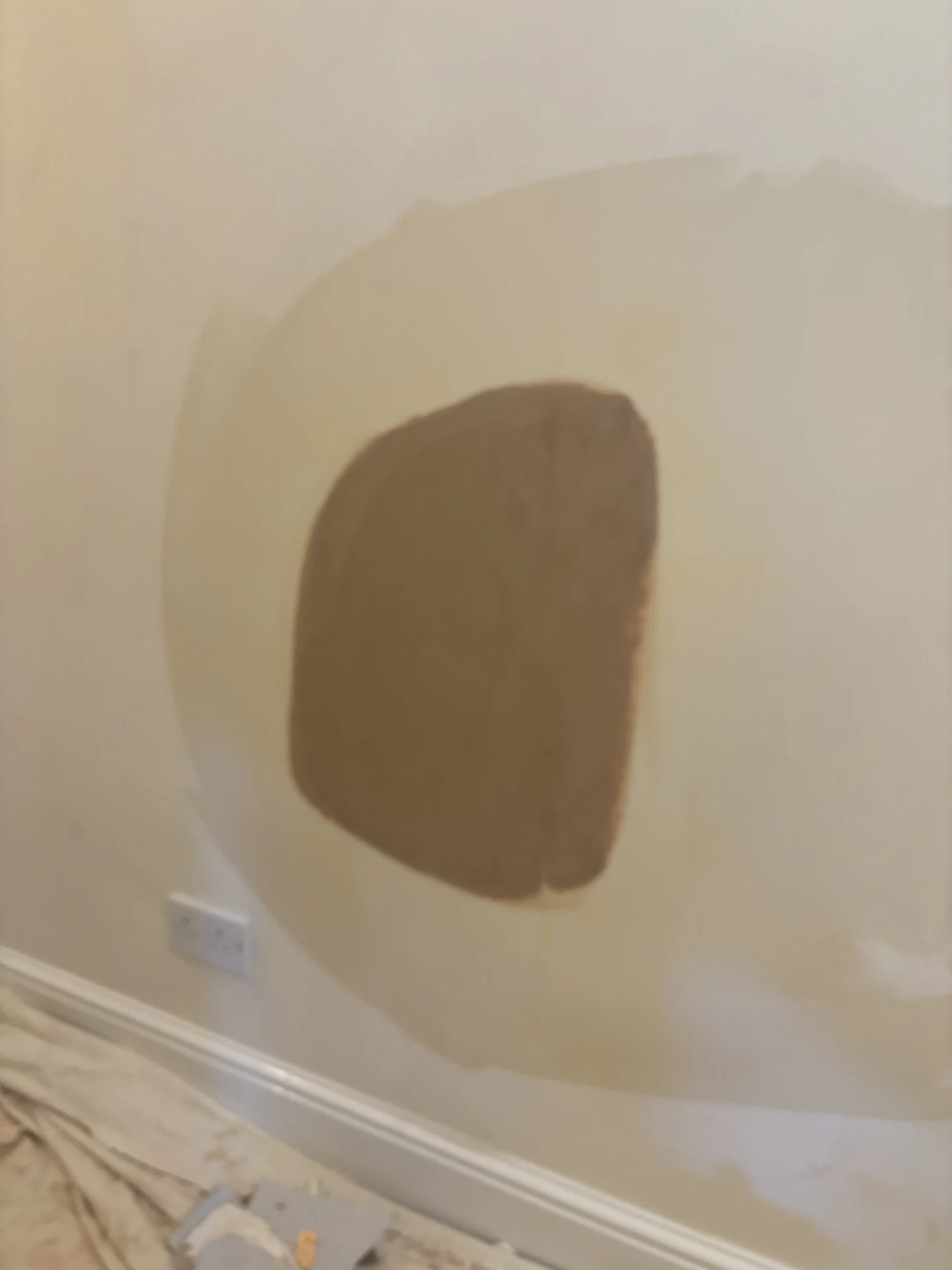
Understand the damage first
An opening left by an electrician, a channel made for pipework and a blown patch of old plaster have different starting points. Explain what caused the damage, if known, and whether the work behind it has been completed. Closing a wall before other trades finish can mean reopening the same area.
Cracks need particular care because filling the visible line does not establish why it appeared. A recurring crack, ongoing damp or movement may require investigation before a decorative repair. Plaster patching should not be offered as a structural remedy or a way to hide an unresolved water problem.
Sound edges and a suitable background
Loose material around a damaged patch can affect how well a repair attaches. The area needs a suitable background and a stable boundary, rather than a thin covering that bridges over failing plaster. The size of the finished repair may therefore differ from the hole visible at the outset.
Where the lining is plasterboard, a damaged section may need boarding as part of making good. On a plastered background, the required build-up depends on the depth and condition of the missing area. These are practical reasons to discuss the wall’s construction rather than requesting a filler by name.
Blending the repair into the wall
Feathering a finish towards the adjoining surface helps avoid a hard step around a patch. A smooth junction matters because side lighting can reveal raised edges after decoration. The aim is a suitable surface for painting, but the existing wall’s texture and flatness also influence the result.
A local repair and a complete skim are not the same scope. If a wall contains many previous patches, ask whether renewing the wider face makes sense. Conversely, sound plaster elsewhere should not be assumed to need removal solely because one part has been damaged.
Allow the repaired area to dry
Fresh repair plaster can dry unevenly, especially where depths vary. A paler surface does not by itself prove that every part is ready for decoration. Follow advice for the material used and the intended paint rather than forcing progress with intense heat.
Plan electrical fittings, trim and decorating around the agreed sequence. The drying guide covers general considerations without promising a fixed number of days. When requesting a quote, identify the affected walls or ceilings, provide a postcode and mention any remaining work that could disturb the repaired area.
Questions homeowners ask
Can channels left by rewiring be made good?
Making good after electricians is one reason to discuss patch work. Confirm the electrical work is complete and describe the channels and adjoining wall finish.
What does a blown patch mean?
It describes plaster that has lost attachment to its background. Loose parts need consideration before a new finish can be expected to remain sound.
Why might the repaired area be larger than the original hole?
Unsound edges or an unsuitable background may need preparation beyond the visibly missing section to form a stable repair.
Will filling a crack stop movement in a building?
No. A decorative repair does not resolve structural movement; recurring or concerning cracks need their cause considered first.
Can I paint a patch as soon as its face looks pale?
Appearance is only part of the picture. Consider the repair’s depth and material guidance before preparing it for paint.