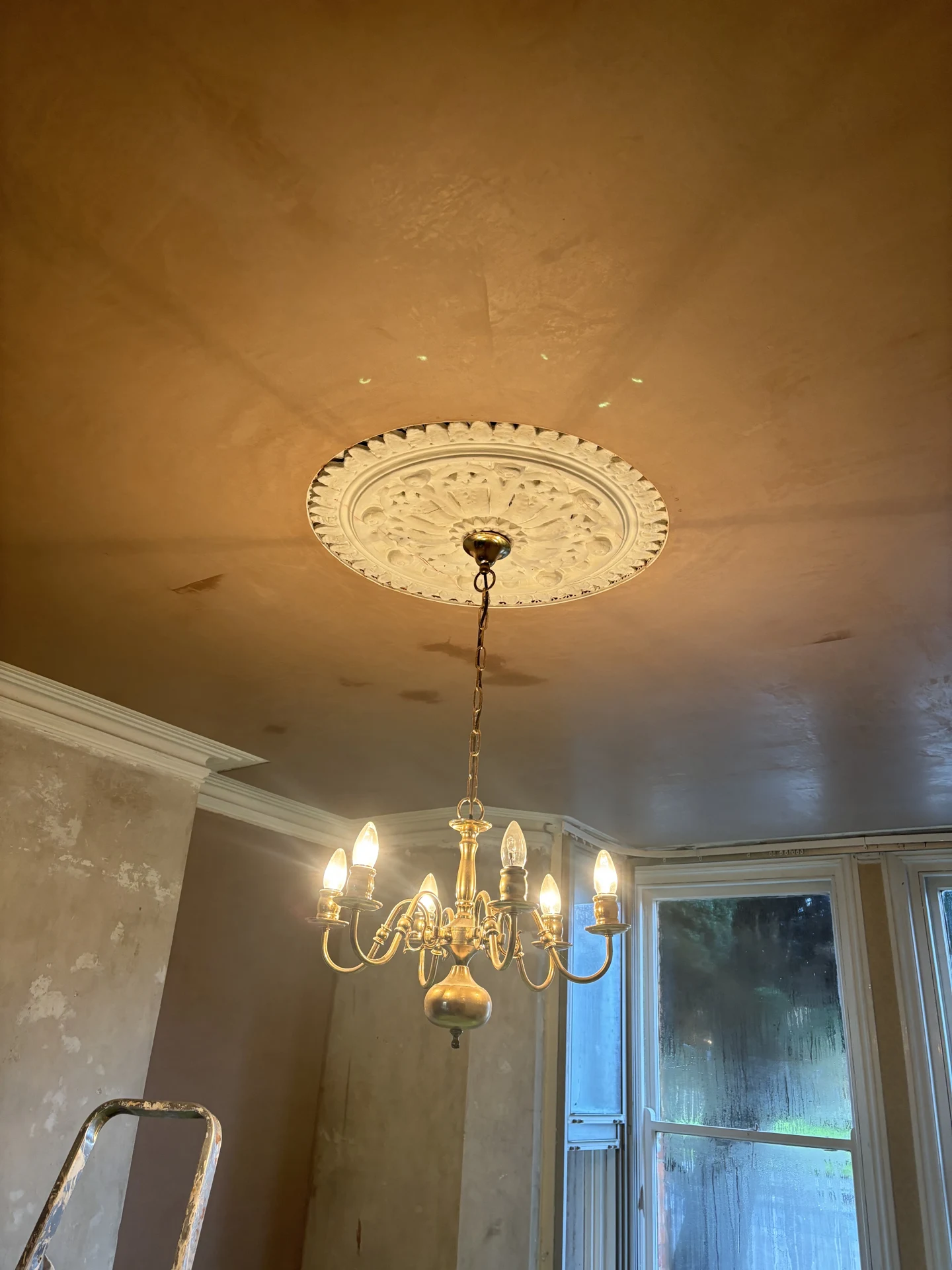
Covering textured surfaces with a smooth skim
Rather than taking artex off, a skim coat is applied directly over the top, building up enough thickness to hide the pattern underneath and leave a flat, paintable surface. This approach works on both ceilings and walls, and avoids the disturbance that removing artex would cause.
Preparing the surface
Before skimming, the artex surface is checked over and any loose or flaking areas are made good. A bonding agent is often used to help the new plaster key onto the existing textured surface, since artex can otherwise be too smooth or powdery for plaster to grip well on its own.
Why you don't sand or scrape it off
Sanding or scraping artex disturbs it and creates dust, which is best avoided, particularly in older properties. Skimming over the top instead keeps the existing surface undisturbed and achieves the same smooth result without that disturbance.
Asbestos and older artex
Older artex may contain asbestos, and it isn't possible to tell just by looking at it. If a ceiling or wall's age or history is uncertain, a sample can be tested by a competent professional before any work is carried out. This is a general safety point rather than a service we provide, and it's sensible precaution in any older home with textured surfaces.
Because of this, the approach of covering a sound textured surface may be an option after its condition and composition have been assessed. If a surface is known or suspected to contain asbestos, specialist advice should be sought before any work goes ahead.
If you are unsure, have a sample tested by an accredited laboratory before anyone sands, scrapes or drills the surface. Skimming over a sound artex ceiling covers the texture rather than breaking it up, which avoids disturbing the material. Testing and any removal are matters for the relevant specialists.
What the job involves
Once the surface has been checked and prepared, the skim coat is applied and trowelled smooth, then left to dry before decorating. The process is broadly similar to skimming any other ceiling or wall, with the extra preparation step to deal with the existing texture.
Textured patterns and how they're hidden
Artex comes in a range of patterns, from a fine stipple to a heavier swirl or stomp texture, and some have been raised quite high above the original ceiling or wall surface over the years through repeated redecoration. A thicker artex pattern needs a slightly heavier skim coat built up in more than one pass to fully cover the texture, while a finer, flatter pattern is usually quicker to hide.
What to do before the day of work
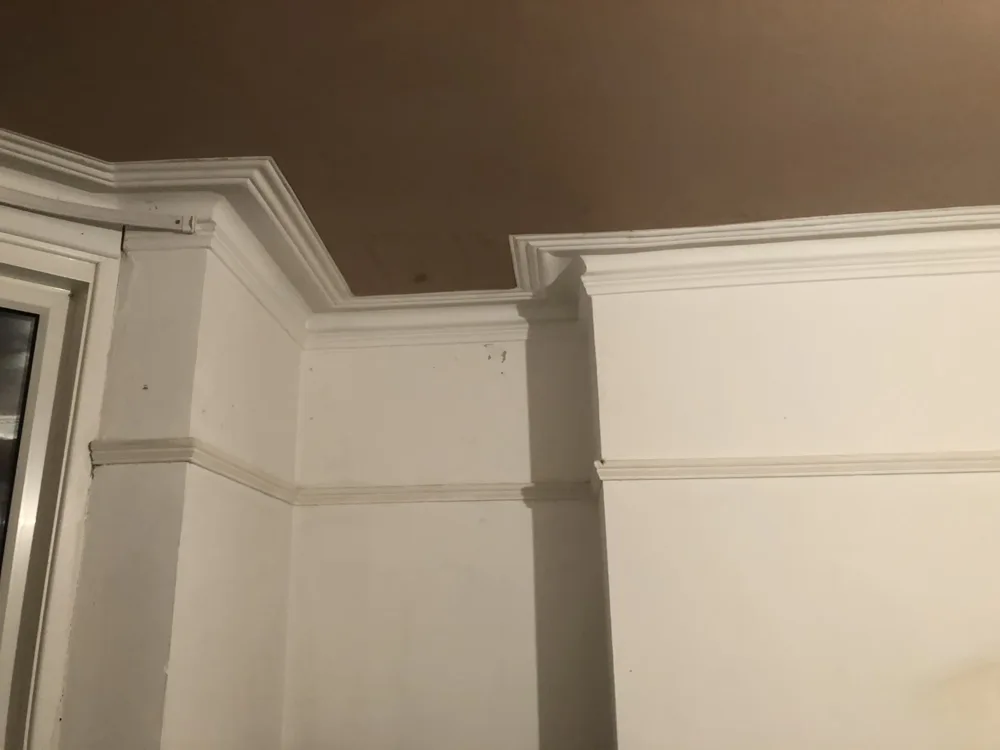
Clearing a room of smaller items, taking down curtains or blinds near the ceiling, and moving furniture to the centre of the room under a dust sheet all help the job run smoothly. Light fittings are usually left in place but worked around carefully, and ceiling roses or coving already fitted are masked off rather than removed unless that's part of the job.
Ceilings with a history of leaks or repairs
Artex ceilings that have previously had a leak, a repaired crack, or a patch of different texture from an earlier repair are checked over more closely before skimming, since these areas can behave differently when a new skim coat is applied. Any soft or crumbling patches are made good first so the whole ceiling takes the new coat evenly.
After the skim: redecorating
Once the skim over the artex has dried, the ceiling or wall is ready for a mist coat and then full emulsion, the same as any other newly skimmed surface. Because the old texture is now fully covered, paint rollers and standard decorating tools work as normal, without the ridges or shadow lines that textured artex can show under certain lighting.
Matching new skim to the rest of a room
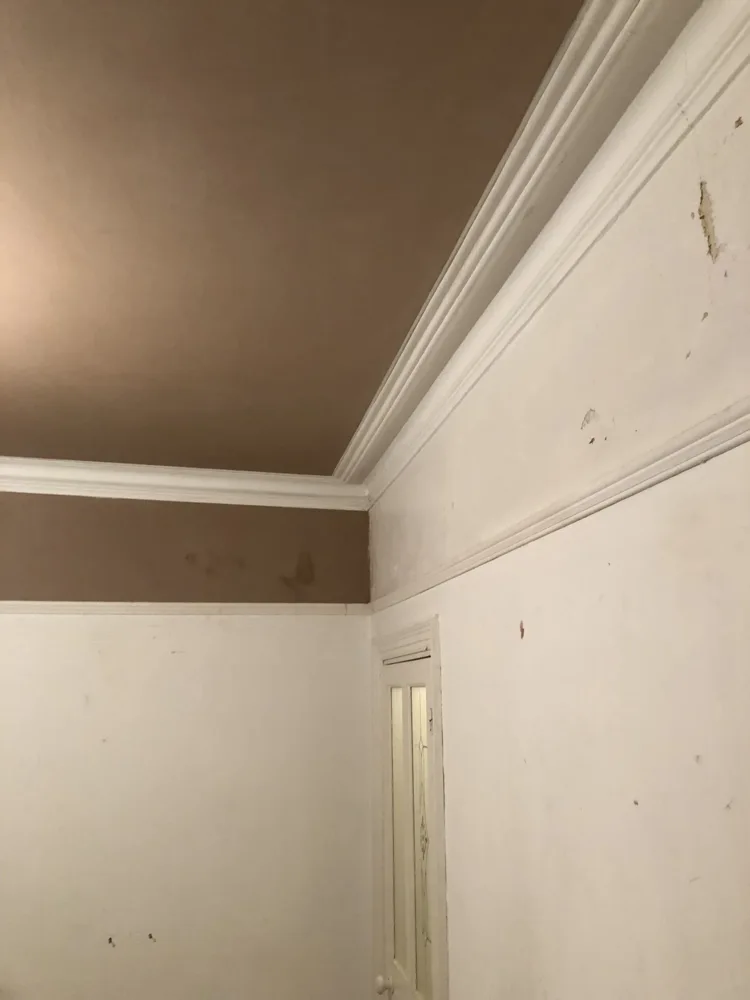
Where only a ceiling is being skimmed over artex and the walls are staying as they are, it's worth checking that the new flat ceiling and the existing wall finish will sit well together once decorated, particularly in a room with coving or a picture rail that bridges the two. A newly skimmed ceiling can look noticeably different from surrounding surfaces until everything is painted in the same colour and finish.
If only part of a textured ceiling is being skimmed, for example after a repair, it's generally better to skim the whole ceiling rather than just the repaired section, since a skimmed patch sitting next to untouched artex rarely blends in once painted, even with careful feathering at the edges.
Deciding what is underneath the texture
A smooth appearance is only part of the decision. The textured coating, the plaster below it and the support above a ceiling all matter. A heavy pattern on a stable background presents a different situation from texture covering loose plaster. If the ceiling has suffered movement or a leak, that needs assessment before choosing a new finish.
Avoid making a test scrape or drilling a sample hole yourself. Older textured coatings may contain asbestos, and the date a room was redecorated does not establish when the underlying coating was applied. A competent testing professional can advise about sampling, while any work that might disturb suspect material requires an appropriate assessment.
Describe the pattern without disturbing it
Photographs can show whether the texture is fine stippling, a swirl or a deeper relief. Take one shot showing the whole ceiling and another from floor level that captures the pattern under normal room lighting. Include visible cracks, stains or earlier patches in the images. You do not need to climb onto furniture or bring a camera close to the ceiling to start the enquiry.
Mention any coving, decorative ceiling rose or other detail you want retained. These features affect the edges of the finish and may influence the work sequence. The quotation discussion can then distinguish between smoothing the main ceiling and any separate repairs around its borders.
Questions homeowners ask
Can artex always be skimmed over rather than removed?
In most cases a sound artex surface can be skimmed over directly. Loose or badly damaged artex may need extra preparation first, which can be assessed on a visit or from photos.
Is artex dangerous?
Older textured coatings may contain asbestos, though it isn't possible to tell by looking at it. If there's any doubt, a sample can be tested by a competent professional before work starts. This is general safety guidance rather than a service offered here.
Why not just scrape or sand the artex off?
Scraping or sanding disturbs the surface and creates dust, which is best avoided, especially in older properties where the artex's history or composition isn't known. Covering a suitable surface may reduce disturbance, but preparation still needs an appropriate safety assessment.
Will the texture still show through after skimming?
A properly applied skim coat, built up to sufficient thickness, should fully cover the texture underneath and leave a flat, even finish once dry.
Does this work on walls as well as ceilings?
Yes, skimming over artex applies to both walls and ceilings, using the same general approach of preparing the surface and applying a skim coat over the top.
How do I get a quote for skimming over my artex ceiling?
Use the quote form on this page, call 07852 191811 or send a WhatsApp message with details of the ceiling or wall and we'll get back to you.