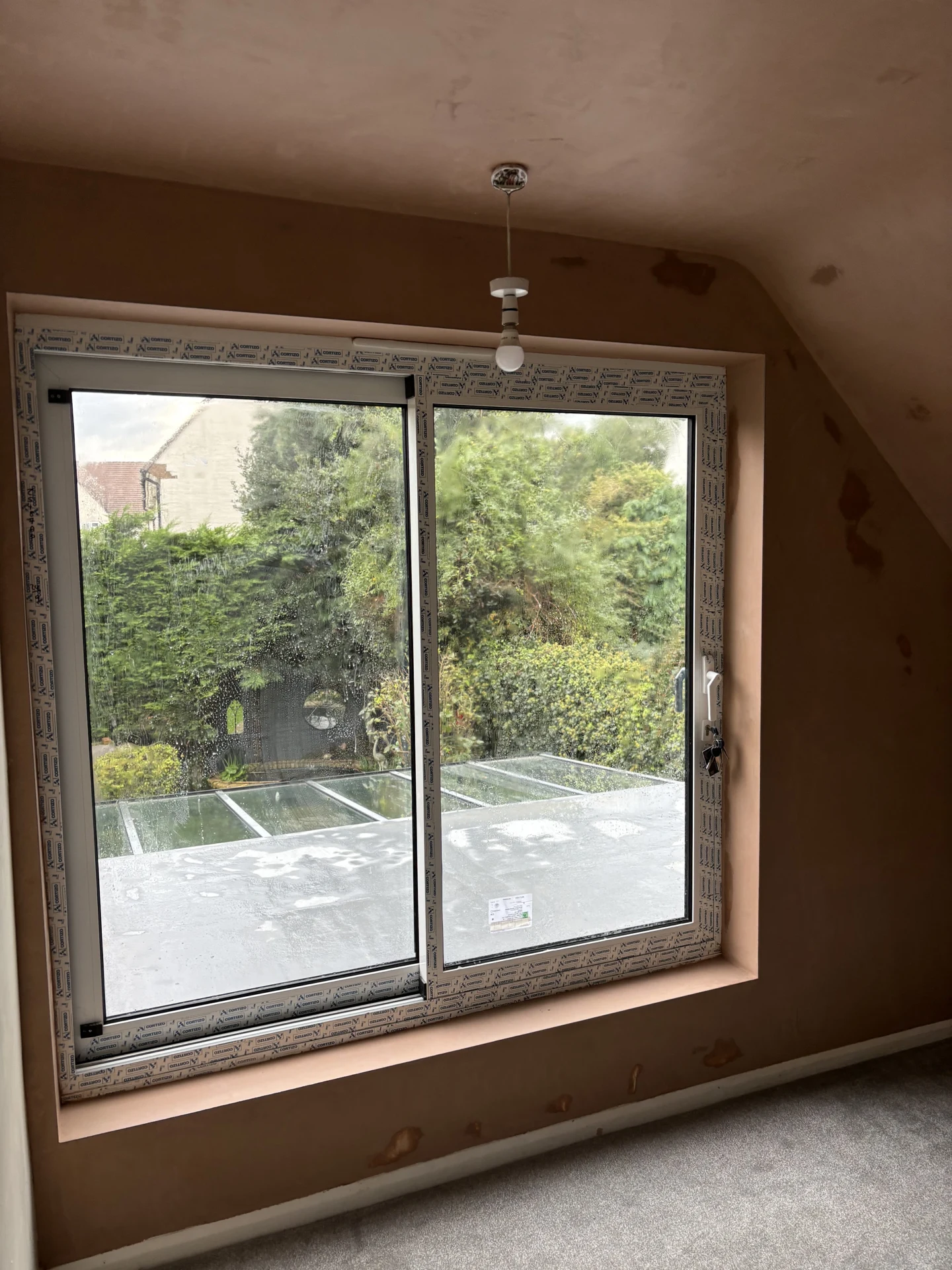
Define the work before clearing the room
Start with a room-by-room list of the surfaces being considered. A ceiling repair, one wall skim and full room replastering require different access and protection. Include window reveals, corners and areas normally hidden by furniture, rather than assuming that “the room” means every surface.
Separate what looks tired from what appears damaged. Record cracks, stains and loose areas so these can be discussed before preparation begins. You do not need to choose the plastering method yourself. The purpose is to make the intended scope visible, including any walls that should remain untouched.
Take photographs before moving everything
Photograph the room in daylight, with a wide view showing each affected wall and closer views of damage. Include the relationship between a problem and nearby windows, skirting or fittings. A close-up alone can make it difficult to understand where a repair sits within the room.
Note anything concealed behind a cupboard or sofa. Previously hidden areas may have a different finish or condition from the exposed wall. Photographs also help explain awkward access, such as a sloping ceiling or a loft hatch. They are a starting point for discussion, not a substitute for checking the background.
Move furniture out where possible
Clearing movable furniture gives better access and leaves fewer belongings to protect. Discuss large items that cannot leave the room rather than assuming they can simply stay against a wall. Work on walls requires access to their surfaces, and ceiling work affects the space below the whole working area.
Decide where moved items will go without blocking the route into the room. Moving a sofa from the work area into a narrow hallway may exchange one access problem for another. If the room cannot be emptied, explain what must remain before the job is planned.
Agree floor, skirting and doorway protection
Floors, skirting and remaining fittings need protection from dust and splashes. Ask what protection will be used and who is responsible for putting it in place. This is particularly important when a room has a carpet or when the route to it passes through other finished rooms.
Doorways can be screened to help limit dust spreading through the house. Discuss that arrangement alongside normal access, rather than treating a closed door as the complete plan. Removing failed plaster produces debris as well as fine dust, while new boarding introduces a different type of work.
Leave uncertain surface preparation for assessment
Do not assume that doing more to the wall beforehand will always help. Wallpaper, loose paint, adhesive residue and powdery patches all affect preparation, but the appropriate treatment depends on what is underneath. Ask which tasks you should complete and which should wait until the surface has been assessed.
Avoid wetting or sealing walls with products chosen at random. An unsuitable coating can add work rather than create a useful base. If wallpaper removal is agreed, clarify whether the plasterer needs to see the exposed wall before the main job. Equally, do not remove large areas of plaster simply to investigate a concern.
Plan sockets, lights and fixed features
List the fittings that affect access: sockets, switches, radiator pipes, ceiling lights and any decorative ceiling features. Protection is not the same as removal. The the plastering guidance describes switches and sockets being isolated and protected, with removal only where that has been agreed.
Electrical work should be handled by a qualified electrician. If light fittings need taking down, arrange that work rather than treating it as an ordinary room-clearance task. For radiator or pipework changes, discuss the sequence with the relevant trade before the wall is finished. Tell the plasterer what is staying, what is moving and what has already been made safe, so the preparation plan reflects the actual room rather than an assumed empty shell.
Finish disruptive alterations in the right order
A new finish should follow work that needs openings in the wall or ceiling. Rewiring, changing pipework and altering light positions can all affect what needs making good. Check which trades still need access before treating an exposed channel or opening as ready to close.
Explain the history of repaired areas too. A filled opening, recent damp treatment or redundant pipe chase may not be obvious during a quick look around. Different backgrounds can need different preparation, even on one wall. The useful decision is not simply who visits first, but whether the work behind each surface is complete. Agree that point before plastering so the new finish is not immediately disturbed by an outstanding alteration.
Check the route, stairs and working space
Tell the plasterer about a steep staircase, restricted parking, a loft hatch or any other awkward approach. These details affect planning even when the room itself looks straightforward. Include them in the first discussion rather than leaving access questions until materials and tools arrive.
Consider the route in both directions. Materials need to reach the room, and removed plaster may need to leave through the same parts of the house. Keep that route clear when relocating furniture. Plastering also involves buckets, mixing equipment and working platforms, not just a person standing beside the wall. Ask which space needs to remain available so household storage does not end up occupying an area needed for the work.
Keep the rest of the home usable
Plan where household activities will happen while the work room is unavailable. This matters especially for kitchens and bathrooms, where simply shutting the door may affect everyday use. Ask about room access during the work rather than assuming the space will be usable between every stage.
Keep children and pets away from tools, working platforms and wet plaster. Arrange another usable room where possible, with access that does not depend on crossing the work area. Discuss the end-of-day arrangements as well as the start: what will remain in the room, which routes will be clear and what cleaning is included. Fine dust can settle nearby even when protection is used, so leave room in the household plan for cleaning afterwards.
When to call a professional
Ask for an assessment before preparation if plaster is hollow, bulging, loose or badly cracked. Clearing a room does not require testing how much damaged material you can remove. Damp or a previous leak also needs explanation, because a new surface is not a treatment for an unresolved source of moisture.
Bring in the appropriate professional where the issue is outside ordinary plaster preparation. Electrical alterations belong with a qualified electrician, and leaks need the relevant plumbing or roofing attention. If an older textured coating would be disturbed, leave that work alone until its safety has been considered. The aim is to prepare access for a suitable job, not to begin removal before the condition and risks are understood.
Make the final preparation handover specific
Before work starts, check the agreed surfaces against the cleared room. Confirm any areas that were previously hidden, the items staying in place and the arrangements for fittings. If you discover another stain or damaged patch during clearance, raise it rather than assuming it is already included.
For the next step, send an enquiry describing the room, the walls or ceiling involved and what you can move yourself. Add daylight photographs and any access restrictions. Ask which preparation is yours to complete, which is included in the plastering work and whether another trade is needed first. That gives the discussion a practical purpose: a room ready for the agreed method, with responsibilities clear before any surface is changed.
More about this topic
Should I empty the room before the assessment?
Photographs and access to affected surfaces help the assessment. Explain what cannot be moved and what normally hides the wall. Agree the full clearance needed for the work rather than assuming every item must leave before an initial discussion.
Can furniture stay in the middle of the room?
Discuss it first. Remaining furniture needs covering, but covering alone does not solve restricted access. Ceiling work and work around several walls may need space that a central furniture group would occupy.
Should I put bonding agent on the walls myself?
Not unless it is part of the agreed preparation. The existing finish and its absorbency determine the treatment. A product applied without assessment can create extra preparation rather than help the plaster bond.
Do I need to remove the light fitting?
It depends on the ceiling work. Ask before work starts, and arrange a qualified electrician if disconnection or removal is required. Do not treat electrical fittings as ordinary items to take down during clearance.
What if I find damage behind a wardrobe?
Photograph it and tell the plasterer before the planned work begins. Hidden areas can have a different condition from the rest of the wall, so the repair and preparation may need reviewing.