Separate surface roughness from wall shape
Homeowners often use uneven to describe different things: shallow trowel marks, ridges around an old patch, a dip beside a chimney breast or a wall that appears wavy in side lighting. These observations are useful because they describe the result you want to improve. They do not all point to the same plastering job or amount of preparation.
Look at the wider wall as well as the most noticeable mark. Note whether the unevenness is confined to an earlier repair or continues across the face. A wall can have a smooth texture yet still be out of plane, while a generally flat wall may simply have rough decoration. Explain which problem bothers you rather than asking for thickness or materials before the wall has been assessed.
Check whether the existing plaster is suitable to keep
Before planning a smoother finish, the existing plaster needs to be firmly attached and suitable to receive it. Bulging, crumbling or hollow areas raise a different question from cosmetic unevenness. Covering those areas does not establish a sound base. If the uneven part is also loose, preparation may need to include removal and rebuilding rather than a skim alone.
Damp marks, soft patches or repeated cracking also need attention before the finish is chosen. A moisture source should be dealt with by the appropriate trade, and recurring movement should not be disguised as a surface defect. Tell Stephen what has changed and whether other repairs have been completed. A wall’s history can be as useful as a close photograph of the uneven area.
What a skim can and cannot reasonably achieve
A skim is intended as a thin finishing layer over a suitable surface. It can refresh sound plaster that is rough, marked or affected by shallow surface irregularities. It is not the same scope as stripping a wall and rebuilding its plaster coats. Agree the intended improvement before treating every visible variation as something that a finishing coat alone will remove.
A deeper hollow, pronounced ridge or inconsistent build-up may need preparation beyond the skim itself. The proposed work should distinguish smoothing the face from correcting the underlying shape. This avoids comparing a quotation for a cosmetic finish with one that includes more substantial levelling or replastering. Neither should be selected simply because both descriptions end with a smooth wall.
Deciding between local preparation and a wider repair
An isolated raised edge around a previous repair is different from several walls with uneven backgrounds. Where the surrounding plaster is sound, a limited repair may be worth considering. Where many patches interrupt the face, renewing the wider finish may be more practical. The decision depends on the wall’s condition and the intended finish, not just the number of visible marks.
If a deeper build-up is needed, the background and construction influence the approach. Plasterboarding and plastering are different scopes and should be discussed on their merits rather than assumed interchangeable. Existing reveals, sockets, skirting and adjoining surfaces also matter when changing the face of a wall. Mention any fittings or edges that need to remain in place.
Use the room’s lighting to explain your concern
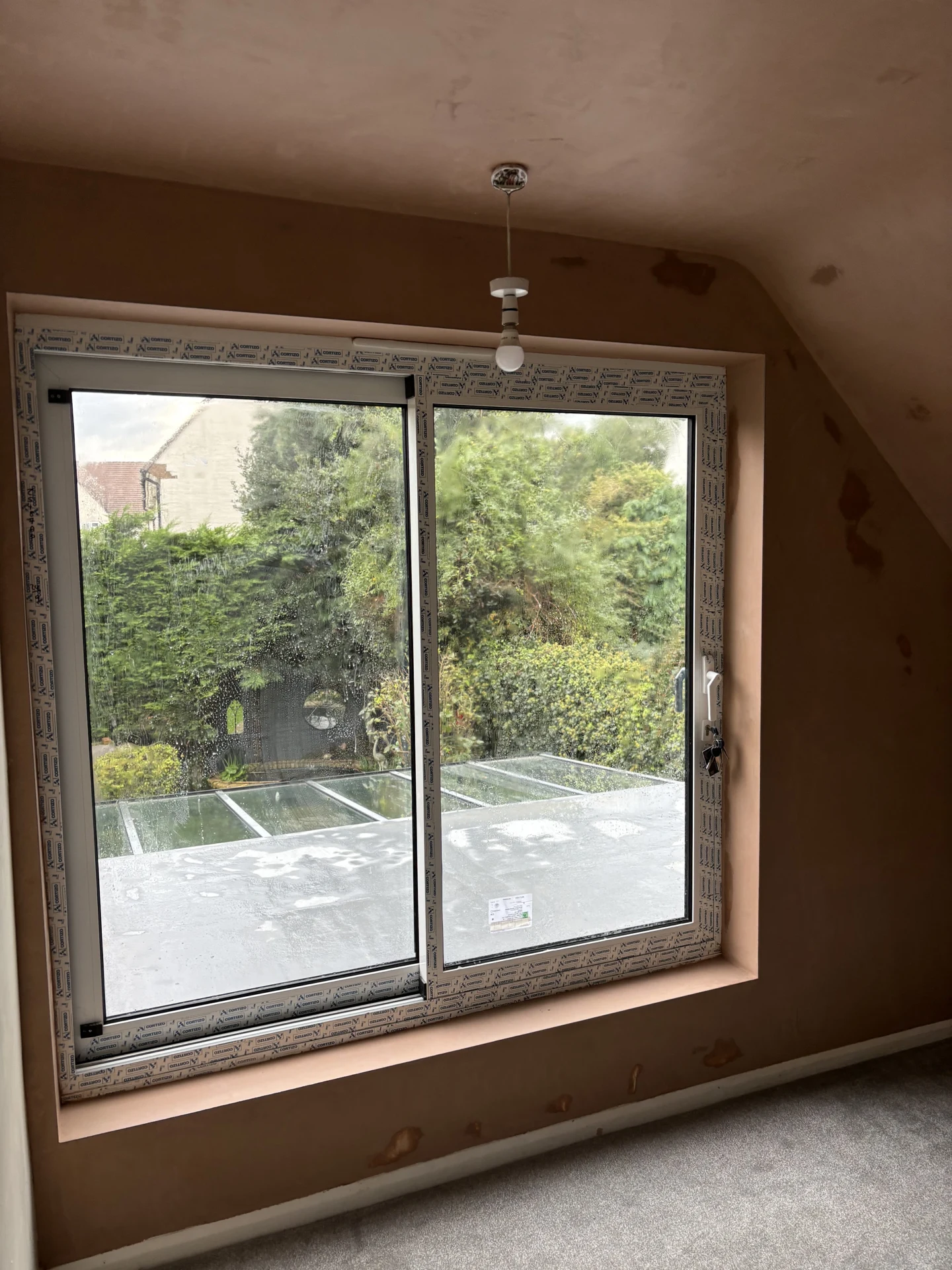
Side lighting can reveal steps at the edge of a patch that are less noticeable when looking straight at the wall. Send a wider photograph showing where the window or light falls as well as a closer view of the ridge or dip. Explain whether you want to improve one repair junction or the appearance of the whole wall before redecorating.
Photographs are a starting point, not a measurement of the wall’s full shape or a guarantee of the finished appearance. The existing wall and agreed preparation affect the result. Discuss expectations before work starts, particularly where you are comparing patching with a whole-wall skim. A local repair cannot be expected to change unevenness outside its agreed boundary.
Plan the work and request a quote
If electrical alterations, pipework or other renovation work are still underway, give that information at the enquiry stage. Completing those tasks first can avoid cutting into a newly finished wall. Agree what needs moving and who will deal with fittings so the affected surface can be reached. Drying and decorating also belong in the plan, not just the application of plaster.
Contact Stephen with your postcode, photographs of each affected wall and a description of the unevenness you notice. Mention loose areas, old repairs and any moisture history. There are no fixed website prices: the preparation, area, access and required build-up shape an individual quote. The main plastering and skimming pages explain the wider services, while the patch repairs page covers isolated making good where that is the agreed scope.
Questions homeowners ask
Is a smooth wall necessarily a flat wall?
No. Smoothness describes the face, while flatness concerns its shape. Explain whether your concern is rough texture, raised repair edges or a wider dip so the proposed work addresses it.
Will a thin skim remove a deep dip?
A thin finishing coat should not be assumed to correct a deep variation. The wall needs assessment to establish whether more preparation or a different build-up is required.
Why does an old repair show up beside a window?
Light travelling across the surface can highlight raised edges and changes in the wall’s shape. That observation helps explain the concern, but the repair and surrounding background still need checking.
Do uneven walls always need plasterboard?
No. Local repair, skimming, replastering or boarding may describe different possible scopes. The wall construction, condition and required improvement decide what is appropriate.
Should socket and skirting positions be discussed first?
Yes. Fittings and adjoining edges affect access and the implications of changing a wall face. Agree any removal or refitting by the appropriate trade before plastering begins.