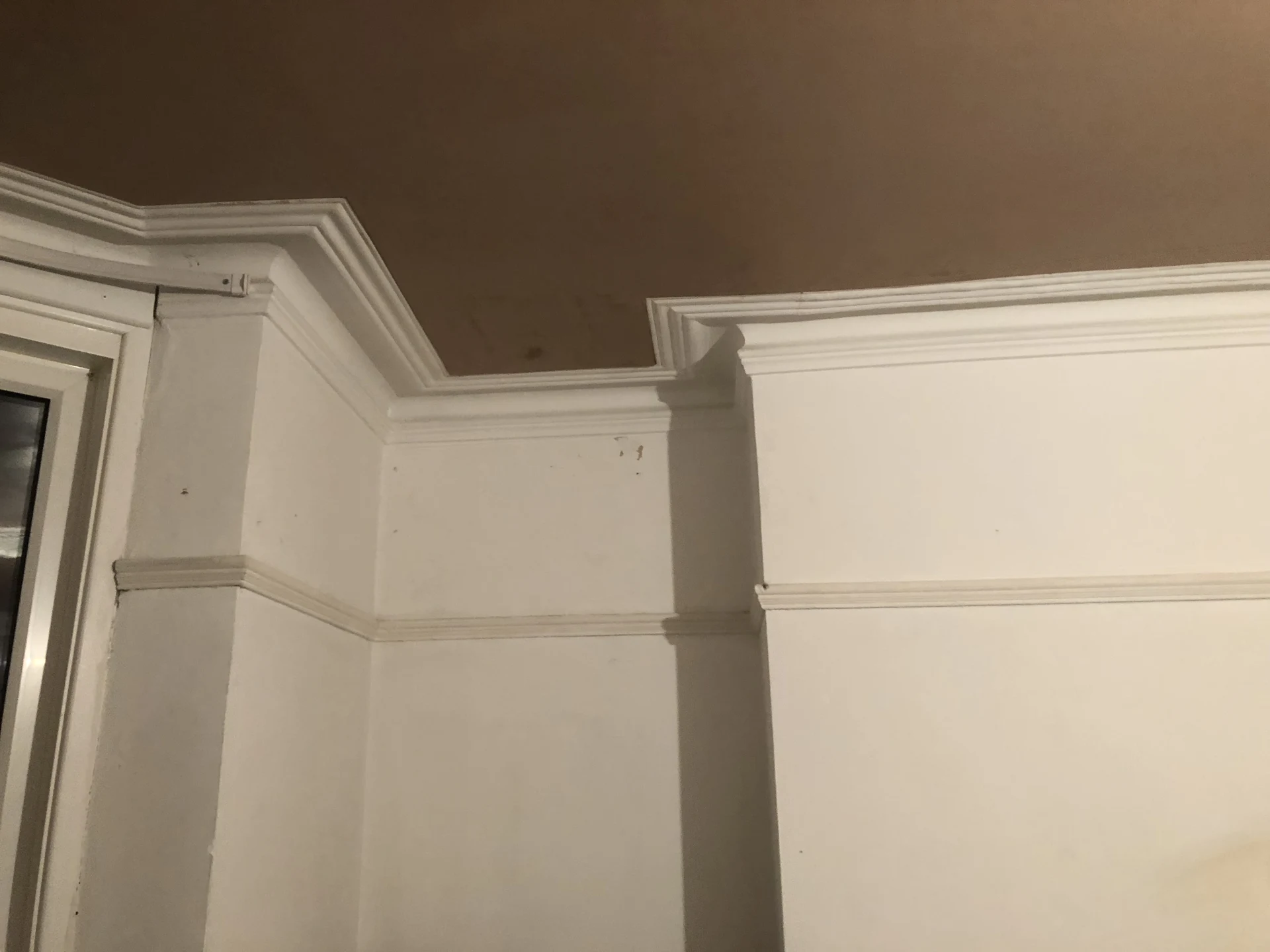
Map the ceiling before discussing the finish
Start with a full view of the ceiling showing the light position, decorative features and any obvious damage. Add closer photographs where fittings obscure the surrounding surface. A picture of the central pendant alone does not explain whether the ceiling is broadly sound or has other areas needing attention.
Describe the proposed result separately from the existing arrangement. You may want the current fitting retained while the ceiling becomes smooth, or you may have wider refurbishment plans that affect what stays. Include coving, ceiling roses and nearby wall-mounted items in your notes. The purpose is to show everything that influences access and appearance before a plastering scope is agreed, rather than discover an obstruction once the room has been prepared for work.
Decide what is staying and what needs discussion
Make a simple list of fittings and decorative features you want to keep. Distinguish the light fitting from the ceiling rose around it: one is an electrical fitting, while the other is decorative plasterwork whose condition and edge need separate consideration. Keeping one does not settle how the other will be handled.
If you are unsure about an item, mark it as undecided rather than leaving it out. Ask what access is needed to finish the ceiling around it and whether it obstructs the work. This is also the point to mention a planned change elsewhere in the room. A clear retention brief lets the discussion concentrate on the actual junctions and responsibilities instead of treating every object on the ceiling as part of the same task.
Arrange electrical work before plastering access is needed
Where a fitting needs moving or disconnecting, the the preparation guidance is to use an electrician. Agree that arrangement before plastering begins. Do not assume that a plastering quote includes disconnection, removal or reconnection simply because the fitting is attached to the surface being worked on.
Frame the discussion around access: which parts of the ceiling need to be unobstructed, and what electrical arrangements must be settled beforehand? Share the proposed ceiling work with the electrician and explain any retained rose. This guide does not provide instructions for handling wiring or removing a connected fitting. Your checklist should identify the need and the responsible professional, leaving the electrical work to them rather than treating it as a small piece of room clearance.
Give ceiling roses their own assessment
A ceiling rose may be plain or patterned, separate from the surrounding finish or closely tied into older plasterwork. Check what is visible from a safe position and photograph cracks, missing pieces or areas that appear loose. Do not pull at decorative sections to find out whether they are secure.
Tell the plasterer if retaining the rose is a priority. A skim adds material to the flat ceiling, so a shallow outline needs care if it is to remain distinct. Plaster should finish against the feature rather than spread across its pattern. Where ornament is insecure, plastering neatly beside it will not make it safe. Fine detail, deep cracking or missing sections therefore belong in the initial discussion, not on a decorating list for later.
Match the work to the ceiling, not the fitting
A decorative fitting can draw attention away from the rest of the surface. Look beyond it for cracks, sagging, uneven patches and water staining. A structurally sound but rough ceiling may be suitable for skimming; other conditions may call for repair, overboarding or a different scope after assessment.
Do not choose a minimal ceiling treatment simply to avoid discussing the lighting arrangement. Equally, the presence of a large fitting does not establish that a whole ceiling needs replacement. Send both wide and close views so the condition can be considered independently of the obstruction. Where there has been a leak, explain whether its source has been addressed. The intended smooth finish and the preparation needed to support it are related decisions, but they are not interchangeable.
Resolve uncertain texture before any disturbance
If the ceiling has an unknown textured coating, raise that before preparation around the light position is planned. Older Artex and similar coatings may contain asbestos, and appearance cannot establish whether they do. Do not sand, scrape, drill or chip the coating to make access easier or reveal an edge.
Arrange competent assessment and testing where the material is uncertain, and explain the work you intend to carry out. Share any relevant report when discussing plastering, bearing in mind that a result relates to the material and locations it covers. Skimming a coating does not remove an underlying asbestos-containing layer. The decision about a smooth finish must follow the necessary assessment, rather than an electrical or decorative change becoming the reason to disturb an uncertain surface first.
Prepare the room around the access requirements
Ceiling work needs a practical room plan as well as a clear ceiling. Identify furniture that can be moved out and items that cannot. Discuss protection for floors, furniture and retained features, and mention awkward routes such as steep stairs or restricted access before the job is organised.
If the home remains occupied, decide which other room will stay usable while this one is out of action. Keep pets and young children away from the work area where tools, trestles and wet plaster are present. Ask about access and clean-up arrangements instead of assuming the room will function normally throughout. These preparations are not substitutes for the electrical arrangements, but they belong on the same schedule so the ceiling area is genuinely accessible when work is due to begin.
Sequence drying, decorating and refitting
Plan the end of the job as carefully as the start. Items removed for plastering are refitted after the new plaster has dried and been decorated. The guidance warns that drilling into fresh plaster before it is fully cured can crack it, so avoid arranging the return of wall-mounted items around an assumed immediate finish.
Drying depends on the background, plaster thickness, warmth and airflow. Dark patches lighten as moisture leaves, but decorating should wait until the plaster is dry throughout. Ask about the appropriate preparation for new plaster and keep paint from collecting in decorative grooves around a retained rose. Put the electrical refitting question back with the electrician. A realistic sequence separates completed plastering from a room that has also been decorated and had its fittings reinstated.
When to call a professional
Call an electrician whenever a fitting needs moving or disconnecting for the work. Seek plastering advice where the ceiling is sagging, damaged or visibly loose, and raise insecure decorative pieces before arranging work around them. Do not treat a light fitting or rose as something to pull aside while investigating the ceiling.
An uncertain textured coating needs competent asbestos advice before disturbance, not a judgement based on photographs. Where original plasterwork is in a listed property, check whether consent is required before making changes. These are separate decisions, and one professional's involvement does not automatically resolve them all. Keep a short list of outstanding questions and the person who needs to answer each one, so the plastering visit is not being used to settle unresolved electrical or specialist material issues.
Send an enquiry that shows the whole arrangement
Gather a full-ceiling photograph, closer views around each obstruction and images of any rose or coving you want retained. Include damage away from the light position, the room involved and your postcode. Explain which fittings stay, which decisions are unresolved and whether an electrician needs to be arranged for access.
Add useful practical details such as furniture that cannot move or difficult access to the room. Ask for the plastering scope and the required preparation to be discussed together, without assuming electrical work forms part of that scope. To request a free quote, use the contact form or send photographs by WhatsApp to 07852 191811. Make the enquiry about the ceiling as a whole, with the lighting arrangements clearly identified rather than left as an afterthought.
More about this topic
Is a ceiling rose the same thing as the light fitting?
No. The rose is a decorative ceiling feature around the light position. Its plasterwork and edge need consideration separately from any electrical fitting that obstructs access.
Can I leave electrical arrangements until plastering day?
Agree them beforehand. Where a fitting needs moving or disconnecting, arrange an electrician so the necessary area is accessible before plastering starts.
What photographs help with a large central fitting?
Send a full-ceiling view and closer photographs of the surrounding surface, any rose and visible damage. A fitting-only photograph leaves the wider ceiling condition unclear.
Does smoothing a textured ceiling remove the old coating?
No. Skimming changes the visible surface but leaves underlying material in place. Uncertain coatings need appropriate assessment before disturbance and before preparation is agreed.
Should refitting be planned straight after the skim?
Allow for the plaster to dry and be decorated first. Drilling into fresh plaster before it has fully cured can cause cracking; electrical refitting belongs with the electrician.