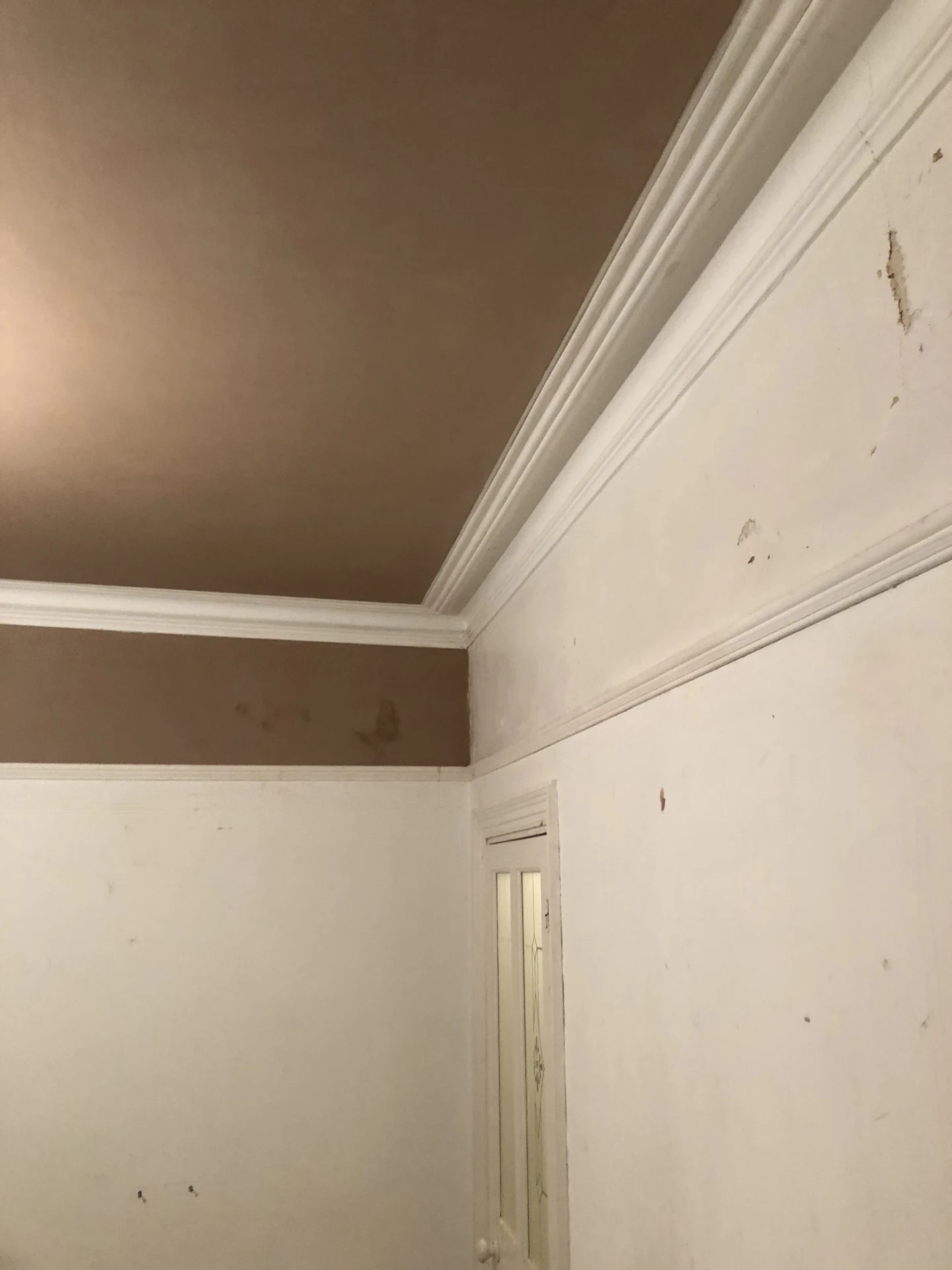
Coving, cornice and ceiling roses explained
Coving usually means a fairly simple curved profile running along the angle between a wall and ceiling. Cornice commonly describes a more shaped or decorative moulding in the same position.
A ceiling rose is the decorative feature around the central light position. It may be plain or patterned, separate from the ceiling finish or closely tied into older plasterwork. Before planning a skim, identify which features you want to keep and whether any parts are cracked, loose or missing.
Decide what stays before the ceiling is prepared
Tell Stephen at the outset that the original detail matters to you. A skim adds material to the flat ceiling, and the edge needs planning so it does not bury a shallow moulding. The condition of the plaster immediately beside the feature matters as much as the broad area in the middle.
Look at the intended result as a whole: ceiling level, cornice edge, wall finish and any previous repairs. If an existing feature is insecure, simply plastering neatly beside it will not make it safe. Its condition needs addressing before work close to it can proceed.
Protecting detail while the flat areas are skimmed
Careful preparation includes suitable protection for retained features and controlled working at their edges. Plaster should finish against the moulding rather than smear across the pattern.
Flat ceiling areas and the junction around a rose need treating as different parts of the job. Where a light fitting obstructs the area, arrange for an electrician to disconnect or remove it safely before plastering begins.
When original ornament needs specialist attention
Fine ornamental work, missing sections, deep cracks or loose decorative pieces need a separate discussion. Talk to Stephen about what you have before booking the surrounding ceiling work.
Do not pull at a loose section or try to fill delicate patterns to make them look complete. Send photographs from a safe position instead. Where the property is listed, check whether consent is required before changing original plasterwork, even if the proposed ceiling finish seems a small alteration.
Choosing and fitting new coving
New coving can give a plain room a cleaner transition at ceiling level. Consider the ceiling height, room proportions and existing joinery rather than choosing the largest profile available. A modest curve can sit comfortably in a smaller room; a stronger shape needs enough surrounding space to look balanced.
Corners, chimney breasts and short wall returns affect how the profile runs around the room. The background must be sound, and uneven walls may need preparation for tidy joints. Agree the profile and plastering sequence together, including whether any old coving will remain in adjoining areas.
Finishing the room and arranging a quote
After skimming, wait until the plaster is dry throughout before decorating. Darker areas fade as moisture leaves; background, thickness, warmth and airflow influence progress. Keep paint from collecting in decorative grooves, and follow the instructions for preparing new plaster and any newly fitted coving.
For a useful enquiry, show the full ceiling, the corners and closer views of the features you want retained. Stephen offers free quotes and accepts photographs by WhatsApp on 07852 191811. Explain whether the priority is keeping existing detail, adding coving or combining the two.
Questions homeowners ask
Will skimming make a shallow ceiling rose look less distinct?
It can if the new finish is allowed to build up over its edge. Discuss the available depth beforehand so the ceiling finish respects the outline rather than swallowing it.
Should I strip paint from old cornice before asking for a quote?
Leave it alone initially. Stripping can damage fragile detail, and the right preparation depends on the condition of both the coating and the plaster beneath it.
Can the ceiling be skimmed while the pendant light stays connected?
Any fitting that needs moving or disconnecting should be dealt with by an electrician. Agree this before the work so the area around the rose is accessible.
Is a photograph of the cornice pattern enough for an enquiry?
Include a wider view as well. The room proportions, corners and adjoining ceiling condition help explain what is involved beyond the decorative pattern itself.