Investigate the layers before disturbing the tiles
Look for existing records, old photographs or accessible information about previous ceiling work. The age of the house alone cannot identify every layer because ceilings are altered over time. A gap around a light fitting may show something useful, but do not enlarge it, loosen the fitting or pull down a tile to investigate. Electrical accessories and their wiring add another hazard, and inspection should not involve disturbing materials whose composition is uncertain.
Pre-2000 artex may contain asbestos. Tiles can conceal that textured coating, so their smooth visible face tells you nothing reliable about what lies underneath. Do not sand or scrape suspected artex, and arrange an accredited laboratory test before work that could disturb it. Sampling should be arranged through a competent asbestos professional rather than attempted as exploratory DIY. Visual appearance, a previous owner's recollection or a negative result from a different room cannot establish that this ceiling is safe.
Separate the safety decision from the finish decision
If asbestos is identified, obtain specialist advice about the material and proposed work. Do not assume covering, stripping or fastening through it is automatically acceptable. Any management or removal decision belongs within the appropriate asbestos assessment, not an ordinary plastering quotation. Stephen O'Brien Plastering does not offer artex removal or asbestos testing as a service. Plastering options can be considered once the background and any necessary specialist arrangements have been established.
Polystyrene is combustible and can behave dangerously in a fire. Keep ignition sources and heat away, and never try to dissolve, burn or melt tiles off a ceiling. Existing lighting arrangements also deserve attention if fittings are in contact with tiles or insulation. An electrician should assess electrical concerns. Replacing the decorative finish should not distract from those issues, particularly where earlier alterations have left fittings poorly supported or covered by several layers of material.
Expect adhesive to affect the exposed background
Where the materials have been assessed and removal is appropriate, the bond between tile, adhesive and ceiling determines what is left behind. Some tiles separate relatively cleanly; others take paint, plaster or the paper face of plasterboard with them. Broad areas of torn paper are not equivalent to a few shallow dents. They can affect adhesion and require a repair strategy that addresses the damaged lining rather than hiding it under a thin finishing layer.
Adhesive may remain as isolated dabs, hard ridges or a more continuous film. Its behaviour and compatibility with proposed preparation products must be checked, not guessed from colour. Applying plaster directly over unidentified glue risks poor bonding or uneven suction. Solvents and aggressive scraping can create additional hazards or spread damage, so do not adopt a removal method merely because it worked on another ceiling with different materials. Agree a suitable preparation approach after inspection.
Choose between repair, overboarding and replacement
A ceiling with a dependable background and limited surface damage may be suitable for local making good followed by the specified preparation and finish. More extensive paper loss, widespread weak plaster or persistent adhesive contamination can change that judgement. Skimming is a finishing operation, not a way to secure failing layers. Ask which materials will actually support the new coat and whether any doubtful sections need to be repaired before a final surface is applied.
Overboarding can sometimes provide a new lining, but it needs a suitable fixing design into confirmed support, consideration of added weight and checks for concealed services. It also changes the relationship with coving, light fittings and ceiling height. Replacing an unsound lining may be preferable in other situations. Neither approach should be used to bypass asbestos advice or conceal unresolved water damage. The right option follows assessment of the complete ceiling, including the structure supporting it.
When to call a plasterer about a tiled ceiling
Contact a plasterer while planning the replacement finish, particularly if you need to understand the implications of adhesive residue, torn plasterboard or changes around cornices. Share the ceiling dimensions, photographs of its present condition and any existing material assessment. Avoid creating a demonstration patch purely for the enquiry. If the ceiling is bulging, wet or shedding material, restrict access beneath it and seek appropriate assessment before continuing with any decorative work.
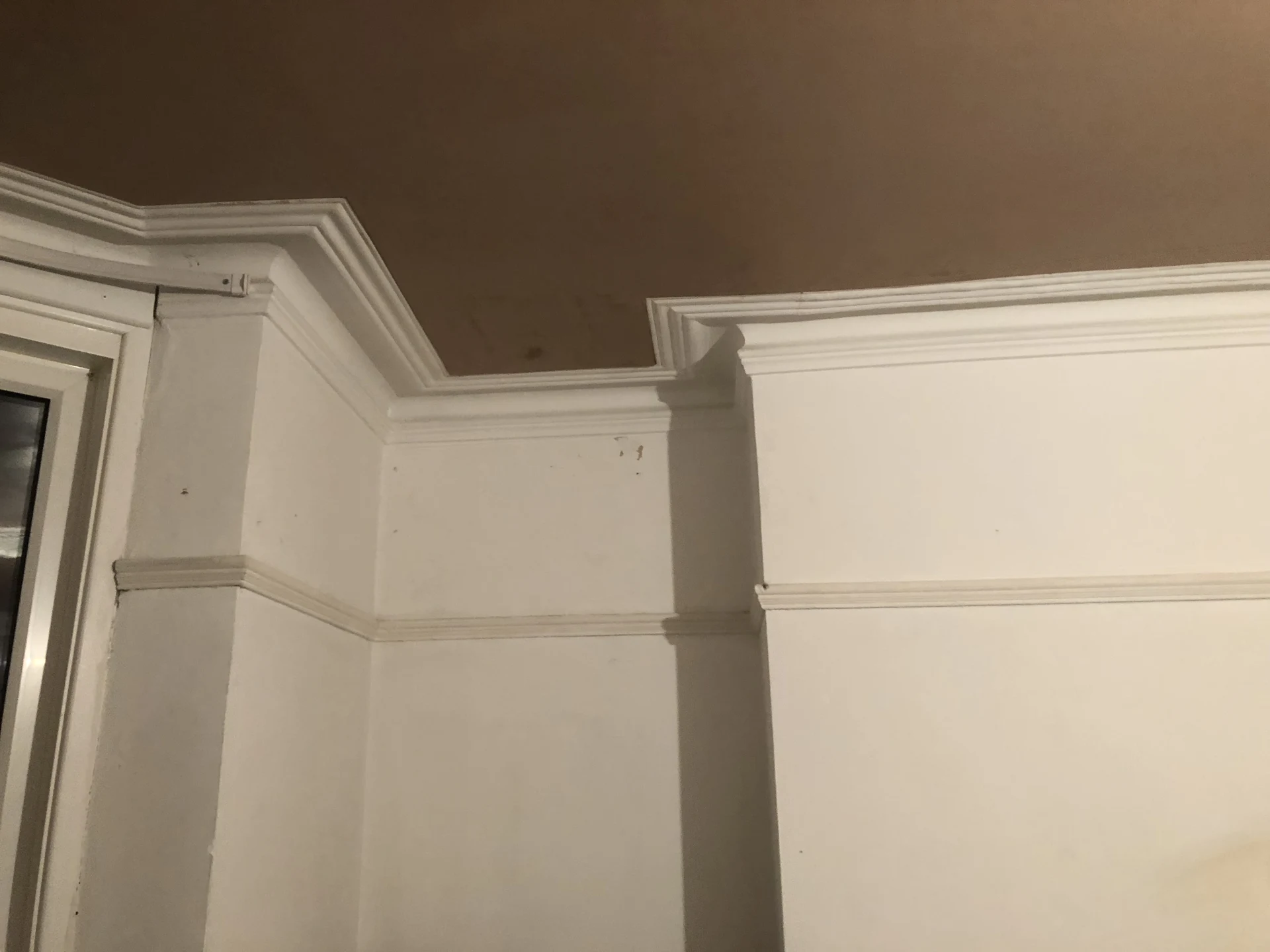
For Stephen O'Brien, explain that the enquiry concerns the ceiling finish after polystyrene tiles, rather than requesting artex stripping or testing. He is based in Headcorn and covers up to 25 miles. Knowing whether specialist investigation is still outstanding helps keep the proposed sequence clear. Once the ceiling is confirmed suitable for plastering, discuss protection of the room, access around lighting and how the chosen lining will meet existing wall finishes and mouldings.
More about this topic
Do polystyrene tiles prove asbestos is present?
No. The tiles do not establish the composition of hidden coatings or other ceiling layers. Where suspect older textured material may be disturbed, arrange identification through an accredited laboratory test instead of relying on the appearance of the tiles.
Can I skim straight over the tiles?
Polystyrene tiles are not a suitable ordinary background for a plaster skim. Their attachment and the layers behind them cannot be assumed reliable. Have the ceiling assessed and agree a properly supported finishing solution rather than coating the tile faces.
Will every ceiling need new plasterboard?
No. The extent of damage, adhesive condition and strength of the existing background determine the options. Some ceilings can be prepared and repaired; others need a new lining. That decision cannot be made reliably while every underlying layer remains concealed.
Should I remove the light fittings first?
Do not dismantle ceiling electrics as part of an informal inspection. Arrange any required isolation, disconnection or alteration with a competent electrician, coordinated with the material assessment and ceiling work. Switching off a wall switch is not adequate proof of electrical isolation.