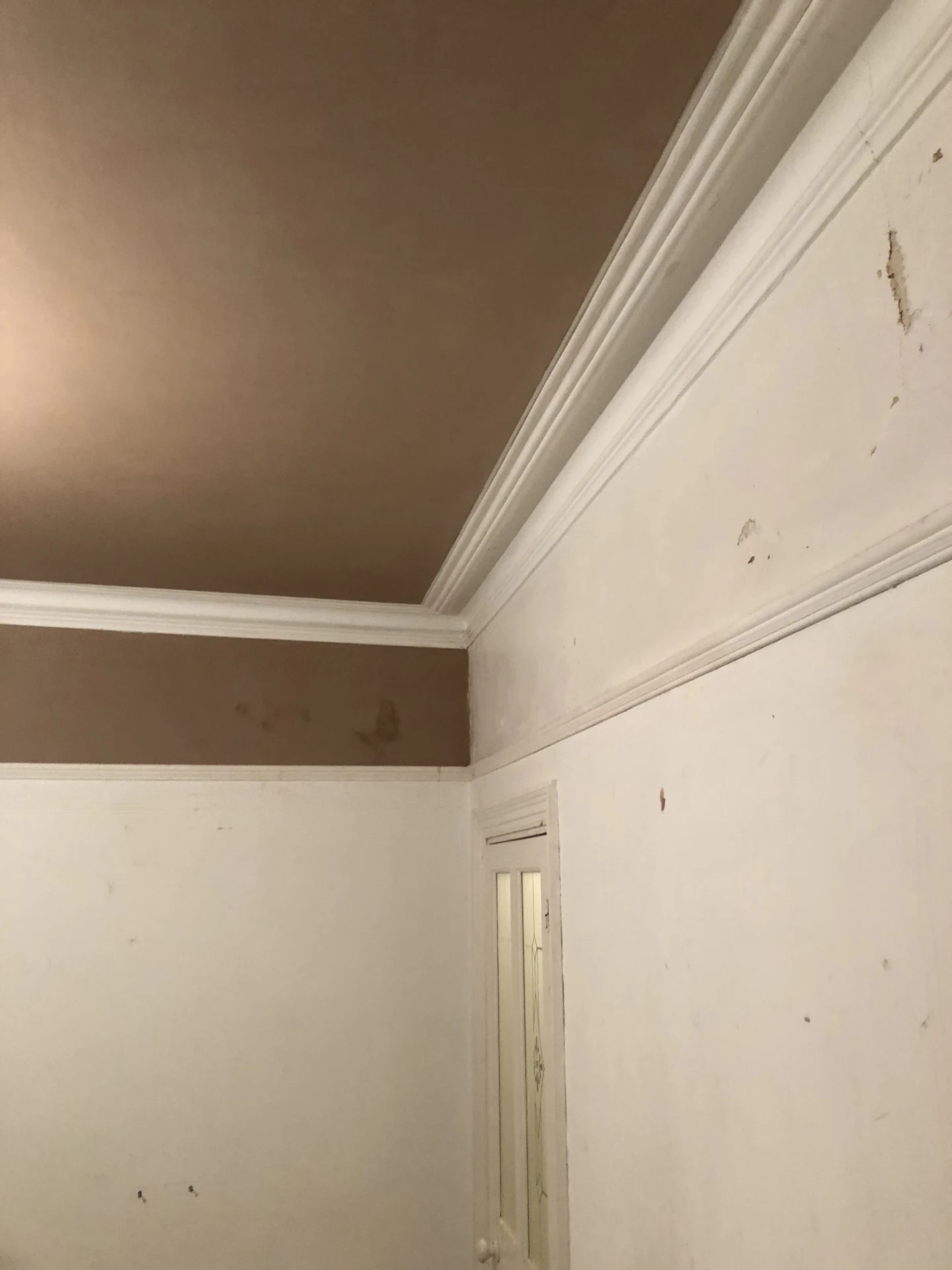
What coving actually does
Coving hides the corner where wall meets ceiling, which is often the first place a hairline crack appears as a house moves slightly with the seasons. A neat run of coving covers that line and gives the room a finished edge. It also softens the shadow in the corner, which can make a room look more complete once decorated.
People sometimes use the words coving and cornice as if they mean the same thing. In everyday use, coving usually means a simpler, repeating curved profile, while cornice tends to describe a more ornate, built up moulding of the kind found in many Victorian and Edwardian houses. Repairing or matching original cornice is a separate kind of job from fitting new coving.
Plain and decorative profiles
The classic plain cove is a smooth quarter curve. It is understated, works in almost any room and is easy to paint. Stepped and ogee profiles add a few lines or an S shaped curve, which gives more shadow without looking fussy. Fully decorative profiles carry repeating patterns such as egg and dart or leaves, and they really belong in rooms with a matching period character.
A good test is to look at the skirting boards, door architraves and fireplace. If those are simple and modern, a plain cove usually suits. If they are deep and moulded, a more detailed profile will look more at home.
Getting the size right
Coving is described by how far it projects onto the ceiling and drops down the wall. Smaller profiles suit rooms with lower ceilings, such as many post war and newer homes, because they do not eat into the height. Larger profiles suit taller rooms, where a thin cove can look like an afterthought.
A practical way to choose is to hold a short sample or an offcut up in a corner and step back to the doorway. Look at it in daylight and with the lights on. It is surprising how different sizes change the feel of a room, and a few minutes testing can avoid regret.
Materials: plaster, polymer and polystyrene
Gypsum plaster coving is the traditional choice. It is heavier, gives crisp lines and takes paint very well, and it is the closest match to the look of older houses. Polyurethane and other polymer coving is lighter and slightly flexible, which can help on walls that are not perfectly straight. Lightweight polystyrene is the cheapest option but dents easily and can look less convincing once painted.
For a lasting finish in a lived in room, many homeowners choose plaster coving. Whichever material you pick, the quality of the fitting decides how good it looks far more than the material itself.
Coving in period homes
In older houses, the first question is whether the room still has original cornice. If it does, it is usually worth keeping and repairing rather than replacing, because new mouldings rarely match exactly. Damaged lengths can sometimes be patched or matched from a profile taken from the surviving section.
If the original has been lost, a sympathetic period style profile can bring back some of the character. Avoid oversized decorative mouldings in small rooms, even in an old house, because they can overpower the space. If the building is listed, check with the local council before changing any original features.
How the job is done
Fitting starts with checking the wall and ceiling line, because coving shows up any dip or bow. Loose plaster or flaking paint along the edge is removed so the adhesive has a sound surface. Lengths are measured, and internal and external corners are mitred so the profile meets cleanly. The coving is bedded on adhesive, pressed into place, and the joints and gaps are filled and wiped smooth.
Once dry, the coving is painted, often the same colour as the ceiling. If the room is being replastered or the ceiling skimmed, it usually makes sense to fit coving at the same stage so everything is decorated together.
Mistakes to avoid
The most common faults are poorly cut corners, visible gaps along the top edge, joints that open up because the surface behind was dusty or flaking, and coving fixed to follow a sagging ceiling. Choosing a profile that clashes with the room, or one far too large or small, is the other regret people mention.
Fitting coving to hide a ceiling that is cracking badly or sagging is also a false economy. The underlying problem should be repaired first, otherwise the cracks simply reappear along the new coving.
When to call a professional
Short straight runs in a small room can be a DIY job for someone patient with a mitre box. Long runs, rooms with many corners, heavy plaster coving, uneven walls and period rooms are where a plasterer earns their keep, because the cuts and the line make or break the finish. Stephen O’Brien fits coving alongside his plastering and ceiling work for homeowners within up to 25 miles of Headcorn. Send a photo of the room and let him know the style you like, and he can advise on profile and size before quoting.
More about this topic
What is the difference between coving and cornice?
In everyday use, coving is a simpler repeating curved profile, while cornice usually means a more ornate moulding of the kind found in older period homes.
What size coving should I choose?
Smaller profiles suit lower ceilings and larger ones suit taller rooms. Holding a sample in the corner and viewing it from the doorway is the easiest way to judge.
Is plaster coving better than polystyrene?
Plaster coving is heavier, gives crisper lines and takes paint well. Polystyrene is lighter but dents easily and often looks less convincing once painted.
Should coving go up before or after the ceiling is skimmed?
It is usually fitted once the plastering is done and dry, at the same stage of the job, so everything can be decorated together.
Can coving hide a cracked ceiling?
It can cover a fine line in the corner, but a ceiling that is cracking badly or sagging should be repaired first, or the cracks will return.