Start with the room, not the finish
Below the North Downs and close to the A20, the village has a recognisable centre with homes extending beyond it. You will find a mix of older properties and more recent homes. That setting helps explain the enquiry, but it cannot establish whether the plaster beneath someone's wallpaper is firm enough to keep.
For example, stripping a sitting room in an older house might uncover small damaged patches beside an otherwise usable wall. Plastering can include those repairs. If several walls have uneven but secure finishes, skimming may be more appropriate. Tell Stephen what becomes visible as decoration comes away rather than choosing a method solely from the building's age.
Think about what you plan to retain. Coving, skirting and the edges around a window affect where new work ends. A picture showing a complete corner is often more informative than a close photograph of one crack. Include both when you can, with an explanation of which surfaces you want finished.
Look up before redecorating
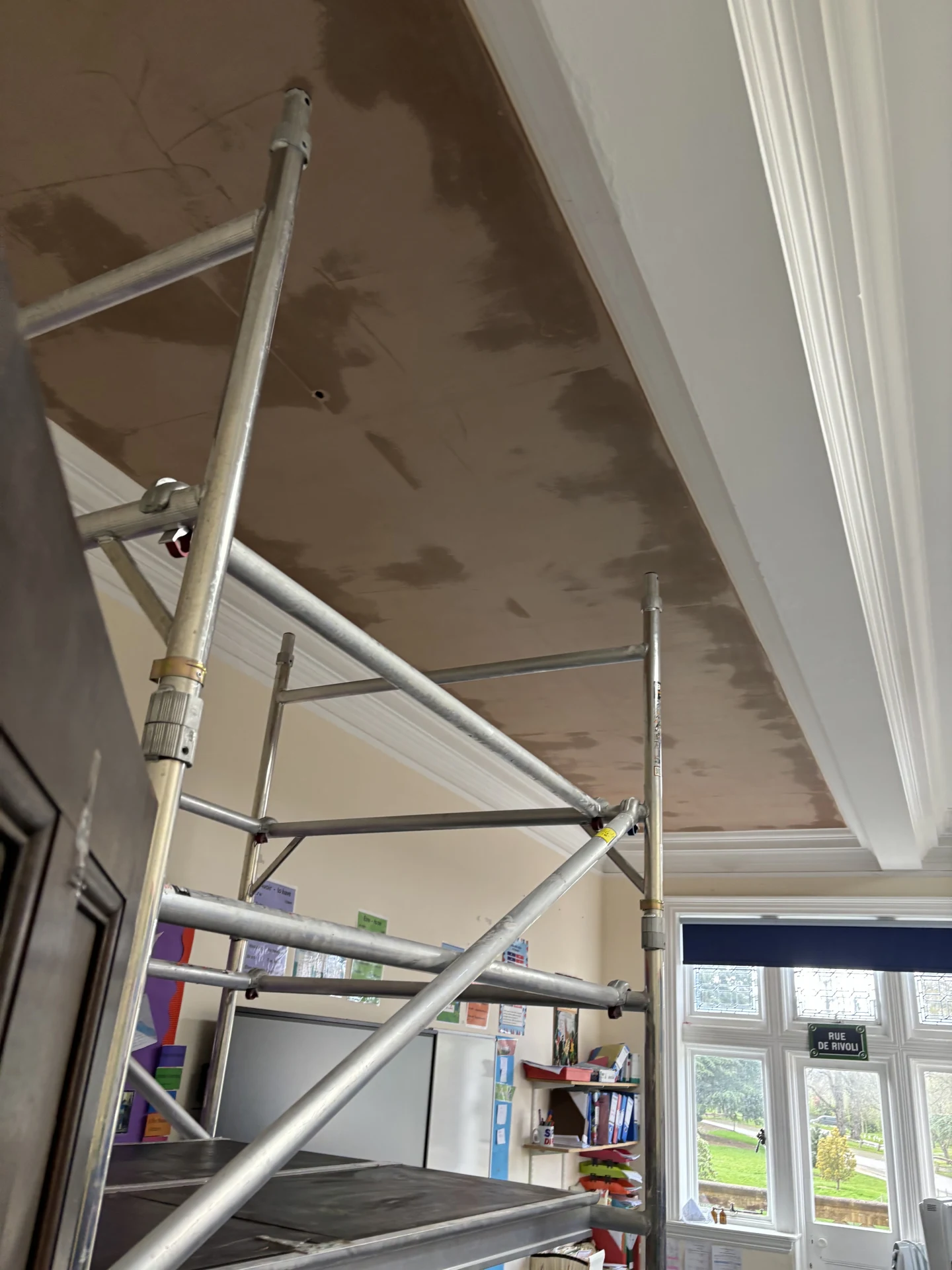
A ceiling can look acceptable in daylight yet show rough patches when a new light is switched on. Ceiling plastering is worth discussing alongside the walls if you want to change the whole room. Note whether the ceiling is flat, textured, cracked or marked, and explain any known history of leaks.
Where a textured coating is present, do not scrape or sand it to make a photograph clearer. Older coatings can contain asbestos. Seek appropriate advice before disturbing them. Skimming over artex is an available service, but the coating and supporting surface need consideration before deciding whether that approach is suitable.
A replacement section of plasterboard may be relevant after an alteration, while coving concerns the junction at the top of the walls. These are separate parts of a room, so mention each in your enquiry. There is no need to request every service simply because you are redecorating.
From the square to the outer lanes
Lenham lies north-east of Headcorn, about 6 miles away, with a journey of roughly 15 minutes depending on traffic. For a property away from the centre, give the full postcode and explain any access restrictions. Distance alone does not describe where materials would need to be carried within the property.
Call 07852 191811 to discuss the room, or use the free quote form on this page. It asks for your name, phone number and postcode, with an optional message. Use that space to describe the work and mention any photographs available to share. Stephen is fully qualified and insured, with 25 years' experience.
An exterior wall needs a separate description from an internal room. If rendering is part of the enquiry, explain which elevation is affected and whether existing material is cracked or loose. For a listed property or work within a conservation area, check the requirements with the council before proceeding.
Questions homeowners ask
Can I ask about just one wall near the village square?
Yes. Explain its condition and include the adjoining edges in your photographs. A single wall does not automatically require the rest of the room to be replastered.
Does being below the Downs change the plastering method?
The geographical setting alone does not decide it. The background, existing finish and any moisture problems matter more when choosing an internal treatment.
What if my postcode covers a lane outside Lenham?
Provide the complete postcode and a short location description. Stephen travels up to 25 miles from Headcorn, so the actual address is useful when discussing coverage.
Should I mention retained coving in a centre cottage?
Yes. Say whether you want it kept or changed, and show where it meets the ceiling. That detail helps define the limits of the proposed finish.