A village with different kinds of walls
Headcorn sits in the Weald, within Maidstone borough. Older and period properties, including timber-framed buildings, form part of its character, alongside later housing. That variety matters indoors. Two rooms that look similar once painted may have quite different materials underneath, so the right treatment cannot be chosen from appearance alone.
In an older house, an uneven wall is not automatically a failed wall. Some irregularity may belong to the building, while a hollow-sounding area, lifting edge or loose patch needs closer attention. Before asking for everything to be made perfectly flat, consider which features you want to keep and whether the existing surface is sound enough to remain.
Stephen is based locally in Headcorn and works with homeowners on plastering, skimming, ceilings and related finishes. Describe the room, any visible damage and the changes you are considering when you get in touch. Photographs can help explain a concern, although they cannot show everything about the condition behind a coating.
Repairing rather than covering a problem
Cracks and blown plaster can call for quite different work. A crack is a visible symptom; blown plaster has lost its attachment to the background. Simply hiding either beneath a thin finish may leave the cause untouched. The useful first question is whether the affected material can stay, needs a local repair or forms part of a wider failing area.
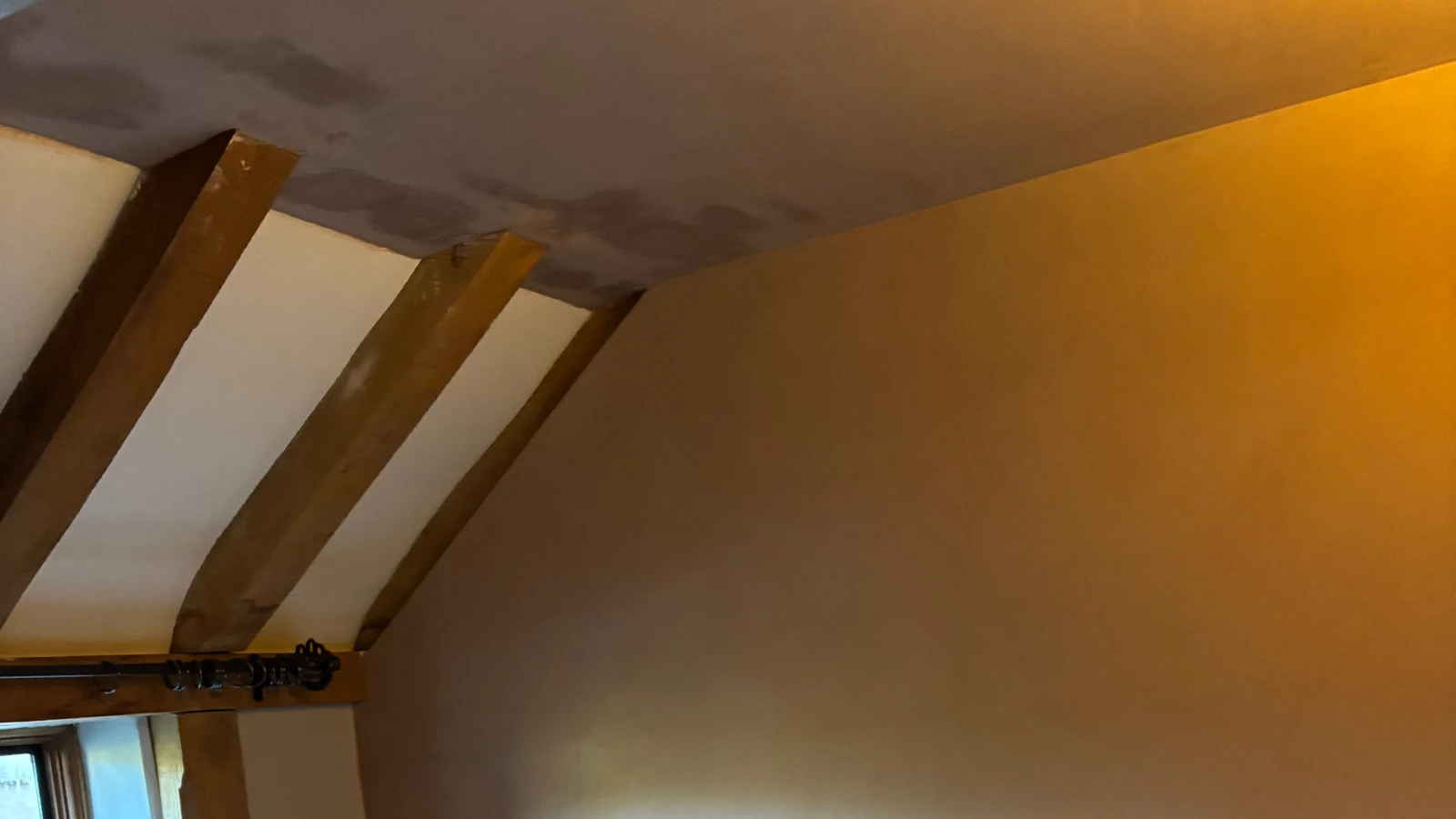
Keep an eye on damp marks, repeated movement or areas that have deteriorated more than once. Plastering is a finishing trade, not a substitute for resolving an active leak or investigating structural movement. Explain what you have noticed, including whether a mark changes after rain or a crack returns after decorating, without trying to diagnose it yourself.
For a small damaged area, a patch repair may avoid unnecessary work elsewhere. Where much of a room has loose or unsuitable plaster, replastering can be the more appropriate discussion. The skim-or-replaster guide explains that distinction, while the plastering service page covers the broader choices.
Ceilings in later village homes
Post-war and later homes can have textured artex ceilings, old repair lines or surfaces altered by previous decorating. A smooth ceiling is a reasonable aim, but the existing texture and what supports it must be considered before deciding how to get there. Skimming and overboarding are different approaches rather than interchangeable descriptions.
Older textured coatings may contain asbestos. Avoid scraping, sanding or drilling an unidentified coating to find out what lies beneath it. Read the artex guide before planning preparation, and discuss whether assessment or testing is needed. A photograph of the pattern cannot establish the coating’s contents.
Where a ceiling meets beams, coving or other retained details, explain what should remain visible. Those junctions affect the extent of the finish and the work involved. Ceiling plastering should be discussed alongside the condition of the room, not treated as an isolated cosmetic layer.
Period features and listed buildings
If your home is listed, check with the council before arranging alterations that could affect its character. Listed-building controls can apply to internal features as well as the exterior. Do not assume that a change is unrestricted simply because it happens inside your own home or will be hidden by paint.
Older buildings may also need compatible materials. Existing lime-based plaster, traditional construction and moisture movement deserve consideration before a modern system is specified. Establish what is there and seek suitable advice where the building calls for it.
Planning a local enquiry
Headcorn, Staplehurst, Biddenden and Sutton Valence are among the places covered within Stephen’s 25-mile radius. The areas page gives the wider coverage list, and the Maidstone and Ashford pages offer advice on walls and ceilings in homes of different ages.
For a useful enquiry, include your postcode, the rooms involved and whether the project follows damage, an alteration or a change of decoration. Mention ceilings as well as walls, and identify any features you hope to preserve. You can ask about an individual repair without assuming that a whole-room service is necessary. Separate urgent concerns about the building from your plans for decoration, so the order of the work is clear.
Questions homeowners ask
Does being based in Headcorn mean Stephen covers nearby villages?
Yes. His coverage includes Staplehurst, Biddenden and Sutton Valence, within a radius of up to 25 miles from his base.
Should every uneven period wall be skimmed flat?
No. First consider the soundness and materials of the wall, together with features you want to retain. Unevenness alone does not establish that plaster has failed.
Who should I ask before changing plaster in a listed home?
Check with the council about the proposed work before it begins. Internal features can be relevant to listed-building consent.
Can a small blown area be discussed separately?
Yes. Describe its position and extent when enquiring about patch repairs; the surrounding plaster will also affect the suitable approach.
Where can I see examples of Stephen’s work?
Browse the gallery to see Stephen’s plastering, ceiling, repair and rendering photographs.