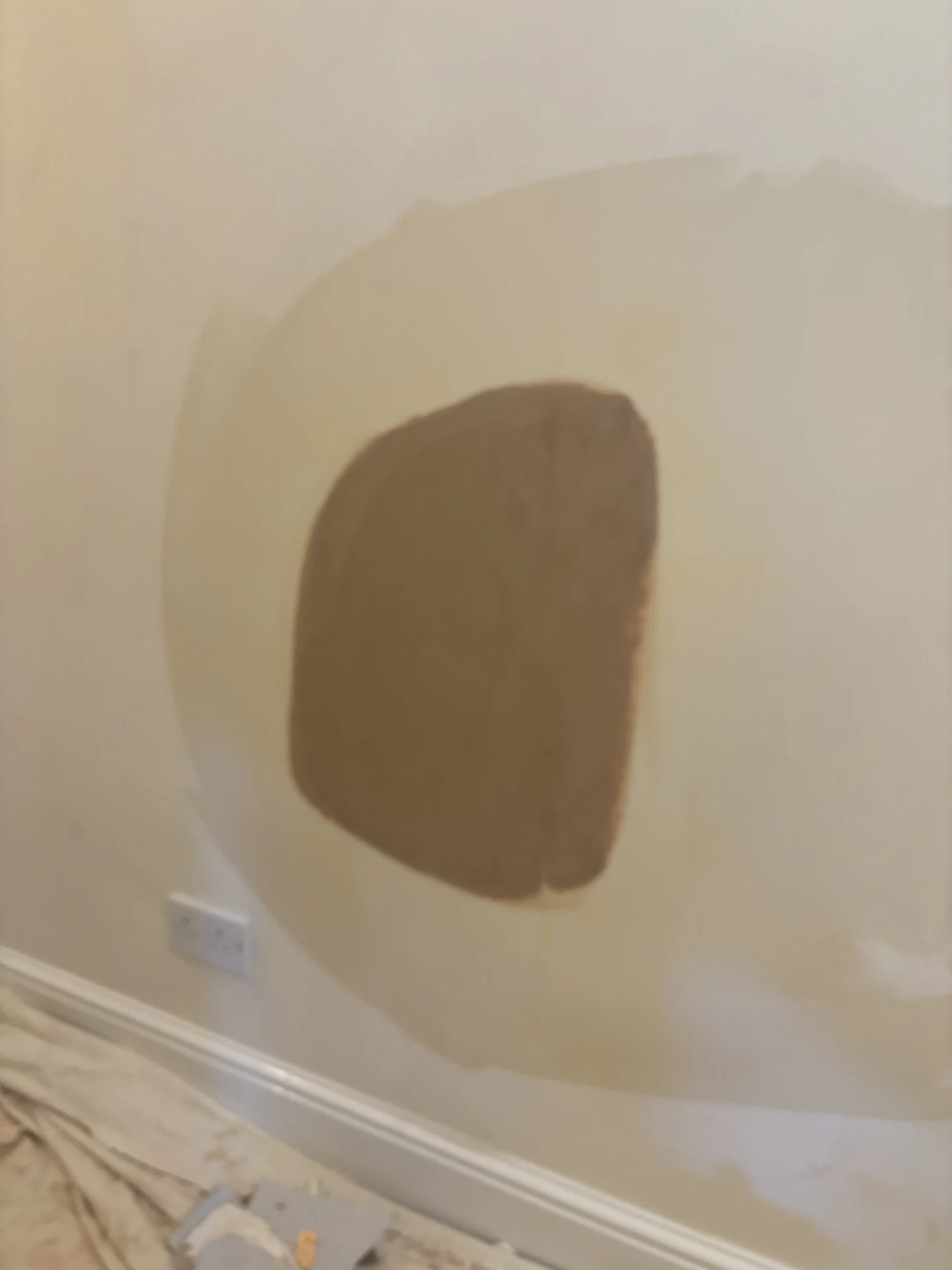
Signs a wall needs replastering
A hollow sound when tapped usually means the plaster has come away from the wall behind it, known as blown plaster. Wide or spreading cracks, crumbling patches, or plaster that's damp and soft to the touch are also signs that replastering, rather than a skim, is needed.
Signs a skim coat is enough
If a wall sounds solid when tapped and the plaster is firmly attached, but the surface is rough, marked, uneven or finished in an outdated texture, a skim coat is usually sufficient. This includes walls that are simply due a refresh rather than showing any structural problems.
What each job involves
A skim coat is a thin top layer applied over the existing surface and trowelled smooth. Replastering strips the old material back to brick, block or board, then builds up new coats before a finishing layer is applied, which naturally takes longer.
Cost and time differences
Because replastering involves stripping out and building up new coats, it generally takes longer and costs more than skimming the same area. The plastering cost guide covers the wider factors that affect price for either type of job.
Doing a simple check yourself
A few checks can be done before calling anyone out. Press gently on the wall or ceiling to feel for any give or softness, tap at a few points with a knuckle listening for a hollow sound, and look closely along any cracks to see whether they're fine surface lines or wider gaps that open up when pressed. None of this replaces a proper assessment, but it gives a starting point for describing the problem accurately.
What a skim involves versus a replaster
A skim coat is a relatively quick job: the surface is prepared, a thin finishing coat is trowelled on in one or two passes, and it's left to dry before decorating. A replaster takes longer, since the old plaster first has to be hacked off, the background made good, and then new plaster built up in a floating coat followed by a setting coat, with more mess and more drying time involved overall.
Mixed situations in the same room
It's common for one wall in a room to need replastering while the others only need a skim, particularly where damp or a specific repair has affected just one area. In these cases, the replastered wall and the skimmed walls still need to dry and be decorated together so the finish and colour match once painted, even though the underlying work was different.
Why getting this right matters
Skimming over a wall that actually needs replastering can mean the new finish fails again quickly, since a thin skim coat can't bridge a hollow or structurally unsound background. Replastering a wall that only needed a skim is extra work and disruption that wasn't necessary, so an accurate assessment at the start saves both time and hassle later.
Looking at the history of the wall
A wall's history can be a useful clue. If damp was treated in the room at some point, or there's been a plumbing leak nearby, the plaster in that area is more likely to need replacing rather than just a skim, even if it looks reasonable on the surface. Plaster that's simply decades old but has never had an obvious problem is more often a candidate for a straightforward skim refresh.
When a small test patch helps
On a wall where it's genuinely unclear whether a skim will be enough, removing a small test area of surface finish, such as old wallpaper or flaking paint, can reveal more about the condition underneath before committing to a full approach. This is a useful step on a wall that looks borderline, rather than guessing and having to adjust the plan once work is under way.
Ceilings versus walls when deciding
The same signs apply to ceilings as to walls, but a few checks are harder to do safely overhead, such as pressing on the surface. Visual signs like sagging, staining, or a line of cracking following the ceiling joists are usually the most reliable indicators on a ceiling, alongside how old the existing ceiling is and whether it's original lath-and-plaster or more modern plasterboard.
A cosmetic problem or a failing background?
Imagine two walls that look equally rough once wallpaper is removed. One has old adhesive marks and shallow imperfections but remains firmly attached to its background. The other has patches where the plaster has separated from the masonry. Their appearance alone may be similar, but their preparation is not: a finishing coat needs a reliable base.
Do not remove a large area of plaster just to find out which situation applies. Discuss the visible signs and let the condition be assessed. Describing where the problem occurs is helpful: around a window, near the floor or along a previous alteration may provide more context than saying the wall is uneven.
Cracks are a clue, not a diagnosis
A crack can result from several different causes, including movement at a board joint or an issue within the building. Its width, location and history matter. A new or changing crack should not simply be classified as a plastering problem without considering whether other professional advice is needed.
If damp is present, neither a skim nor a full replaster should be treated as the solution to the source of moisture. The cause needs to be identified and addressed first. Otherwise, a new surface can be affected by the same conditions that damaged the old one.
What to ask during the assessment
Ask which parts of the background can remain, which need repair and which need replacing. A room can require a mixture of treatments rather than a single choice everywhere. For example, a sound wall may be skimmed while an altered section needs boarding or deeper making good.
It is also worth asking how the chosen approach affects drying and decoration. A rebuilding coat and a thin finishing coat do not hold the same amount of moisture. The timetable should allow the actual plaster to dry, rather than being based only on a target painting date.
More about this topic
My wall sounds hollow when I tap it, what does that mean?
A hollow sound usually means the plaster has come away from the wall behind it, often called blown plaster, which generally needs replastering rather than a skim.
Can a skim coat fix a crack in my wall?
A skim coat can cover fine, stable hairline cracks, but wider or spreading cracks usually point to an underlying issue that needs replastering to resolve properly.
Is it cheaper to skim than to replaster?
Generally yes, since skimming doesn't involve stripping out old material and building up new coats. The plastering cost guide covers the wider factors affecting price.
Can I tell myself whether I need a skim or a replaster?
The signs in this guide, such as hollow sounds and wide cracking, are a useful starting point, but a visit or photos can confirm which your wall actually needs.