Newer housing still needs careful finishing
Ashford is a large, growing Kent town, with newer homes alongside established housing. Moving fittings, adapting a room or changing an opening can leave patches that do not disappear beneath paint alone.
Small holes and channels left by work need to be considered with the material around them. The aim is not merely to fill a space but to restore a suitable background and finish. A repair may involve plasterboard, plaster or both, depending on how that part of the wall was built.
Stephen covers Ashford homeowners within up to 25 miles of Headcorn. Distinguish completed alterations from planned work when describing your project.
Making good after changes to a room
Electricians and plumbers may need access through a wall or ceiling. Once their work is complete, the remaining opening or chase can require making good before decorating. Explain where it is, whether fittings remain and how far the disruption extends. Different openings do not necessarily call for identical repairs.
The surrounding surface affects how a patch can blend. A repaired area needs to meet the existing plane without a pronounced ridge; the wall’s previous texture or finish can still influence what is visible after painting. Where the wider surface is poor, discuss whether a larger area needs attention rather than assuming a small repair will solve everything.
The patch-repairs page uses Stephen’s genuine small wall-repair photograph to show the kind of work being discussed. The drying guide explains why a repaired area still needs consideration before paint is applied.
Plasterboarding and skimming in adapted spaces
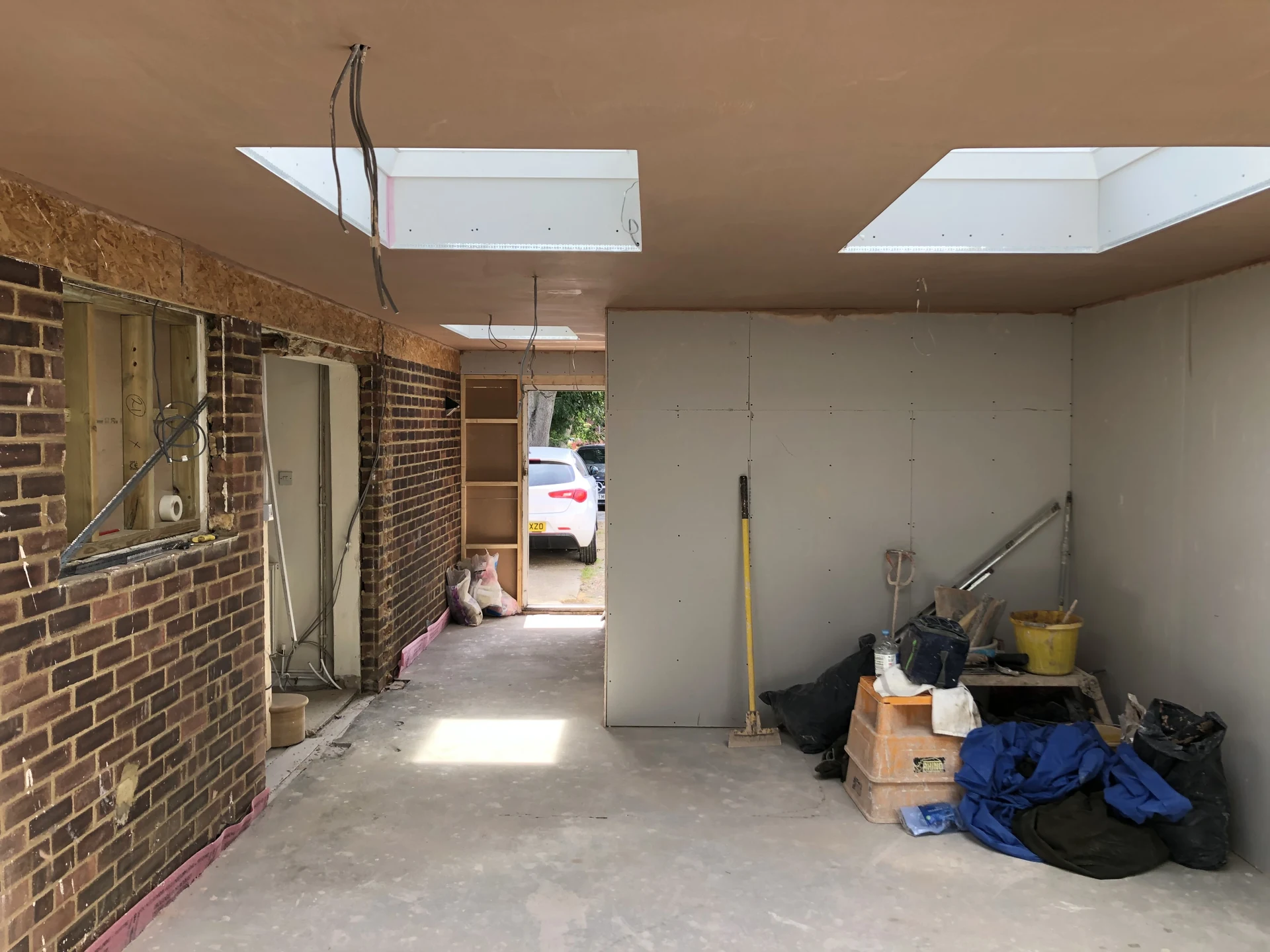
A changed layout may introduce stud walls, boxed-in areas or a ceiling lining. Plasterboarding establishes those surfaces, but it is distinct from the finishing stage. Skimming over suitable boards is one way to create a continuous decorative face; the proposed specification should make clear how the boards will be finished.
At the edge of new work, an existing wall may not line up perfectly with the new surface. Openings, corners and junctions are worth describing because they influence preparation and the appearance of the completed room. Do not judge the scope purely by the size of the largest flat area.
If you want to understand the alternatives before enquiring, the plastering-versus-dry-lining guide compares their purposes. It explains how the background and use of a room affect the choice of finish. The plasterboarding and skimming service pages provide the next point of reference.
Older terraces and inherited finishes
Older terraces in the town may have surfaces altered by several owners. Replastering can become relevant where substantial areas are loose or unsuitable, while a sound but tired face might need less extensive work. Previous age alone does not decide between these approaches: what matters is the condition found in the particular room.
Artex or other texture may have been added long after a house was built. Older textured coatings can contain asbestos and should not be scraped or sanded on the assumption that they are harmless. Use the artex advice page to prepare questions about assessment before discussing a smooth replacement finish.
Ceilings deserve separate attention when assessing an older room. A concern overhead may involve the lining or its support rather than only its visible coating. Tell Stephen about sagging, previous leaks or recurring cracks; cosmetic plastering should not take the place of investigating an underlying problem.
Coverage beyond the town centre
Bethersden and Tenterden are nearby places included in the wider coverage list. The areas page lists the towns and villages covered, with advice for homeowners in Headcorn, Maidstone and Ashford. Stephen covers up to 25 miles from Headcorn.
Supply your postcode and a brief outline of the project so location and scope can be discussed together. Photos of the whole wall or ceiling, as well as the damaged detail, can make an enquiry clearer. Include any retained coving, shelving or openings that affect the finish you want.
You can request a free quote without committing to a full-room project. Ask about the actual issue: a damaged patch, newly boarded room or older failing plaster. A defined request helps you compare what is included and understand which preparation belongs to the proposed work.
Questions homeowners ask
Can a newer home in the town need plaster repairs?
Yes. Alterations and access for services can leave holes or damaged areas even where the rest of a relatively modern surface remains sound.
Should I send only a close-up of a hole?
Include a wider view as well, showing its position and the adjoining surface. Photos help describe the issue but do not replace checking the background.
Could a new partition be boarded and then skimmed?
Yes. Boarding forms the partition’s lining and a suitable skim can provide its decorative finish; ask for both stages to be described in the proposal.
Do older terraces always need complete replastering?
No. The extent and soundness of the existing plaster determine whether a local repair, skim or more extensive replacement should be discussed.
Are Bethersden and Tenterden included in coverage?
Both are on Stephen’s coverage list, alongside this town, within up to 25 miles from Headcorn.