Start with the room you want to change
The village has a mainline railway station and a mixture of older houses and later development. That gives homeowners rather different starting points: perhaps a bedroom with tired decoration, or a living room altered to suit a new layout. Neither needs a whole house specification just because one surface looks untidy.
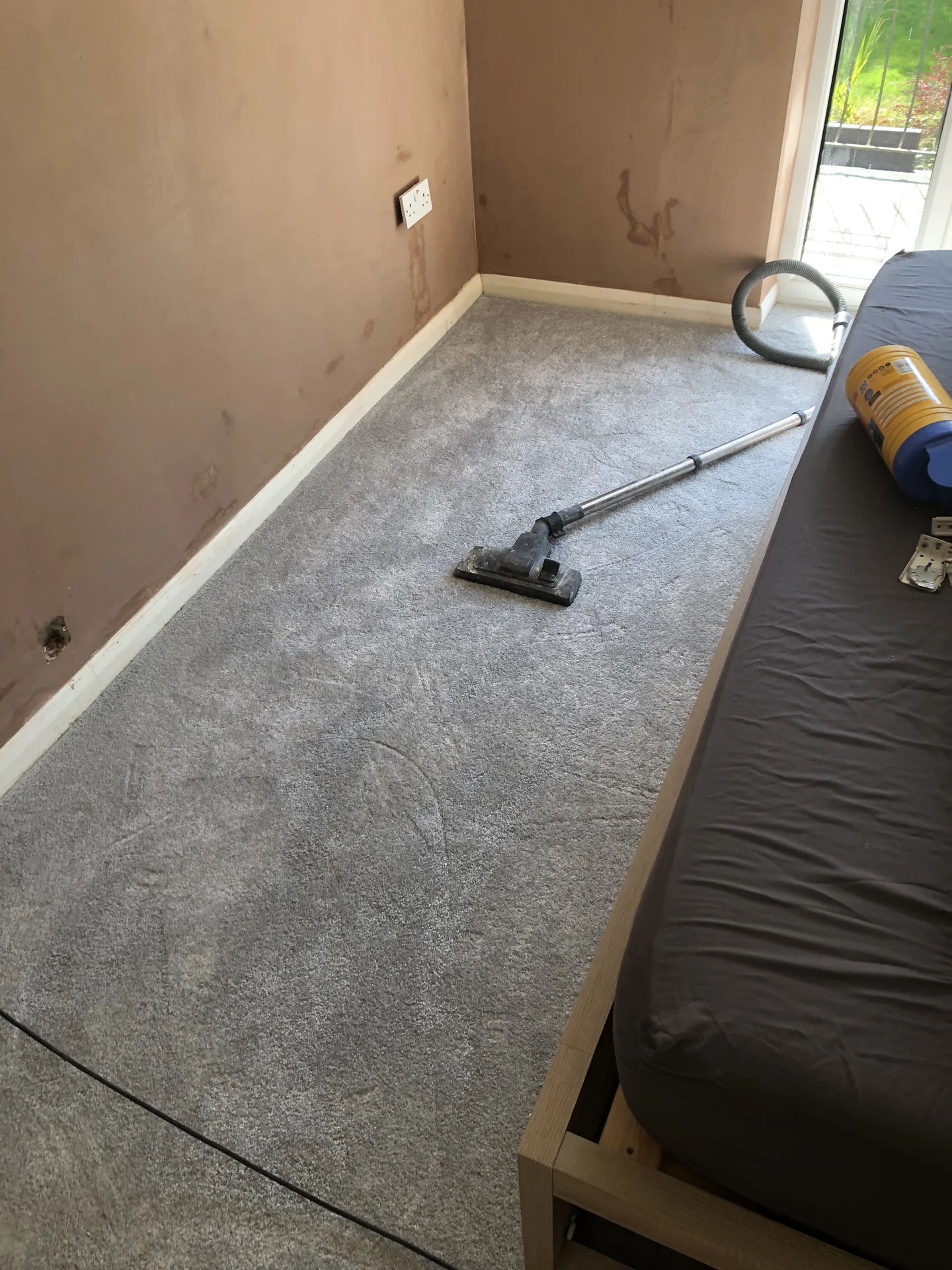
Think about what will remain in the room. Built-in cupboards, skirting and existing coving affect where plastering ends. If furniture is being removed, explain whether the wall behind it is exposed already or still hidden. A description of the complete room is more useful than a close photograph of one mark.
Headcorn lies close by, with the journey west or south-west along the A229 corridor about 3 miles and roughly 10 minutes, depending on traffic. Stephen works within 25 miles of his base and has 25 years' experience.
Walls after cupboards, cables and shelves
In a later estate home, taking out fitted storage or moving sockets can leave several small areas needing attention. Patch repairs fall within plastering. Where the rest of the wall remains firmly attached, discussing those individual areas may make more sense than assuming every wall needs a new finish.
A thin skim is a different proposition. It renews the face of a suitable background rather than replacing missing depth or securing loose material. Describe any soft edges, exposed boards or patches that sound hollow, without pulling material away to investigate. The choice between local repair and broader skimming depends on what is underneath.
A ceiling worth including in the plan
Once the walls are cleared, an old textured ceiling may become the most noticeable part of the room. Skimming over artex is one of Stephen's services, but suitability needs consideration before preparation starts. Older textured finishes can contain asbestos. Seek advice before scraping or sanding an unknown coating.
Ceiling plastering and coving can be discussed together if you want to change the junction above the walls. Say whether the existing coving stays, comes down or needs joining to another length. Do not remove original details from a listed building without checking the position with the council.
If there is a stain overhead, mention whether a leak has been dealt with. A smoother finish cannot stop water entering. Resolving that issue belongs ahead of the decorative work, even where the visible mark seems small.
Put the postcode in your enquiry
Call 07852 191811 or use the free quote form on this page. Enter your name, phone number and postcode, then add a message and optional photos. For a house near the station or elsewhere in the village, include any access details that could affect bringing materials to the room.
Stephen is fully qualified and insured. Opening hours are Monday to Saturday, 7:30am to 6:30pm. You can ask about one ceiling, several repaired walls or a room with both; there is no need to choose the service name before describing the work.
Questions homeowners ask
What helps explain work in a house near the station?
Include the postcode and say which floor needs attention. Note parking or access restrictions if relevant rather than relying on the station as the location.
Could removing estate-home wardrobes mean more than patching?
Yes, if the newly exposed background is weak or uneven across a wider area. Show the entire wall as well as the damaged edges.
Should I include retained coving in my Staplehurst enquiry?
Yes. Photograph the wall-to-ceiling junction so the intended finish can be discussed without overlooking the moulding.
Can I ask about just the spare bedroom?
Certainly. Identify its walls and ceiling separately, including any textured finish or areas concealed by furniture.