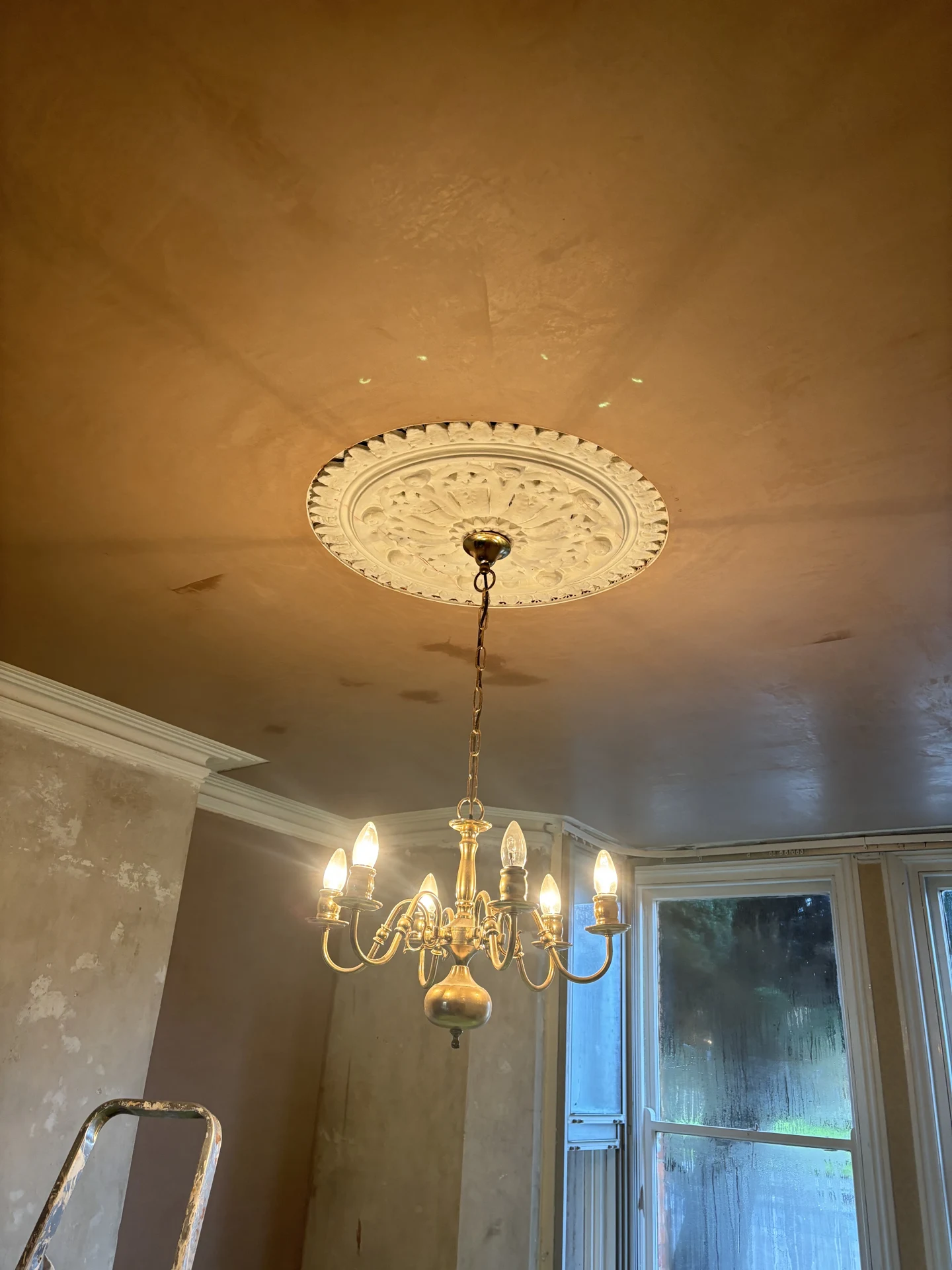
Skimming over is the usual route
Rather than stripping artex off, a skim coat is applied over the existing texture, building up enough thickness to hide the pattern and leave a smooth, flat finish once dry. This avoids the disturbance of removing the artex altogether and is the approach generally taken.
Asbestos and older artex
Older textured coatings may contain asbestos, and this isn't something that can be judged by eye. Where the age or history of a ceiling or wall is uncertain, a sample can be tested by a competent professional before any work takes place. This is general safety guidance rather than a service we provide, and it's a reasonable precaution to take in any older property with textured surfaces.
Why scraping and sanding are a bad idea
Scraping or sanding artex disturbs the material and creates dust, which is worth avoiding regardless of a ceiling's history, and is a particular concern where asbestos hasn't been ruled out. Any preparation must be assessed so that suspect material is not disturbed.
What the job involves
The surface is checked over, loose or damaged areas are made good, and a bonding agent is often used to help the new plaster key onto the artex. The skim coat is then applied and trowelled smooth, before being left to dry ahead of decorating.
Why this question comes up so often
Artex was fitted in huge numbers of UK homes from the 1970s through to the 1990s, and tastes have moved on since then towards flat, smooth ceilings and walls. Many homeowners buying an older property, or simply updating a room they've lived in for years, want to know whether the textured finish can be dealt with without a major, disruptive renovation.
The general process, step by step
The artex surface is first checked for loose or flaking areas, which are made good before anything else happens. A bonding agent is then usually applied so the new plaster can grip the existing texture properly. A skim coat is applied over the top, built up to a thickness that fully covers the pattern underneath, then trowelled smooth and left to dry before decorating.
Testing for asbestos before any work
Because older textured coatings may contain asbestos, and this can't be identified just by looking at it, a sample can be sent for testing by a competent professional if there's any doubt about a ceiling or wall's age or history. This is standard advice for any older textured surface, not something specific to one property, and it's worth doing before any work is carried out, including skimming.
What happens if asbestos is confirmed
If a sample comes back positive, specialist advice should be sought on how to proceed safely, since this falls outside general plastering work. In many cases, encapsulating the surface rather than disturbing it is the recommended approach, which is broadly consistent with skimming over rather than removing artex in the first place, but the specific guidance should come from whoever carries out the testing.
How thick the new skim needs to be
The thickness of skim needed to cover artex depends on how pronounced the existing texture is. A light stipple pattern can often be covered with a standard skim coat, while a heavier stomp or swirl pattern, raised more from the surface, usually needs a slightly thicker build-up applied in more than one pass so the texture doesn't show through once painted.
Walls as well as ceilings
Artex wasn't just used on ceilings; some homes have textured walls too, particularly from the same era. The same general approach applies: the surface is checked and prepared, a bonding agent is used if needed, and a skim coat is built up over the top. Walls are generally easier to work on than ceilings simply because of the more comfortable working position.
Getting an accurate view before work starts
Because artex ceilings vary so much in pattern, thickness and condition, an accurate view of what's involved usually comes from seeing the ceiling directly or from clear photos, rather than a general description alone. This helps confirm how much preparation and how many skim passes a particular ceiling is likely to need before the job is booked in.
Start with the condition, not the pattern
The key question is not simply whether the swirls can disappear. A new plaster finish needs a reliable background. Texture applied over loose plaster, moisture damage or movement may need a different plan from an intact coating. The age and composition of the finish should also be considered before preparation is proposed.
Take pictures from the floor showing the whole surface, the room edges and any visible damage. You can explain the pattern without rubbing, scratching or removing it. A photograph supports the first conversation but cannot confirm whether asbestos is present or whether the background is securely attached.
Why the date is not enough
A room may have been painted recently while retaining a much older textured coating. Conversely, a historic house may contain a later finish. Neither the age of the building nor the most recent decorating date reliably identifies the material. Where there is doubt, seek advice about professional sampling before work that could disturb it.
Do not use the absence of an obvious warning label as reassurance. Textured coatings do not carry visible evidence of their composition. The practical next step is to establish what material is there and agree safe preparation, rather than guessing from the shape of the pattern.
What covering the surface does and does not mean
Covering a coating can change the appearance without removing the underlying material. It should not be described as asbestos removal or as proof that the original material is harmless. If asbestos is identified, appropriate specialist advice is needed for any work that might disturb it, including future alterations.
Tell any future contractor about a known underlying textured coating before they drill, cut or alter the ceiling. Keeping relevant survey information with the property records can help later work be planned appropriately. A smooth visible surface does not reveal every layer beneath it.
Agree the edges and decoration
The finish around a ceiling rose, coving or access hatch deserves attention alongside the main surface. Mention which details you would like to keep when asking for a quote. Once plastering is complete, decoration still needs to wait for drying and a suitable first paint coat. The separate drying guide explains how room conditions affect that stage.
Artex removal or skim over?
Removing artex means taking the textured coating off the surface, which disturbs the material and, where asbestos is present, needs to be handled by licensed specialists under the relevant rules. Skimming over leaves the coating in place and covers it with a new smooth layer, so the texture is sealed behind fresh plaster rather than broken up.
For most sound textured ceilings, skimming over is the simpler route. Removal tends to be considered only where the surface is failing or other work means it has to come off. Stephen offers skimming over artex, explained on the skimming over artex page; he does not offer artex removal.
More about this topic
Do you need to remove artex before skimming?
No, in most cases a sound artex surface can be skimmed over directly, without removing the artex first.
How do I know if my artex ceiling contains asbestos?
It isn't possible to tell by looking at it. If the ceiling's age or history is uncertain, a sample can be tested by a competent professional before any work is carried out.
Why shouldn't I scrape or sand artex myself?
Scraping or sanding disturbs the material and creates dust, which is best avoided, particularly where asbestos hasn't been ruled out. Skimming over a sound surface avoids this disturbance.
Will skimming over artex hide the pattern completely?
A properly applied skim coat, built up to sufficient thickness, should cover the texture and leave a flat, even finish once dry.
Can walls as well as ceilings be skimmed over artex?
Yes, the same approach applies to artexed walls as to ceilings, skimming directly over a sound surface.