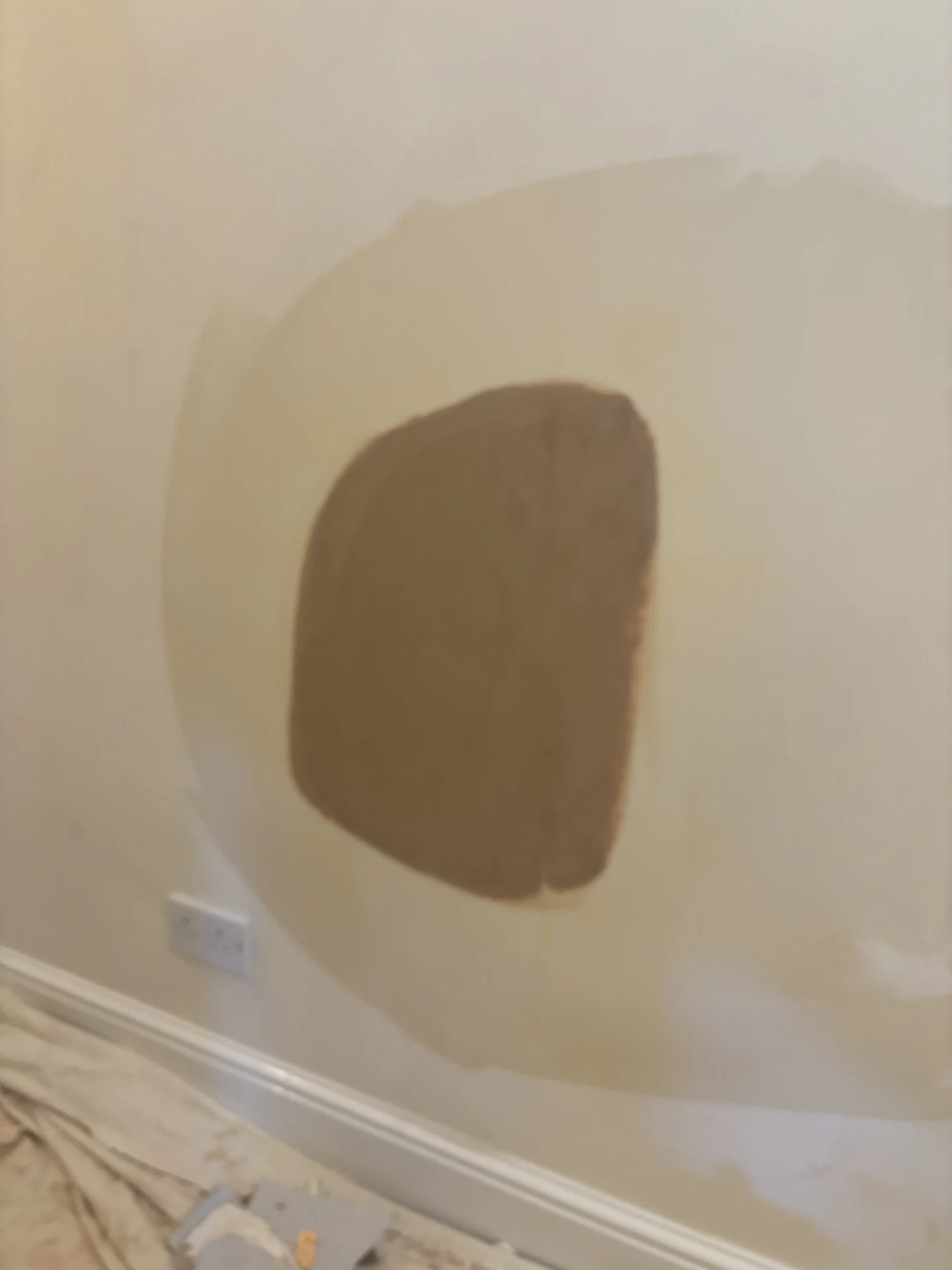
Decide what actually needs repairing
Look across the wall in daylight rather than judging only the centre of the hole. Small dents and redundant screw holes often need little more than suitable filler, provided the surrounding plaster is firm and dry. A deeper opening, crumbling edge or soft patch calls for a different approach.
Check for staining, salts and repeated cracking before doing cosmetic work. A leak or moisture problem needs attention from the appropriate trade first. If the damage follows building movement, have that investigated rather than packing material into the visible gap. Repairs last better when the reason for failure has been addressed.
Filler or patch plastering?
Filler suits limited surface defects within the depth stated on its packaging. Remove redundant fixings where safe, brush out loose dust and follow the preparation instructions. Build up deeper fills in suitable layers instead of leaving a thick lump that can shrink or remain soft underneath.
Patch plastering restores missing plaster rather than simply smoothing its face. It becomes more appropriate where damage exposes masonry, extends through several layers or leaves a broad depression. Broken plasterboard needs proper support or replacement of the damaged section; stuffing filler into an unsupported opening is not a reliable substitute.
Cut back only to firm material
Protect nearby furnishings and wear appropriate eye protection and dust protection. Before cutting, consider concealed cables and pipes. Do not chase a hole out blindly, especially near sockets, switches or plumbing fittings. Electrical alterations belong with an electrician.
Loose plaster needs careful cutting back until the remaining edges hold firmly. Avoid levering against sound material and spreading the damage. Brush away debris so the repair bonds to the background, not a dusty layer. Stop if removal keeps spreading, the wall feels unstable or you cannot identify what lies behind it.
Understand the layers
A deep repair may require a suitable backing or bonding coat to restore the missing thickness, followed by a thinner finish coat. The background determines preparation and suction control, so one method will not suit every wall. Follow the materials’ guidance on compatibility, coat thickness and application.
The backing should leave room for the finish rather than stand proud of the surrounding plaster. Trying to achieve the whole depth with finishing plaster can cause problems. Older lime plaster also needs a compatible repair approach, not an automatic replacement with harder materials.
Blend the edge, then prepare for decoration
Feathering means easing the repair into the neighbouring surface without leaving a raised rim. Keep the repair level and avoid spreading unnecessary thickness over sound paintwork. Check from the side as well as straight on: strong light across a wall makes ridges easier to spot.
Once the repair has dried as required, remove minor nibs carefully and clear away sanding dust. Excessive sanding can hollow out the patch or damage the surrounding finish. Fresh plaster and filler can absorb paint differently from the existing wall, so use the appropriate preparation before decorating.
Know where DIY stops
A patient homeowner can usually tackle a few shallow dents on a sound wall. Large areas, repeated failures, deep missing sections and awkward corners are better assessed by a plasterer. Stephen O’Brien can discuss plaster repairs from photographs, including pictures sent through WhatsApp.
More about this topic
Should I pull out a wall plug before filling?
Remove it carefully if it is redundant and safe to do so. Avoid tearing away surrounding plaster; check for nearby services before enlarging the opening.
Can I fill over peeling paint?
Remove poorly attached paint around the defect first. A repair resting on a loose coating can detach with it.
Why does my filled dent still show in side light?
The fill may be slightly raised or sunken, or its texture may differ. Check the profile before adding more paint.
Do I need to strip wallpaper around a repair?
Expose enough plaster to assess and prepare the affected area. Do not use wallpaper as the edge or backing of a repair.