Why use two passes
A skim coat is thin, so the surface beneath needs to be reasonably sound and prepared. The first pass spreads the material across the wall and fills small variations. The second pass follows while the first is at a suitable stage, bringing the surface together and helping remove trowel lines.
The two passes work as part of one finishing process. They are not normally two separate thick layers left to dry completely between applications. Timing varies with the room, background and working conditions, so a plasterer adjusts the sequence rather than relying on a fixed clock.
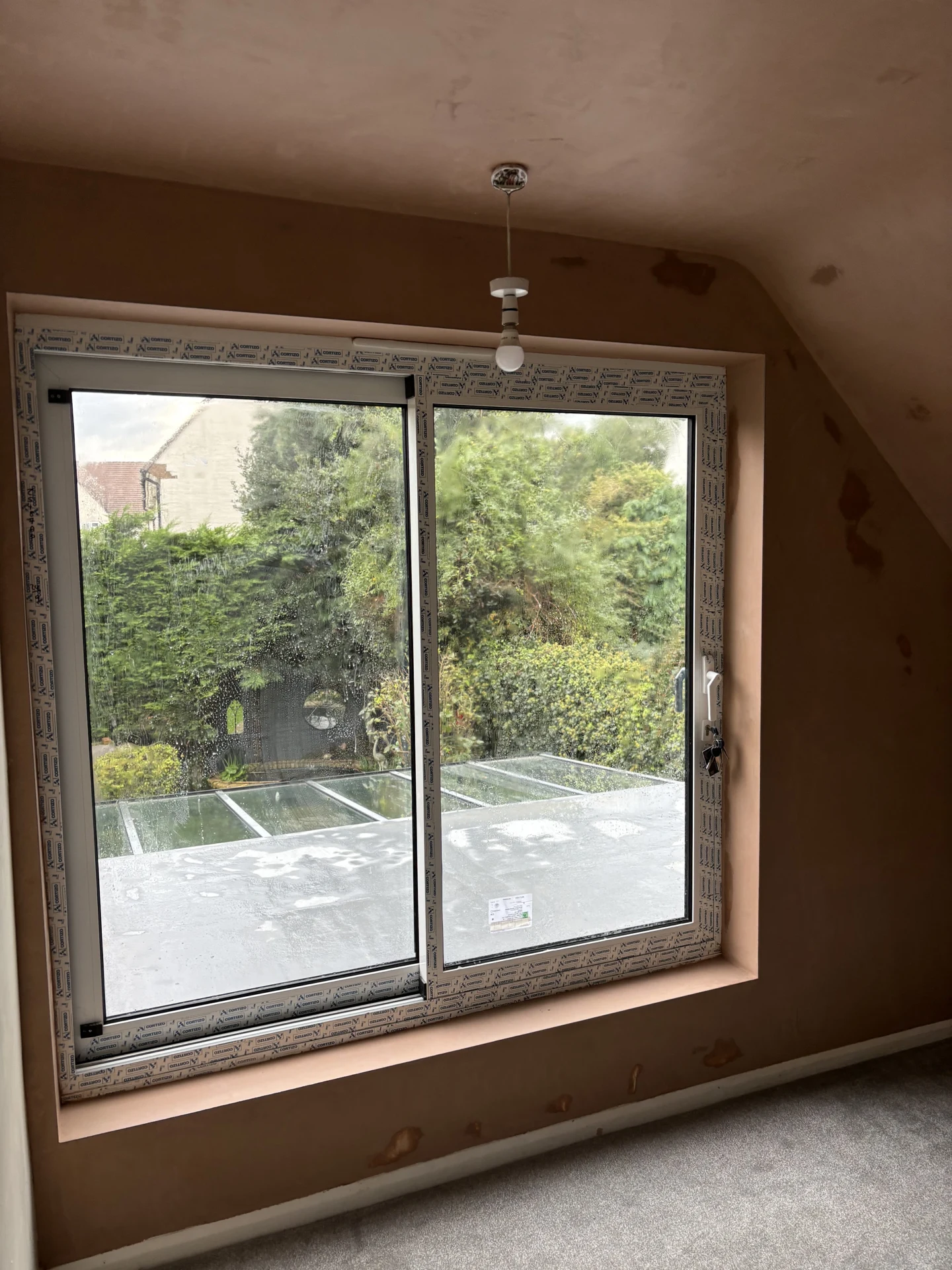
A freshly skimmed wall can show small variations under grazing light, such as light from a window running along its face. This does not necessarily mean the work is defective; the expected standard should be considered in the room’s normal use and lighting. Discuss any particular lighting or fitted furniture before work begins.
The wall needs to be ready
Before skimming, loose paint, wallpaper residue, dust and weak material need attention. A very absorbent surface may require suitable preparation to manage suction; a smooth painted background may need a compatible bonding treatment. The choice depends on what is actually on the wall. Preparation helps the fresh plaster adhere and remain workable.
Skimming cannot reliably stabilise plaster that has blown away from the wall or cover an active damp problem. Hollow areas, cracks and significant hollows should be assessed first. A small movement crack may need suitable repair, while wider or recurring cracks can indicate movement that should be investigated.
Protect the floor and keep the working area clear, as wet plaster can mark adjoining finishes. If sockets or switches need attention, arrange isolation and any electrical work with a qualified electrician. Coordinating trades reduces the risk of damaging the new surface after it has been finished.
How the coats are worked
The plasterer applies a controlled first coat over the prepared area, keeping coverage consistent and working around sockets, edges and corners. The second pass is applied as the material begins to firm. This allows the plaster to be flattened and refined without adding unnecessary thickness. Several careful trowelling stages then close the surface and reduce ridges.
Light and sight lines matter. A wall may look smooth from directly in front but show waves beside a window or under strong lighting. Experienced finishing involves checking from different angles and keeping the trowel clean. The aim is a uniform surface appropriate for ordinary decoration, not a guarantee that every wall will be optically perfect in every lighting condition.
Skimming over different backgrounds
New plasterboard is often skimmed after joints and fixings have been treated appropriately. Existing plaster can be skimmed if firmly attached and prepared. Old painted walls may need a different approach from bare plaster, and glossy or contaminated surfaces can make adhesion difficult. Tell the plasterer about previous coatings and any repairs.
The condition of the background can affect the finished appearance. A skim will follow major changes in the wall unless levelling work is done first. Where a surface is substantially uneven, an undercoat or other preparation may be needed before the finish. At edges and around fittings, beads and neat junctions help provide crisp lines.
Drying and painting the new skim
Fresh skim changes colour as it dries, usually becoming more even and pale. Drying time depends on thickness, airflow, room temperature and the substrate. Keep the room reasonably ventilated and avoid forcing the process with intense heaters. Do not paint while darker damp patches remain, as trapped moisture can spoil the finish or decoration.
Once fully dry, new plaster usually needs a suitable first coat before normal painting. The paint should be applied as directed for fresh plaster, rather than using a heavy, impermeable coat straight away. Ask the plasterer when the surface is ready; there is no dependable calendar date that suits every room and season.
When to call a plasterer
Call a plasterer if the wall is loose, heavily cracked, badly uneven or has stains that may indicate moisture. The right answer may be repair or preparation before skimming, rather than two finish coats directly over the problem. If only a small patch is damaged, ask whether it can be blended into the surrounding surface or whether a broader area is needed for a consistent result.
Stephen O’Brien has 25 years’ experience, is Level 2 qualified in solid plastering and British Gypsum certified. Photos showing the whole wall and close-ups of damage can help explain what is needed. For a wider room project, mention ceilings, adjoining walls and any planned electrical or decorating work so the sequence can be considered.
More about this topic
Are two coats of skim two separate days of work?
Usually the two passes are part of the same finishing process, with the second applied when the first has firmed suitably. Conditions affect the timing.
Can two coats of skim fix an uneven wall?
They can refine small variations, but significant unevenness may need levelling or an undercoat first. Skim is a thin finish, not a deep levelling layer.
When can I paint after skimming?
Wait until the plaster is fully dry throughout. The time varies with the room and conditions; use a suitable first coat for fresh plaster.
Will skimming cover cracks?
It may cover minor surface marks after preparation, but recurring or wider cracks need their cause assessed and repaired properly.