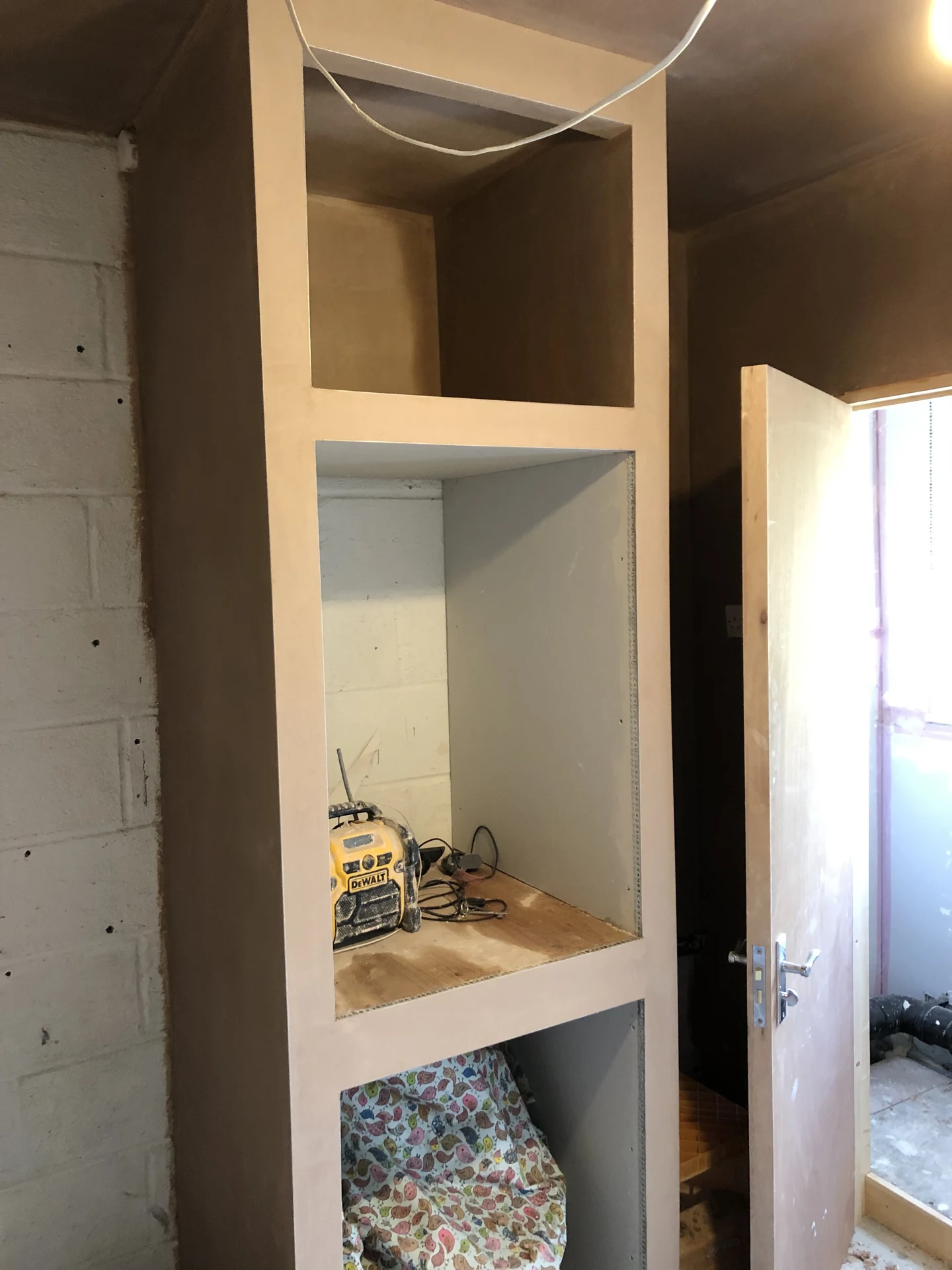
Start with the tile and paint layout
Mark which walls will be tiled, which will be painted and where units or splashbacks will end. These boundaries affect the preparation. A painted wall needs a consistent finished face, while a tiled area needs a sound, suitably flat background compatible with the tile adhesive and proposed tile weight.
Fresh skimming is not automatically the right preparation beneath every tile installation. Ask the tiler to confirm the required background before plastering is agreed. Shower areas may need a suitable tile backing and waterproofing arrangement; ordinary plaster alone is not waterproofing.
Plan the order with the other trades
Pipe and cable alterations normally need completing before the walls are closed and finished. Set out the positions of taps, sockets, appliances and extractor fans together, allowing for the final wall thickness. Otherwise a newly plastered area may need cutting open again for a missed connection.
Where possible, substantial wall repairs and ceiling work are easier before new cabinets, sanitary fittings and worktops restrict access. Allow for drying before decorating or fitting moisture-sensitive joinery. Agree responsibilities before booking plastering.
Making good around a fitted kitchen or bathroom
Sometimes the room is already fitted and the remaining job is a damaged strip above the worktop, exposed wall beside a cabinet or holes left by old fittings. Local repairs can rebuild these areas where the surrounding plaster is firm enough to keep.
Access matters as much as the size of the patch. Tight gaps around fittings can restrict the work. Send photographs showing the fittings as well as the damage, and discuss whether anything needs temporarily removing by the relevant installer.
Pipes, sockets and fan openings
Edges around service openings need leaving neat without burying parts that require access. Pipe penetrations and changes between different backgrounds also need careful detailing. Plaster should not be relied upon to support pipework, hold electrical fittings in place or seal a wet joint.
Electrical work belongs with the electrician, including safe isolation where socket fronts need moving. Fan ducts and access requirements should be established before finishing. If a leak is discovered during preparation, have it repaired first rather than closing the affected section and hoping it will dry.
Steam, condensation and bathroom ceilings
A smooth ceiling does not solve condensation. Extraction, heating and ventilation need addressing so moisture is not repeatedly settling on the new decoration. Persistent mould or staining should prompt attention to the cause before the surface is refinished.
A sound bathroom ceiling may only need preparation and skimming; soft, sagging or water-damaged material needs a different repair. Boards, where required, should suit the location. A moisture-resistant board is not permission to leave a leak unresolved or expose an unsuitable ceiling to direct water.
Letting the finish dry before use and decoration
New plaster releases moisture as it dries, with darker patches becoming paler. Thickness, the surface beneath it and room conditions affect the process. Gentle background warmth and ventilation are preferable to trying to force the surface dry while moisture remains below.
Painting and tiling should follow the requirements of the finish materials as well as the condition of the plaster. Tell Stephen about your fitting plans when requesting a free quote on 07852 191811, so the plastering scope can be discussed alongside the rest of the room.
Questions homeowners ask
Should the plaster finish continue behind my splashback?
Confirm the splashback material and fixing method with its installer. The background needed for a bonded panel may differ from the preparation needed for tiles or a painted strip.
Can a kitchen wall be patched after old tiles are removed?
Yes, if the remaining background is sound. Tile removal can pull away more plaster than expected, so the repair extent is clearer once the old covering is off.
Who decides where the plaster meets the shower tiling?
Agree the boundary with the bathroom fitter and tiler before work starts. Include any waterproofing requirements and the position of trims so the junction is intentional.
Should I send the kitchen layout with my enquiry?
A layout helps explain unit heights, exposed wall areas and awkward access. Add current photographs, since a plan cannot show the condition of the existing plaster.