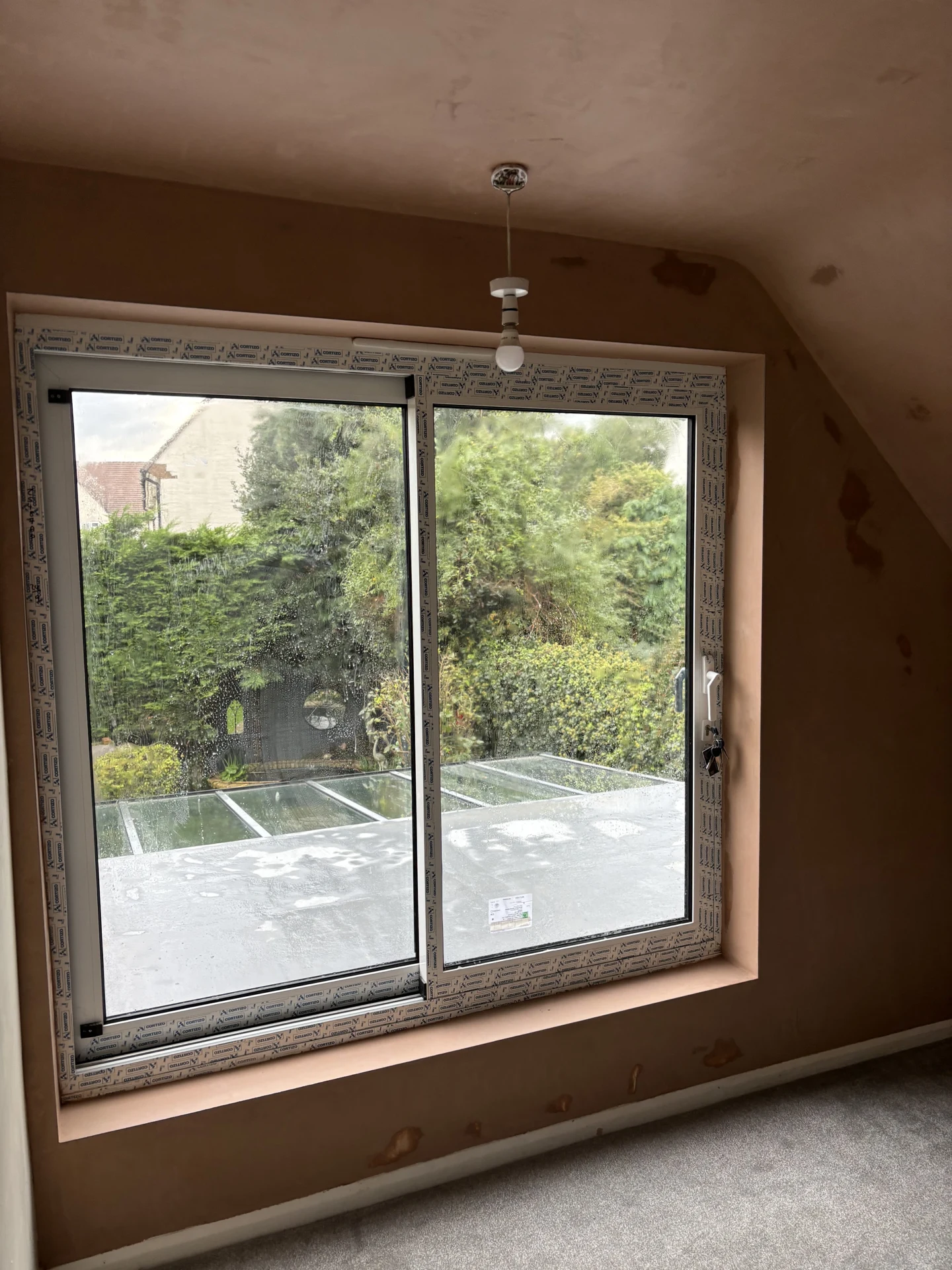
Recognising the damaged area
Plaster may bulge away from the wall, sound hollow, or become powdery and crumble when disturbed. White salt deposits can appear across the face or around the edges of a stain. Paint may blister or peel even where the surrounding decoration still looks reasonable.
These signs do not identify the cause by themselves. Staining might follow a plumbing leak, moisture entering from outside, or condensation. Record where the marks appear and whether they change after rain or use of a nearby bathroom, then pass that information to the appropriate specialist.
Find the moisture source before replastering
A plumber, relevant building trade or damp specialist should establish and correct the source first. Depending on the problem, that might involve a leaking pipe, external defect, failed damp course or inadequate ventilation. Stephen’s plastering work follows those repairs; it does not replace them.
New plaster cannot make a persistently wet background suitable for decorating. If the cause remains, moisture can damage the replacement finish too. Agree the order of work before stripping and rebuilding the wall, particularly if other repairs still require access to pipework or masonry.
Why salts can remain after a repair
Water travelling through masonry can carry soluble salts into the plaster. When that water evaporates, the salts are left behind. Some salts can attract moisture from the air, so the old plaster may remain troublesome even after the original leak has stopped.
That is why simply sanding away white deposits or painting over the stain may not resolve matters. The affected plaster itself can need removal. The extent and choice of replacement material should reflect the background and any specification provided by the specialist dealing with the moisture problem.
Removing plaster back to a reliable base
Hacking off takes the failed material back to a sound background rather than leaving soft edges buried under new work. The visible stain is not always the boundary of the damage. Surrounding plaster needs checking, and the repair may extend beyond the obvious mark.
Furniture and loose belongings should be moved away before this dusty stage. Removing skirting or other fittings may be necessary to reach damaged plaster at the base of a wall. Discuss what needs moving and who will refit it so the repair is accessible from the start.
Give the background room to dry
With the cause corrected and unsuitable plaster removed, the wall may need a drying period before replastering. There is no useful fixed timetable: masonry thickness, retained moisture, heating and ventilation all influence progress. A surface that looks better is not necessarily ready underneath.
Rebuilding and decorating the repair
The new plaster build-up must suit the wall, including its age and moisture behaviour. A traditional solid wall may need a different approach from a modern internal partition. Stephen can discuss the plastering scope once the background and any specialist requirements are clear.
Fresh plaster generally changes from darker areas to a lighter colour as it dries. Wait for it to be properly dry before decorating, and use a suitable first coat and finish for the chosen plaster. For a free quote, call 07852 191811 with details of the damage and the repairs already completed.
Questions homeowners ask
Do white crystals always mean rising damp?
No. Salts can accompany different moisture sources and are not a diagnosis. Have the cause investigated rather than choosing treatment from the appearance of the deposits alone.
Should I keep repainting a stain while waiting for repairs?
Repeated coats can hide changes that would help explain the problem. Photograph the area and address the source first; decoration is the final stage, not a substitute for repairs.
Will all the plaster in the room need stripping?
Not necessarily. The decision depends on where plaster is unsound or contaminated, rather than the room boundary. Sound unaffected areas may be retained.
Can I put wallpaper over the repaired area?
Only once the replacement plaster is dry and appropriately prepared. Check that the wallpaper adhesive and wall covering suit the background, especially where the wall needs a breathable finish.