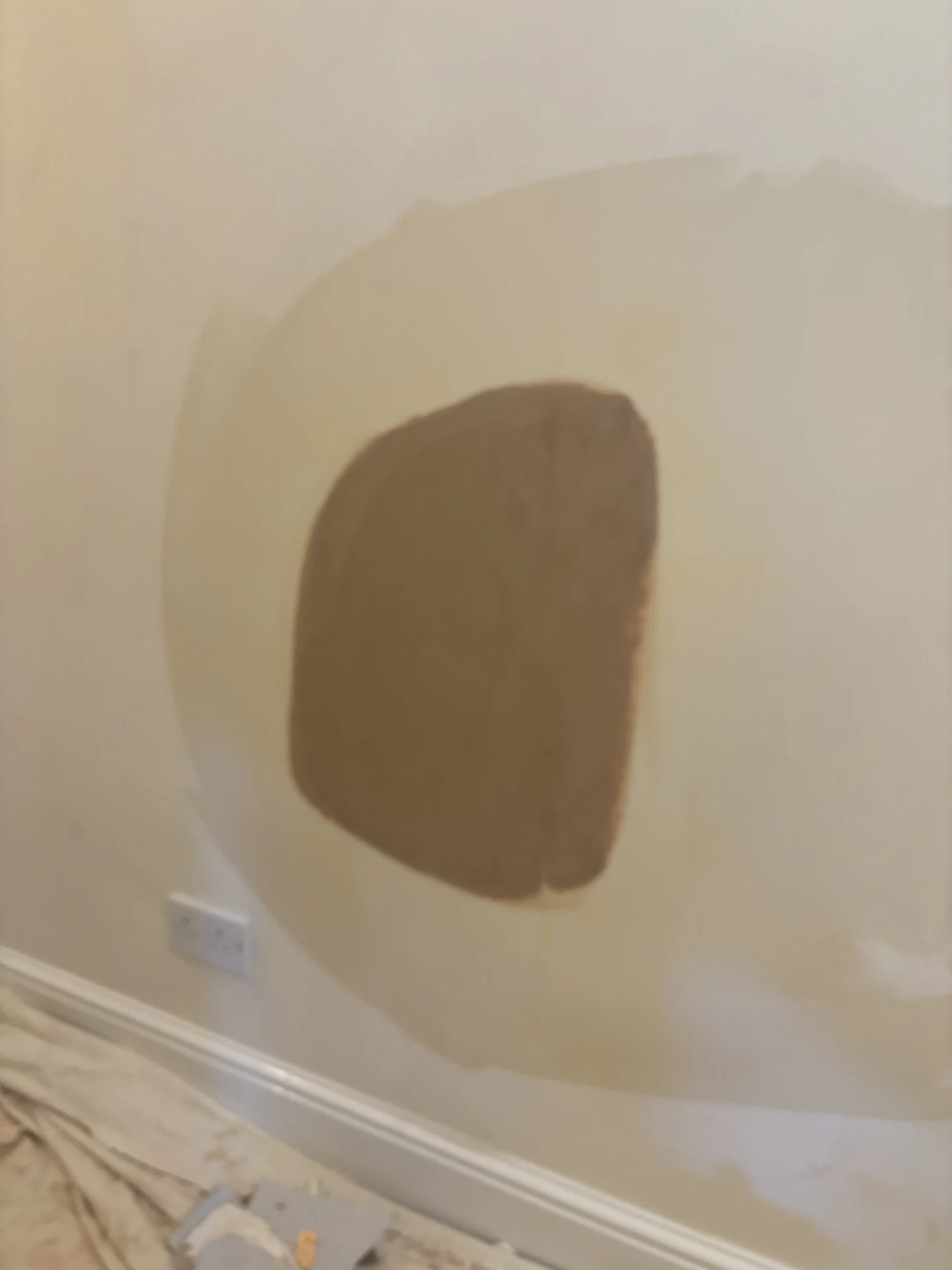
Describe what is actually coming away
You might notice curled edges of paint, small flakes beneath wallpaper or a patch where the exposed face looks chalky and crumbles. These observations are not interchangeable. Note whether only the coloured finish is lifting or whether material from the wall is coming with it. You do not need to remove more just to describe the problem or provide photographs.
Look at where the peeling starts and how far it extends. It may follow an old repair, sit around a stain or affect several separate parts of the room. Photograph the whole wall as well as a close view of the edge. Include what you know about recent decorating or leaks, since the visible flakes alone do not establish why the finish is failing.
Paint failure and plaster failure need different decisions
A wall can have peeling decoration while the plaster beneath remains firm. That does not automatically justify stripping and replastering the whole face. Conversely, repainting is not enough if the plaster itself is soft, loose or crumbling. The first decision is which layer can remain, not which new finish will cover the appearance most quickly.
Where the underlying plaster is sound, preparation for decoration may be the relevant next step rather than a plaster repair. Where the surface or deeper material is unsuitable, the extent of removal and rebuilding needs assessment. Explain what you can see without assuming that every peeling edge means blown plaster or that a fresh coat of paint will resolve it.
Check for moisture before covering the surface
Peeling paint can accompany moisture damage, particularly where there are stains, white deposits or soft areas. Record whether marks change after rain or use of a nearby bathroom, and whether a plumbing or external repair has already been completed. These details can help the appropriate trade investigate, but they do not diagnose the moisture source by themselves.
A plumber, relevant building trade or damp specialist should establish and correct an underlying water problem where needed. Stephen’s plastering follows that work; it does not replace it. The damp and salt damaged walls page covers moisture-affected backgrounds in greater detail. This page focuses on identifying the failing layer and deciding whether the wall needs decoration preparation, local plaster repair or a wider renewal.
Why a new skim needs a suitable base
A skim adds a thin finish over the retained background. It should not be expected to make peeling layers firmly attached, hold loose plaster against the wall or correct a continuing moisture problem. The preparation matters as much as the new face. A wall that looks covered immediately after work can still contain the original weakness underneath.
If only limited areas are damaged, local repairs may be appropriate once unsuitable material has been addressed. If the surface is affected widely, a broader scope may need discussion. The condition of the retained plaster decides what is reasonable. Do not assume the answer is either a tiny cosmetic patch or removal of every wall finish before the surrounding material has been assessed.
What to tell Stephen about previous work
Mention when the wall was last decorated, whether fresh plaster was involved and whether the peeling returned after an earlier repair. New plaster needs to be properly dry and appropriately prepared before painting. However, a recent decorating date alone does not prove the cause of failure, and there is no useful diagnosis to be made from the word peeling without checking the background.
Include any known leaks, repairs to the outside of the property and other building work that may still require access. If wiring or pipework is unfinished, closing the wall too early can mean reopening it later. The quote should reflect the condition and sequence of the actual job rather than treating every peeling surface as the same straightforward skim.
Repair, drying and the next decoration
Where plaster replacement is needed, the repair needs stable edges and a suitable background. The finished area may be larger than the visible flake if neighbouring material is also unsound. Agree whether the proposed work is a local patch or a wider finish. Existing texture and unevenness outside a patch remain relevant when considering how the wall will look after decoration.
Allow replacement plaster to dry before painting or papering, following advice for the material and intended finish. Avoid forcing the process with intense heat or assuming a fixed timetable suits every depth of repair. Contact Stephen for a free quote with your postcode, wider and close-up photographs, and the history of the problem. The plastering, skimming and patch repair pages describe the related services once the diagnosis supports that work.
Questions homeowners ask
Does peeling paint prove that the plaster needs replacing?
No. The decoration may be failing while the plaster remains firm. Identify which layer is coming away before choosing between decorating preparation and plaster repair.
What should I photograph if the peeling edge is small?
Take a close view of the edge and a wider view showing its position on the wall. Include nearby staining or old repairs without disturbing more material to improve the photograph.
Are white deposits beneath peeling paint important?
Yes. They can accompany moisture and salt damage, but do not identify a particular source on their own. Have the cause considered before covering the area.
Can peeling after recent decorating be diagnosed from its age?
No. The timing is useful history but does not establish whether drying, preparation, moisture or the background is involved. The affected layers still need assessment.
Can I wallpaper over peeling areas instead of repairing them?
A wall covering does not make unstable layers suitable to retain. Establish what is failing and prepare or repair the background before deciding on the final decoration.