Separate indoor and outdoor ambitions
A homeowner might want a smoother sitting room and attention to a cracked exterior at the same time. These involve different surface problems. Indoor plastering concerns walls and ceilings; rendering concerns the external finish and the background supporting it.
For an older terrace or town-centre home, start with the features you intend to preserve. For a later house, begin with the room changes and damaged areas. Neither age nor appearance alone specifies the work. Keep photographs of each part of the enquiry clearly separated so the discussion follows the actual surfaces.
Follow a living-room change through
Removing shelving can expose fixings and strips of unfinished plaster, while moving lighting may affect the ceiling. Ask about patch repairs where damage is local. If a broad wall is sound but unsuitable for your intended decoration, skimming may be the more relevant service to discuss.
At the edges, consider door openings, window reveals and the line above the skirting. A room is not simply a rectangular measurement. Explain whether existing trim stays and whether new fittings will cover part of the wall later. This helps define where the plaster finish is actually needed.
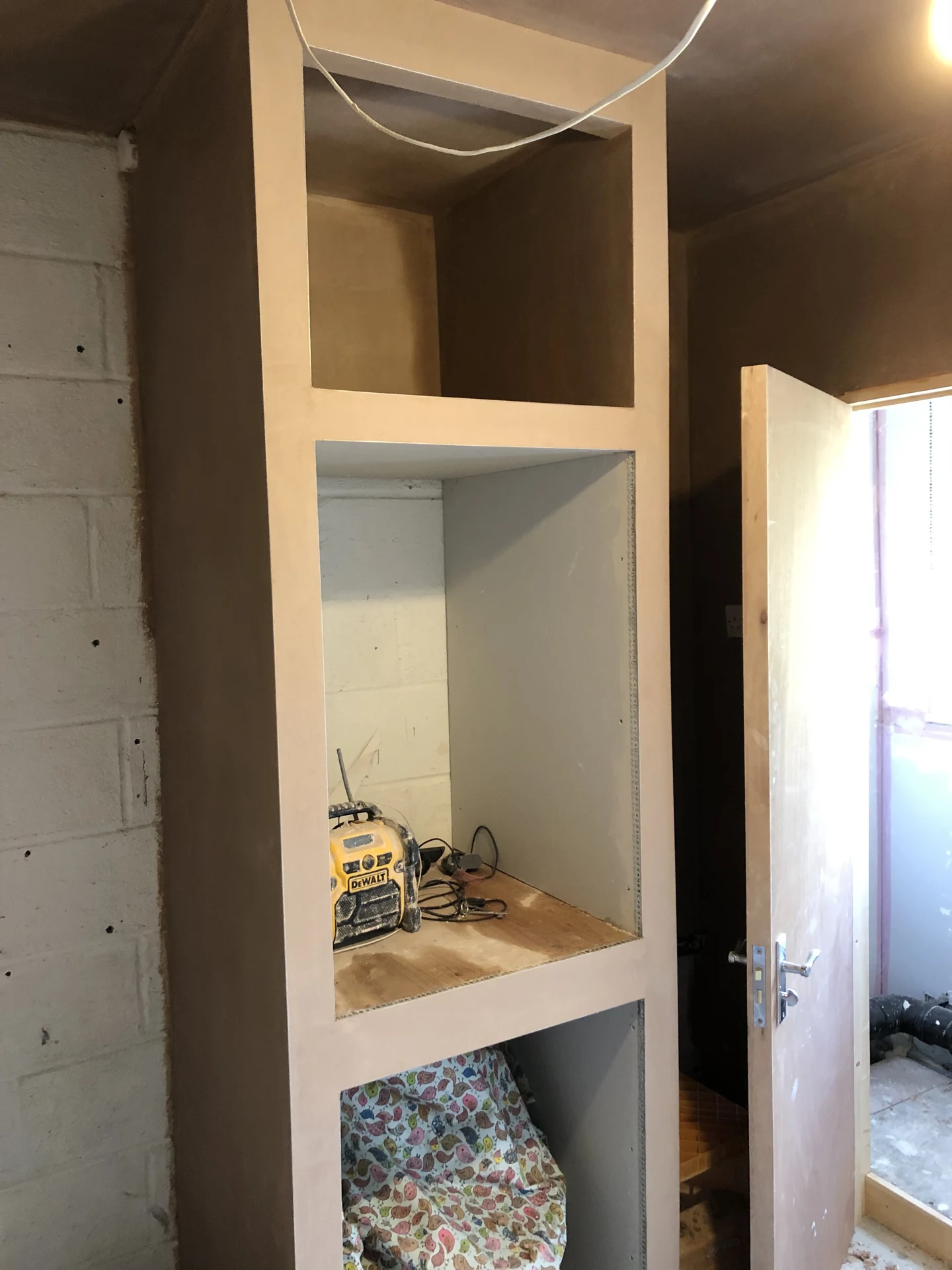
If a new partition forms part of the layout, plasterboarding can provide a lining before the finishing stage. Mention any new openings or boxed-in pipework too. The meeting points between retained surfaces and new work deserve attention rather than being hidden within a general request to skim everything.
Do not leave overhead surfaces out
A smooth wall may sit below a ceiling with old texture or visible repairs. Say whether you want that ceiling included. Skimming over artex is offered, but an older textured coating may contain asbestos. Seek advice before disturbing it rather than scraping it back as preparation.
Cracks or staining need their own explanation. Include what you know about previous leaks and whether any moisture source remains active. Plaster cannot cure a roof or plumbing fault. Where the ceiling itself appears unstable, avoid disturbing it while you seek appropriate advice.
For the exterior, show the whole wall
A close image can record a render crack but not its position on the building. Add a wider view showing nearby openings and ground level. Explain whether loose material, staining or repeated deterioration is the concern. A new coating should not be treated as a way to conceal an unresolved defect.
Weatherboarding and brickwork do not automatically call for render. Be explicit about which existing rendered areas need attention rather than implying that every elevation should change. For a listed property or work affected by conservation controls, ask the council about requirements before arranging alterations to its appearance.
From Headcorn to your postcode
The town is south or south-east of Stephen's base, about 8 miles away. Driving takes roughly 20 to 25 minutes depending on traffic. Stephen O'Brien Plastering covers up to 25 miles from Headcorn, and a full postcode helps identify the precise location of your enquiry.
Ring 07852 191811 or submit the free quote form with your name, phone and postcode. You can add optional photos and a message outlining indoor and outdoor work separately. Stephen has 25 years' experience and is fully qualified and insured; you can explain the problem without prescribing the solution.
Questions homeowners ask
What should I send for a Tenterden terrace with several altered rooms?
Label the photographs by room and identify walls, ceilings and retained features. State which changes are complete and which fittings still need to be installed.
Is render appropriate just because the house is near the High Street?
No. Location does not determine an external finish. Identify the existing materials and check any controls before proposing a change.
Can I combine sitting-room repairs and an external render enquiry?
Yes. Describe them as separate parts of the request, with individual photographs and a clear account of the damage in each.
What location detail helps for a home outside the town centre?
Provide the full postcode rather than only a landmark. Add access information relevant to the property, particularly where the entrance is not obvious.