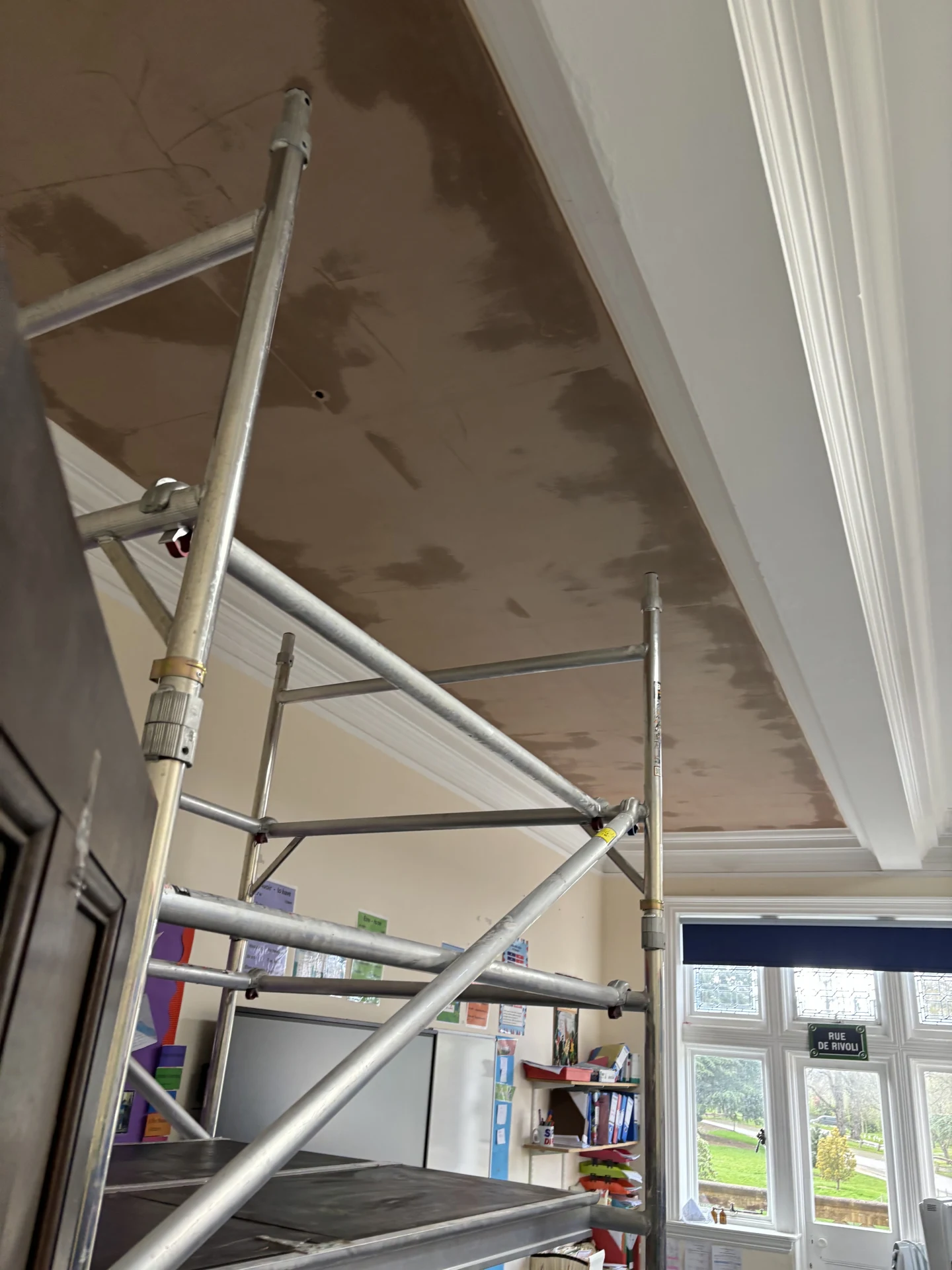
What overboarding involves
New plasterboard is fixed through the old ceiling into the joists above, giving a fresh, flat surface to work with. Once the boards are up and jointed, they're skimmed in the same way as any other new plasterboard ceiling, finishing smooth and ready for decorating once dry.
Overboarding versus taking the ceiling down
Overboarding works well where the existing ceiling is basically sound but tired, uneven, or finished in an outdated texture that's awkward to skim directly. Taking the ceiling down and starting again is usually better where there's significant sagging, damage, or the boards have come loose from the joists, since overboarding needs something solid underneath to fix into.
A quick inspection can usually tell which route makes sense for a particular ceiling, weighing up the condition of the existing boards against how much disruption each approach involves.
Mess and timing
Overboarding is generally less messy than stripping a ceiling out, since the old surface stays in place rather than being removed. There's still dust from fixing and jointing the new boards, so the room is protected beforehand, and the ceiling needs time to dry once skimmed before it's painted.
Checking the joists first
Before overboarding, the ceiling joists are checked to make sure they're sound and at consistent spacing, since new plasterboard needs to be screwed firmly into solid timber rather than relying on the old boards or laths underneath. Where joists have been cut or notched for pipes and cables over the years, this is noted so the new boards can be fixed into the remaining solid sections.
Ceiling height and existing coving
Overboarding adds a small amount of extra thickness to a ceiling, typically around the thickness of the new plasterboard plus a skim coat, which is rarely noticeable in room height but can affect how existing coving or ceiling roses line up. Where coving is already fitted, it may need to be removed and refitted, or the new boards fitted with that overlap accounted for.
Why overboarding is often chosen over stripping out
Taking a ceiling down to the joists is more disruptive, with more dust and debris, and more disturbance to the room below if there's a floor above. Overboarding over a ceiling that's structurally sound but tired or cracked avoids that disruption while still giving a completely fresh, flat surface once it's skimmed.
Dealing with damaged areas before boarding
If part of an old ceiling has sagged badly, is stained from a past leak, or has come away from the joists in places, that section is usually assessed to see whether it needs extra support or a small amount of making good before the new boards go up, rather than simply boarding straight over a problem that could affect how well the new ceiling holds.
How long the room is out of use
Overboarding and skimming a ceiling generally takes less time overall than stripping an old ceiling out completely and starting again, since there's less demolition and clearing up involved. The room still needs to be cleared of furniture, or have it well protected, for the full process including the drying time before decorating can begin.
Questions to ask when comparing the options
Ask what the new boards will be fixed to, rather than simply whether the old ceiling can be covered. The supporting structure must be suitable for the proposed work. A ceiling with active movement, rot or substantial water damage may need other repairs before boarding can be considered.
Removing an old ceiling can allow access to hidden defects, while leaving it in place can reduce demolition. Neither option is automatically best in every room. Ceiling height, existing decorative features, the condition of the supports and the need for access above should all contribute to the decision.
Before agreeing the work, identify whether the quotation includes treatment of the perimeter and any separate changes to fittings. Electrical alterations belong with an appropriately qualified electrician. A boarding and skimming plan should not imply that wiring or structural repairs are included without a clear agreement.
Questions homeowners ask
When is overboarding better than taking a ceiling down?
Overboarding suits a ceiling that's basically sound but tired or awkward to finish directly, such as one with an old texture. A ceiling with significant sagging or loose boards usually needs taking down instead.
Does overboarding add much height to the ceiling?
A new layer of plasterboard adds a small amount of thickness, which is generally not noticeable in most rooms, though it can be a consideration in rooms with particularly tight head heights.
Is overboarding less messy than a full ceiling replacement?
Yes, generally. The old ceiling stays in place rather than being stripped out, though there's still dust from fixing and jointing the new boards, so the room is protected beforehand.
Can overboarding be done on artex ceilings?
Yes, overboarding is one option for covering an artex ceiling, alongside skimming directly over the artex. Which suits your ceiling best can be assessed on a visit.