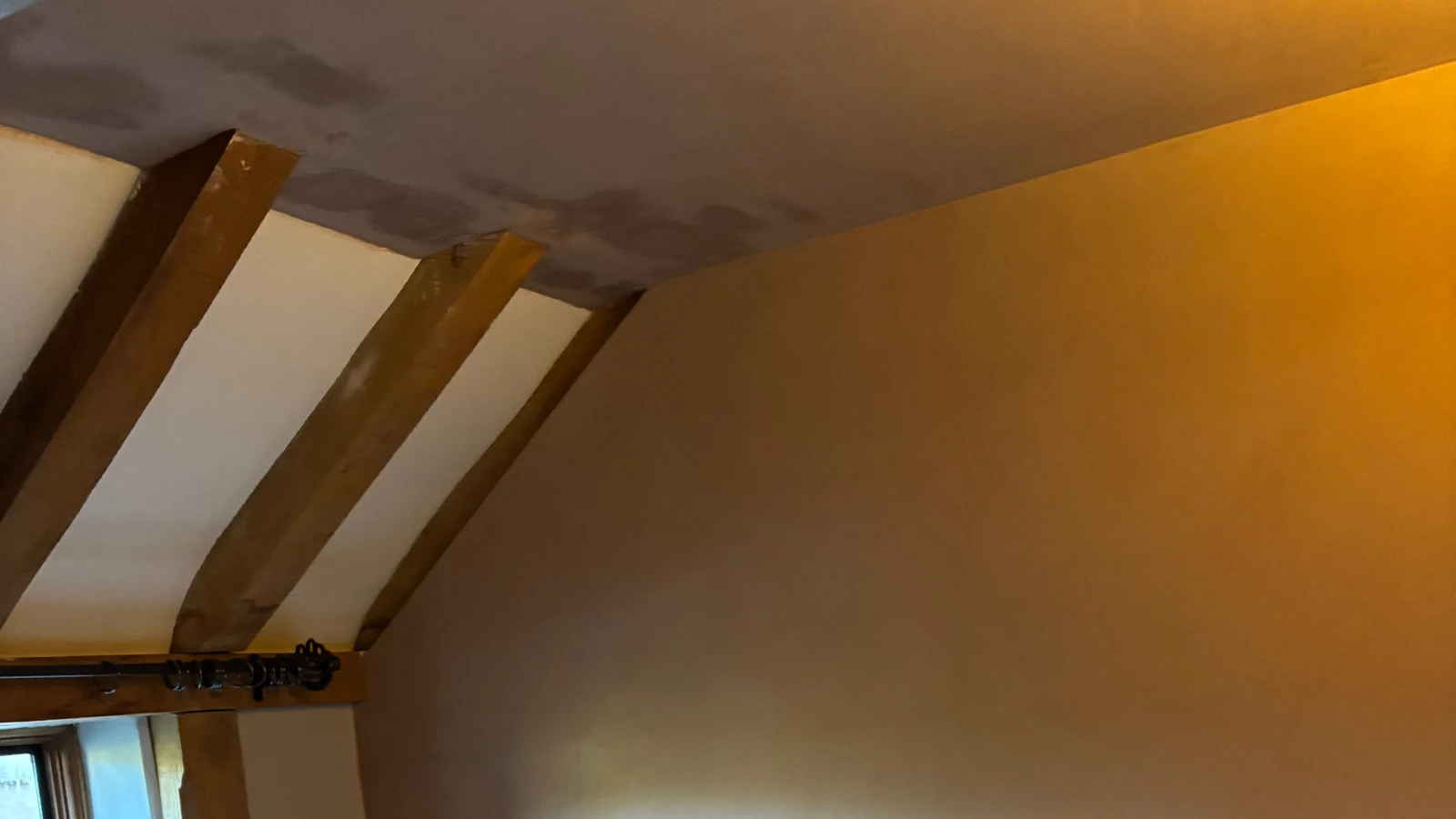
What lath and plaster is and where you find it
Before plasterboard became standard, ceilings were made by nailing thin timber strips, called laths, across the joists with small gaps between them. Plaster was pushed onto the laths so that some squeezed through the gaps and curled over the back, forming nibs that hold the ceiling in place. Further coats were then applied to build up a flat finish.
You are most likely to find lath and plaster in houses built before the mid twentieth century, including the period cottages, older terraces and timber-framed buildings found around Headcorn, Tenterden, Biddenden and other villages in the Weald. Many have been altered over the years, so one house can have a mix of original ceilings and later plasterboard.
Warning signs to look out for
A lath and plaster ceiling usually gives warnings before it fails. Bulging or dropping areas, often visible when you look along the ceiling with light coming from the side, suggest the plaster has pulled away from the laths. Long, straight cracks running in parallel lines can follow the laths beneath.
Other signs include the ceiling feeling springy or moving when gently pushed, a hollow sound, and fine dust or small pieces falling, especially when someone walks around the room above. Water from an old leak can rot laths or weaken the nibs. If a large area is bulging or plaster is falling, keep out of the room and have it looked at before using the space.
Options: local repair, overboard or replace
Where the problem is confined to a small area and the rest of the ceiling is well attached, a local repair can be made: loose material is removed, the area is secured or reboarded and the patch is plastered to blend in. This keeps most of the original ceiling.
If cracking and loose patches are more widespread but the ceiling is still generally secure, overboarding is often a good choice. New plasterboard is screwed through the old ceiling into the joists, holding it in place, then skimmed. The overboarding and skimming page explains this. Where the ceiling has failed badly, it may need taking down and replacing, as described on the ceiling replacement page.
Why older ceilings need a careful approach
Lath and plaster is heavy, and old joists may be uneven, undersized by modern standards or show signs of past movement. Before any work, it is worth checking that the joists are sound and offer a good fixing. Adding a layer of board adds weight, so the condition of the structure matters.
Older houses may also have features worth keeping, such as cornices, ceiling roses or original mouldings. If your house is listed, check with the local council before altering original ceilings, as consent may be needed. Stephen will discuss which approach is most sympathetic to the house as well as practical for you.
Living in the house during the work
Most homeowners stay in their home while ceiling work is done, but the room itself will be out of use. Overboarding and local repairs create less disruption than a full strip-out. Taking down lath and plaster produces a lot of heavy debris and fine, old dust, so the room needs to be emptied, sealed off and the route out of the house protected.
Keep children and pets away from the work area and plan around the rooms you will need. Afterwards the new plaster will need time to dry before decorating, which our drying guide explains. Lights and alarms on the ceiling will need an electrician before and after the work.
Book a look
If you have a bulging, cracked or loose ceiling in an older house, send Stephen some photos taken from a few angles, along with the rough age of the property and whether it is listed.
Stephen O’Brien is based in Headcorn and covers homes up to 25 miles away. He has 25 years’ experience and is Level 2 qualified in solid plastering. Call 07852 191811, Monday to Saturday from 7:30am to 6:30pm, or request a free quote online.
Questions homeowners ask
How do I know if my ceiling is lath and plaster?
Age is a strong clue: houses built before the mid twentieth century often have it. Lath and plaster tends to feel hard and sound solid, and you may see lines of laths from the loft or through a damaged area.
Is a bulging lath and plaster ceiling dangerous?
It can be. A bulge usually means the plaster has lost its grip on the laths, and pieces can fall without much warning. Keep people out of the room underneath and have it checked as soon as possible.
Can you overboard a lath and plaster ceiling?
Often, yes, if the ceiling is still generally secure and the joists are sound. New boards are screwed through into the joists, which helps hold the old ceiling in place, then the surface is skimmed.
Should I keep the original ceiling in a period house?
Where the ceiling is reasonably sound or has decorative features, keeping and repairing it can suit the character of the house. For a listed building, ask the council before making changes.
How much mess does removing lath and plaster make?
A lot. The plaster is heavy and old dust comes down with it. The room has to be completely cleared, sealed and protected, which is why overboarding is often preferred where it is suitable.