Skim, overboard or replace: three different jobs
The biggest influence on cost is what the ceiling needs. A skim is a thin new coat over a sound ceiling. It suits a ceiling that is firm and reasonably flat but marked, lightly cracked or patchy after earlier repairs.
Overboarding means fixing new plasterboard over the existing ceiling, taping the joints and then skimming. It involves more materials and time than a skim, but it avoids taking the old ceiling down and suits uneven or cracked ceilings that are still secure. Replacement means removing the old ceiling entirely, fitting new boards to the joists and skimming. It is the most involved of the three because of the strip-out and waste. Our pages on overboarding and on ceiling replacement explain when each is used.
Room size, height and shape
A larger ceiling takes more material and more time, but size is not the only factor. Ceilings above stairwells, in rooms with high ceilings or with sloping sections need extra access equipment and take longer to work on safely.
Shape matters too. A plain rectangular ceiling is the simplest. Chimney breasts, bay windows, beams, dormers and sloping ceilings in loft rooms all add edges and angles that need careful finishing. Several small ceilings, such as a landing and hallway, can take as long as one larger room because of the setting up and edges involved.
Condition: cracks, artex and water damage
The state of the ceiling decides how much preparation is needed. Cracks may need taping before a skim, loose areas cutting back and filling, and old paint or flaking finishes stabilising.
Artex and other textured ceilings need a suitable approach. Older textured coatings may contain asbestos, so they should not be sanded or scraped. Skimming over a sound textured ceiling may take more preparation and material than skimming a smooth one, as the pattern has to be filled and levelled. Our page on skimming over artex explains this. Water damage adds further work, because the source must be fixed, the area dried and damaged sections replaced before the finish can go on.
Clearing the room, protection and lights
Ceiling work affects everything below. The more you can clear from the room beforehand, the quicker protection is to set up and the easier it is to work. Items that cannot move will be covered and floors sheeted, and carpets may need extra protection.
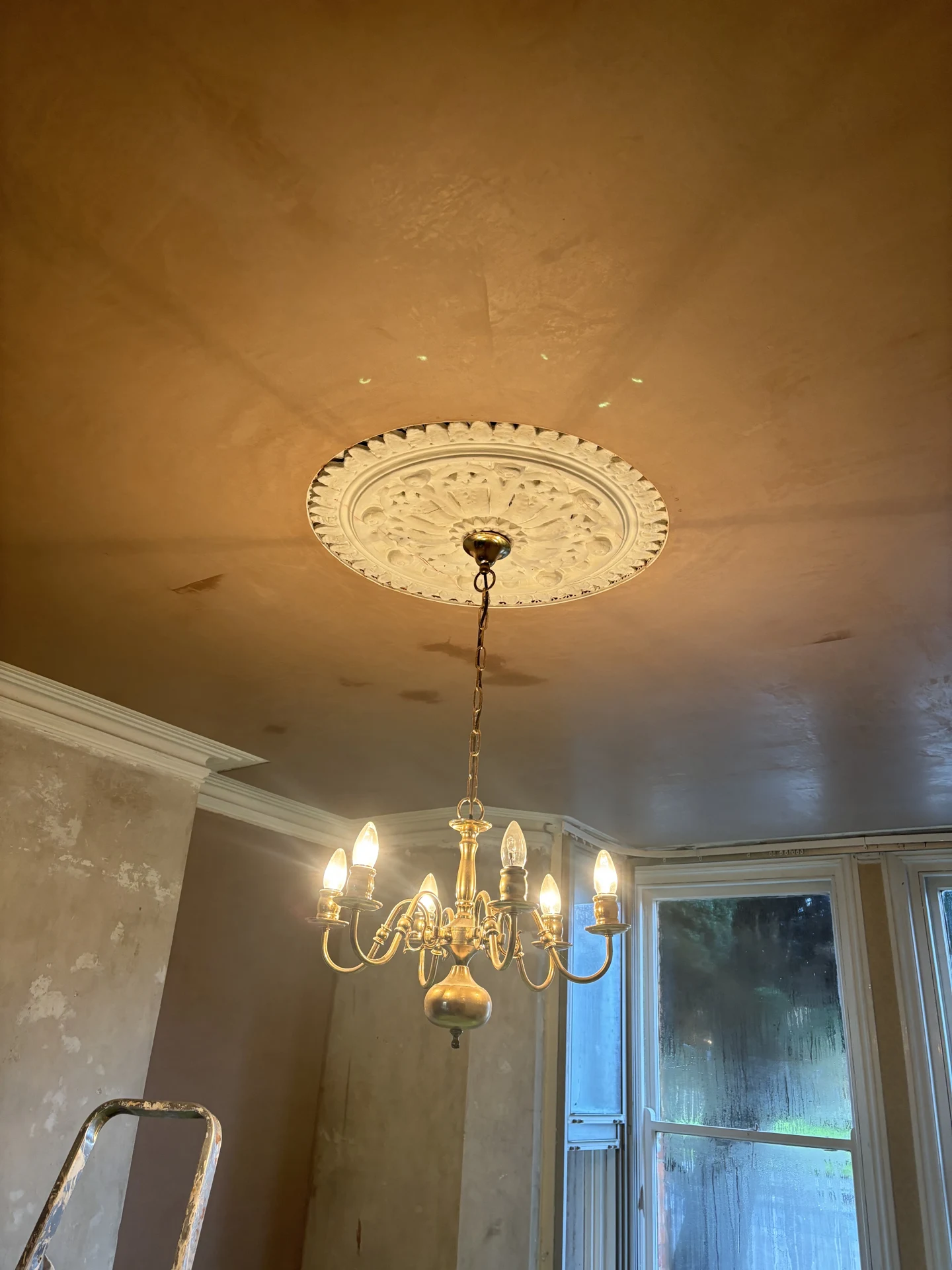
Light fittings, smoke alarms and extractor fans usually need taking down and refitting, which should be done by an electrician. Coving, ceiling roses and decorative features can also affect the work: they may need protecting, removing or refitting depending on the job. Discussing all of this at the quote stage avoids surprises later.
Drying and decorating afterwards
Fresh plaster needs to dry before it can be painted, and drying time depends on how thick the work is, the time of year and how well the room is ventilated. Overboarded ceilings with a skim often dry differently from a skim straight onto an old ceiling.
When planning a budget, remember that decorating is usually separate. New plaster normally takes a mist coat followed by top coats. If you are redecorating the walls at the same time, it may make sense to plan that around the ceiling work. Our guide on how long plaster takes to dry explains the factors involved.
Getting an exact quote
Because every ceiling differs, the best way to get a reliable price is to have it looked at. Send Stephen a photo of the whole ceiling, close-ups of any cracks or damage, the room measurements if you have them, and a note of whether the ceiling is textured.
For general interior work such as walls and full rooms, our plastering cost guide covers the factors that apply there. Stephen O’Brien is based in Headcorn and covers up to 25 miles, including Maidstone and Ashford. He offers free quotes; call 07852 191811, Monday to Saturday from 7:30am to 6:30pm.
More about this topic
Is overboarding dearer than skimming?
Usually, yes, because overboarding adds new plasterboard and more labour before the skim. It is used when the existing ceiling is too uneven or cracked for a skim alone.
Does an artex ceiling cost more to plaster?
It can, because the texture has to be filled and levelled as part of the skim. The artex should never be sanded or scraped, as older textured coatings may contain asbestos.
Do high ceilings cost more?
They can. High ceilings, stairwells and sloping ceilings need more access equipment and take longer to work on safely, which usually affects the price.
Can I stay in the room while the ceiling is done?
No, the room needs to be cleared and kept free while the work is under way and while the plaster starts to dry. You can normally use the rest of the house as usual.
Is the price for one ceiling or the whole room?
That depends on what is quoted. Some quotes cover only the ceiling, others include walls, coving or making good. Check what each quote includes so you can compare fairly.