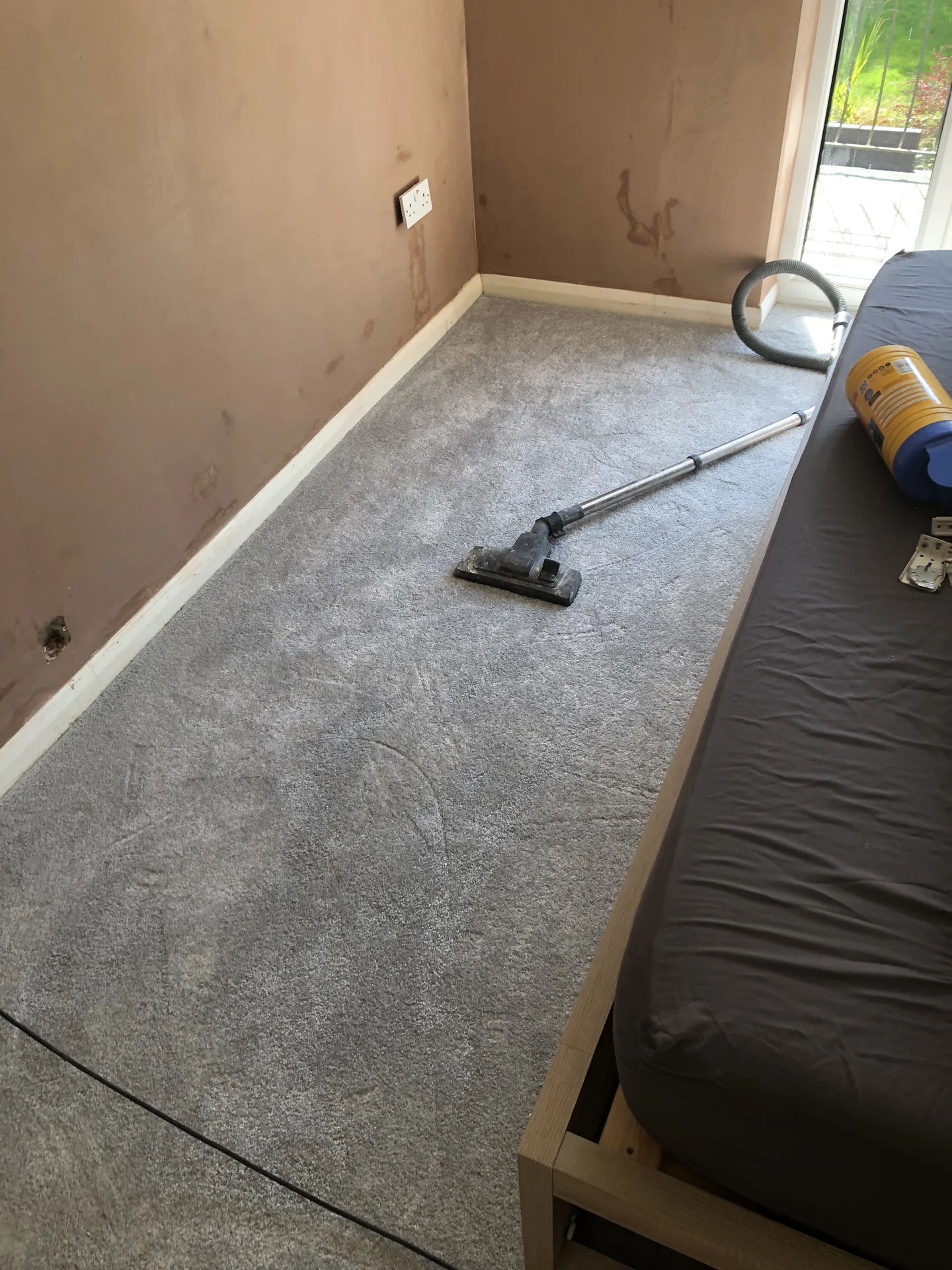
When a full room needs replastering
A whole room is often replastered after damp has affected several walls, after a rewire or replumbing that has disturbed large areas of plaster, or where the existing plaster is old, cracked and blown in more than one place. It can also follow building work such as a wall being removed or altered, where patch repairs alone wouldn't give a consistent finish.
In older properties, plaster that was mixed and applied decades ago can simply be reaching the end of its working life across a whole room at once, even without an obvious cause like damp or disturbance.
Stripping out
Old plaster is removed from the walls, and from the ceiling too if that's part of the job, working back to brick, block or board. This is a dusty stage, so the room is sheeted and protected beforehand, and debris is cleared as work progresses rather than left to build up.
Beads, floating and setting
Corner beads are fitted to give straight, protected edges around doors, windows and external corners. A floating coat is then applied to build up a flat, even base, followed by a setting coat that's trowelled to a smooth finish ready for decorating once it has dried.
What to expect as a homeowner
Expect some noise and dust during the stripping-out stage, with floors and fittings protected throughout. Once plastering is complete, the room needs time to dry before painting, and the finished plaster should be flat, smooth and ready to decorate once that drying period has passed.
Planning the order of rooms
When more than one room in a house needs full replastering, it's usually sensible to plan an order that causes the least disruption, starting with rooms that aren't in daily use and leaving bathrooms or kitchens until last if possible. This also allows drying time to overlap between rooms rather than the whole house being out of action for decorating at once.
Skirting, architrave and fittings
Skirting boards and door architraves are usually left in place during a full room replaster, with the new plaster finished neatly down to the top edge of the skirting. If skirting is due to be replaced as part of wider renovation work, it's worth removing it before plastering starts so the wall can be finished right down to the floor instead of leaving a line to patch later.
Light fittings, curtain poles and any wall-mounted items are taken down before work begins and refitted once the new plaster has dried and been decorated, since drilling into fresh plaster before it's fully cured can crack it.
Dust and ventilation during the job
Hacking off old plaster across a whole room generates more dust than a smaller patch repair, so good ventilation during the stripping-out stage makes a real difference, with windows opened where the weather allows and doors to the rest of the house kept shut. Once the new plaster is on, ventilation is just as important for drying, though direct draughts across fresh plaster are best avoided as they can dry it unevenly.
Decorating after a full room replaster
Once a whole room has been replastered, it's common to decorate everything together, including ceiling, walls and any new coving, so the finish and colours are consistent throughout. Waiting for the full drying period before starting means the paint goes on evenly rather than being applied in stages as different walls happen to dry at different rates.
Deciding how much of the room needs attention
A consistent finish does not always mean that every existing surface must come off. One wall may have failed while the others remain well bonded. During an assessment, distinguish between damaged plaster, cosmetic roughness and any movement in the building. The proposed scope should explain which areas need rebuilding and which could retain their sound background.
Take a room-wide photograph as well as close-ups of problem areas. Mark where furniture or fixed cupboards normally hide the wall, since these areas may have a different condition from the exposed surfaces. This helps avoid overlooking an awkward corner until work begins.
Questions homeowners ask
Why would a whole room need replastering rather than just one wall?
This is usually down to damp affecting several walls, disturbance from a rewire or other building work, or old plaster reaching the end of its life across the room at the same time, making a consistent full-room finish more practical than isolated patches.
Is the ceiling included in full room replastering?
It can be, depending on the ceiling's condition. Some rooms need the ceiling replastered or overboarded alongside the walls, while others only need the walls done.
How messy is stripping out old plaster?
It's a dusty stage of the job, so the room is sheeted and protected beforehand, and debris is cleared as the work goes on rather than left until the end.
What are beads used for?
Corner beads give straight, protected edges around corners, doors and windows, helping the floating and setting coats finish flat and square.
How soon can I paint after a full room replaster?
The room needs time to dry out first. See the plaster drying guide for the general factors that affect drying time before decorating.