Keep the building in the conversation
Begin by saying what you want left alone. In a cottage with visible timbers, that might mean keeping the shape of an opening or the line of plaster beside a beam. In a later house it could simply mean retaining sound coving while renewing the ceiling. Those are different briefs, even if both involve plastering.
The journey south from Headcorn follows the A274, about 4 miles and roughly 10 to 15 minutes depending on traffic. Stephen's working area extends up to 25 miles from his base. Location is straightforward to establish, but the age and condition of the actual surfaces still need explaining.
If a building is listed, ask the council about the proposed changes before arranging them. Conservation area controls may also be relevant. Do not assume a familiar-looking plaster surface can be removed freely, or that replacing it with a modern finish is automatically appropriate.
Three things to separate before decorating
First, distinguish damaged plaster from old decoration. Peeling paint and torn wallpaper can look dramatic without showing whether the underlying plaster is secure. Conversely, a painted surface can conceal loose areas. Tell Stephen what is visible, when you noticed it and whether anything has changed recently.
Second, separate repair from flattening. A small missing section may call for patching, while a sound but tired wall might suit skimming. Neither description means that every irregularity in an older room should disappear. Where traditional materials are present, compatibility deserves attention before choosing a replacement.
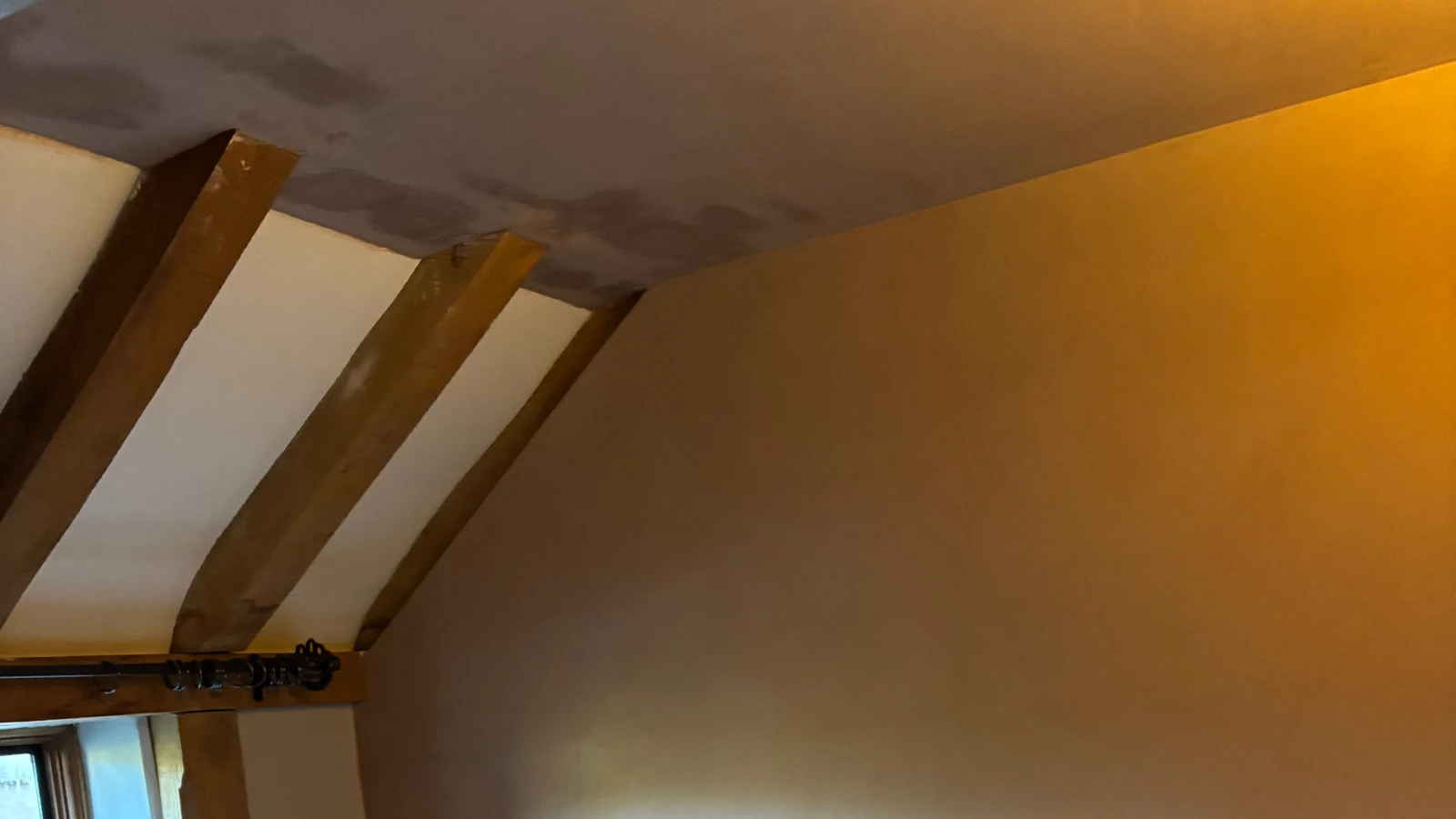
Third, look overhead without disturbing anything. A ceiling with cracking, a textured coating or a damp mark presents different questions from the wall below. Mention sagging or ongoing water entry explicitly rather than putting everything under a request for decoration. The cause of damage needs dealing with before a fresh finish.
Older artex and similar textured coatings may contain asbestos. Do not test the texture by scraping it off or sanding a patch. Obtain appropriate advice first. Skimming over artex is offered, but a safe and suitable method cannot be selected just from the pattern visible in a photograph.
Describe the edges as well as the middle
Photographs of corners, beams and window reveals help explain the boundaries of the work. Include a wider room view too. For a ceiling enquiry, show where it meets the wall, especially if there is coving or a change in height. These details keep the discussion tied to the room you actually have.
Call 07852 191811 or fill in the free quote form here. It asks for your name, phone and postcode, with optional photos and a message. Explain whether you are considering a repair, one complete surface or several rooms, and flag any restrictions connected with the building.
Stephen is fully qualified and insured, with 25 years' experience. The business is open Monday to Saturday from 7:30am to 6:30pm. You can describe uncertainty about a surface without committing yourself to skimming, replacement or another particular approach.
Questions homeowners ask
Must walls beside Biddenden timber framing be made perfectly straight?
Not necessarily. Say which features and irregularities you want retained, and seek advice on suitable materials before deciding how much to change.
What should I check before altering a listed village cottage?
Speak to the council about the intended work, including internal plaster and decorative details. Establish any consent requirements before removing material.
Is a close photograph of a beam edge enough for an enquiry?
Add a wider view showing the surrounding wall or ceiling. The relationship between retained timber and plaster is easier to explain with both.
Can I include a later extension in the same request?
Yes. Identify it separately from the older rooms, since the construction and suitable preparation may differ.
Should an old textured cottage ceiling be scraped before sending pictures?
No. Leave an unidentified coating undisturbed and obtain safety advice, as older textured finishes can contain asbestos.