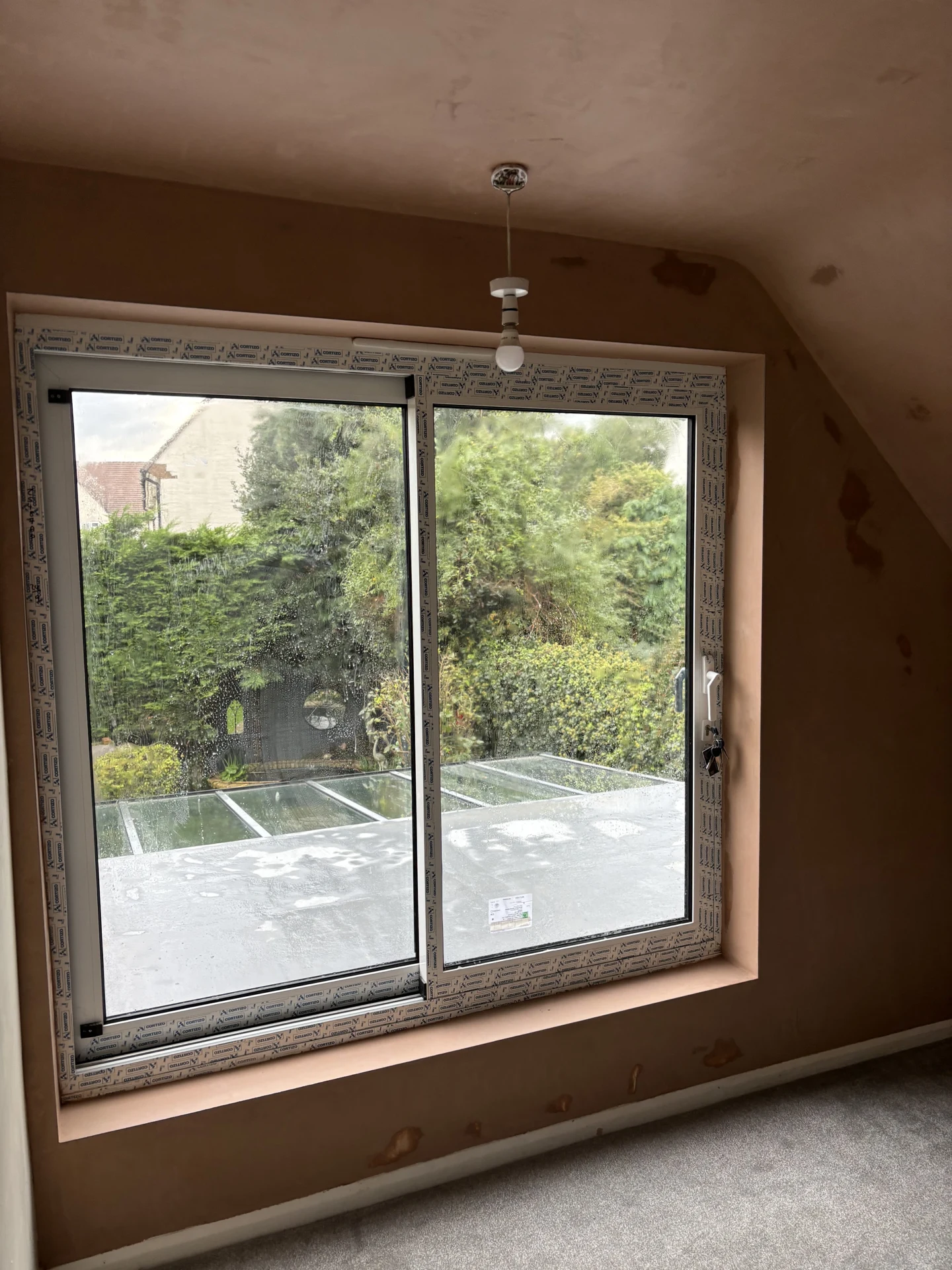
A terrace refurbishment, not just a coat of plaster
The Historic Dockyard is a familiar landmark, while hillside Victorian terraces form another part of the town's character. A terrace refurbishment might expose filled channels, loose patches beside a fireplace or different surfaces beneath wallpaper. Those discoveries need describing individually rather than treating every wall as the same job.
If electrical alterations have left channels, say whether that work is finished and where sockets or other fittings remain. A patch repair deals with a defined area; a skim renews the finish across a suitable surface. Neither description automatically covers removing substantial failed plaster. Keep preparation and finishing distinct when discussing what is included.
What the stairs change
Steep hillside streets and a house with several internal levels make access worth mentioning early. Tell Stephen where the room sits, whether materials must pass through occupied rooms and what can be moved. Do not send a street name in place of the full postcode when establishing coverage.
Photographs of the route into the room can explain a practical difficulty that wall measurements miss. In a flat, also mention communal entrances and any building access arrangements. These details help define the enquiry without suggesting that difficult access rules out a project.
Ceilings on later estates
Later estate homes offer a different scenario: the walls might be serviceable while an old textured ceiling dominates the room. Skimming over artex may be an option, but only after considering the coating and the ceiling underneath. Cracking or sagging should not be dismissed as part of the pattern.
Older textured finishes can include asbestos. Avoid drilling, sanding or stripping an uncertain coating while preparing for a quote. Get advice on identifying it safely. A photograph can record its appearance but cannot establish whether asbestos is present.
New lining in a flat
An adapted room may need plasterboarding where an opening has been closed or a lining removed. Describe the edges where new boards meet existing plaster and any retained coving. A junction can need more thought than the broad flat area beside it.
If your flat has requirements for a separating wall or ceiling, make those known before the lining is specified. A smooth skim is a decorative finish, not evidence that the complete construction meets every relevant requirement. Do not choose a board arrangement purely by the appearance you want after painting.
Talk through the work before decorating
From Headcorn the route is north via Maidstone, about 14 miles. Allow roughly 35 minutes depending on traffic as a description of the journey, not an appointment commitment. Stephen works within a 25-mile range and has 25 years' experience.
Call 07852 191811 or complete the free quote form using your name, phone and postcode. The optional message can list rooms, damage and photographs available to share. State whether the property is occupied and which finishes you hope to retain. Opening hours are Monday to Saturday, 7:30am to 6:30pm.
Questions homeowners ask
What access details help with a hillside Chatham terrace?
Explain steps, the floor being worked on and the route through the house. Include any restrictions on carrying materials to the room.
Can channels beside terrace-house sockets be repaired locally?
They can be considered for patch plastering. Their depth, extent and surrounding surface determine whether a local repair is the right scope.
Does an estate-home textured ceiling have to be stripped?
Not automatically. Its condition and contents need consideration before deciding between possible ceiling treatments. Do not disturb an unidentified coating.
What should a flat owner say about a replacement lining?
Mention any known requirements for the wall or ceiling and any building management conditions. The lining specification matters beyond its final decorative face.