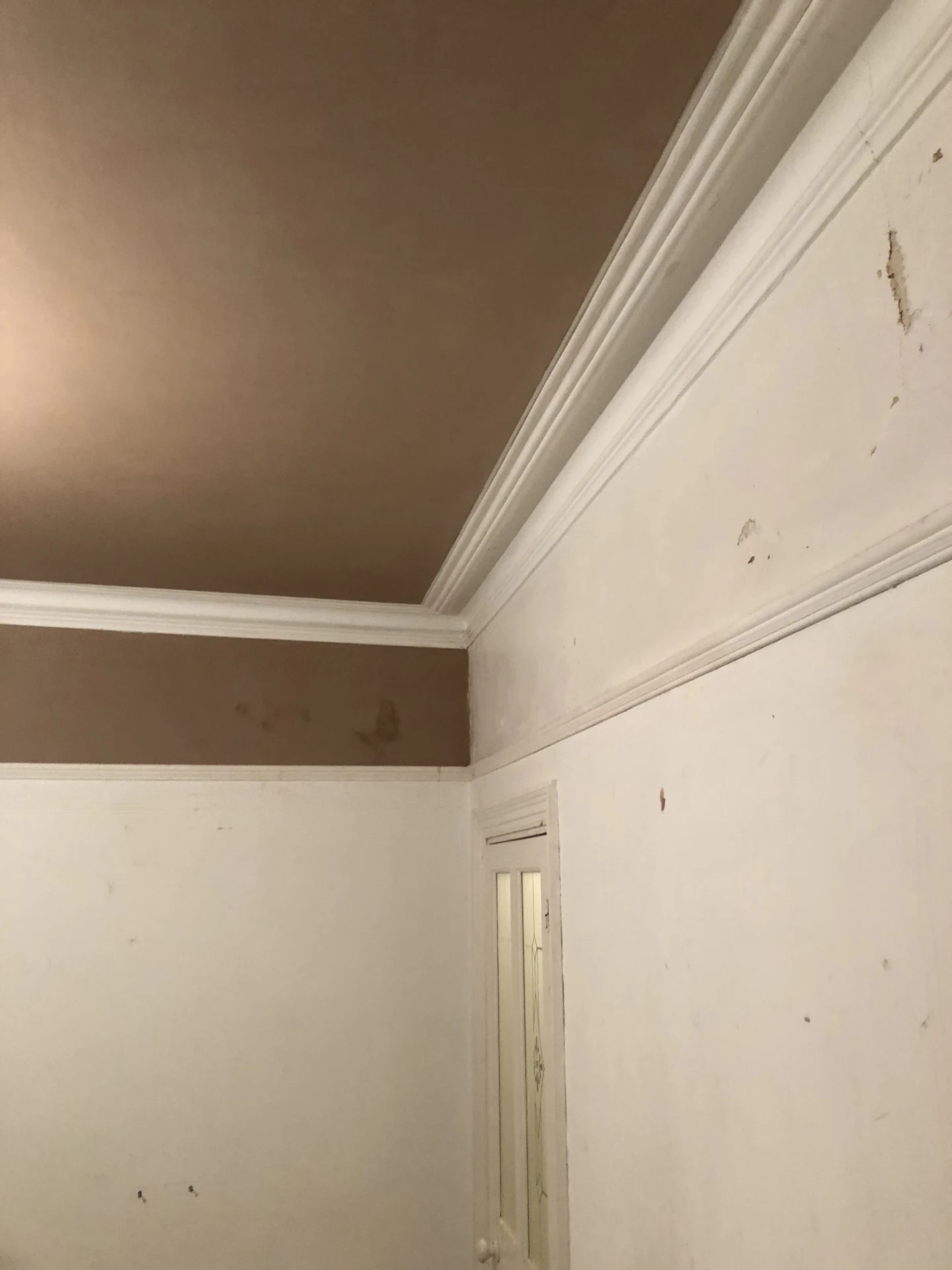
First, decide what stays
Georgian and Victorian houses are part of the local mix, though any individual interior may have undergone several changes. Picture a front room with an older ceiling border, window reveals and a repaired fireplace opening. Asking for smooth walls does not mean that all those edges should be stripped back or changed.
Make a simple list of retained details, including coving, trim and any areas of older plaster you value. Take wider photographs so their relationship to the room is clear. This gives a more useful starting point than sending only the most noticeable crack.
Check permissions before preparation
Conservation areas and listed buildings need care when planning alterations. Check with the council about your particular property and proposed work. Not every old home has the same restrictions, and you should not assume that internal work in a listed building falls outside them.
Permissions and suitable materials are separate questions. Traditional plaster can behave differently from a modern lining, particularly where moisture movement is involved. Establish what is present before choosing a replacement. Avoid removing a sound older surface merely to create a uniform background for a finish chosen in advance.
Read cracks in context
A fine line at a junction, a loose patch and a ceiling that has changed shape are different concerns. Explain when you first noticed the issue and whether it has altered. Plastering can repair a surface, but it is not a substitute for investigating movement or an ongoing building defect.
Where the background remains sound, skimming may provide the finish you want. Detached or unsuitable material needs a different discussion, potentially including patching or wider replastering. The decision should follow the condition of the actual wall rather than a rule that every period room needs the same treatment.
Give the ceiling its own brief
If a ceiling has older lath and plaster construction, report loose areas, sagging or previous water damage. Do not assume that covering the face will resolve a problem with its support. Ceiling plastering needs to account for what is carrying the surface as well as its visible appearance.
Some rooms have textured coatings applied later in the building's life. Older coatings may contain asbestos, so seek advice before disturbing one. If retaining coving is important, mention that alongside the proposed ceiling work rather than leaving the junction to be considered after the main surface.
Include the less historic rooms
A modern kitchen extension or altered back room may call for plasterboarding and a new finish rather than conservation of older plaster. Describe those spaces separately. Joining new work to an existing room involves corners, changes of level and openings, not simply a measurement of wall area.
Arrange the enquiry around your address
Stephen O'Brien is fully qualified and insured, with 25 years' experience. His Headcorn base is about 15 miles south of the city; travelling north takes roughly 35 minutes depending on traffic. Coverage extends up to 25 miles.
Use the free quote form with your name, phone number and postcode, adding an optional message about retained features and available photographs. You can also call 07852 191811. Explain any permissions still being checked so the proposed work and its limits remain clear.
Questions homeowners ask
Can coving stay in a Rochester period-room refurbishment?
Identify the sections you want kept and their condition. Any adjoining plaster or ceiling work needs to be planned around those edges.
Does a High Street address automatically mean a home is listed?
No. Establish the status of the individual property and check relevant restrictions with the council before arranging alterations.
Should old lath and plaster be hidden beneath a new finish?
Not without considering its stability and support. Describe sagging or loose areas before discussing cosmetic improvements.
How do I describe an extension beside an older room?
Separate the new lining from the retained surfaces in your enquiry. Include the connecting opening and any changes in wall or ceiling level.