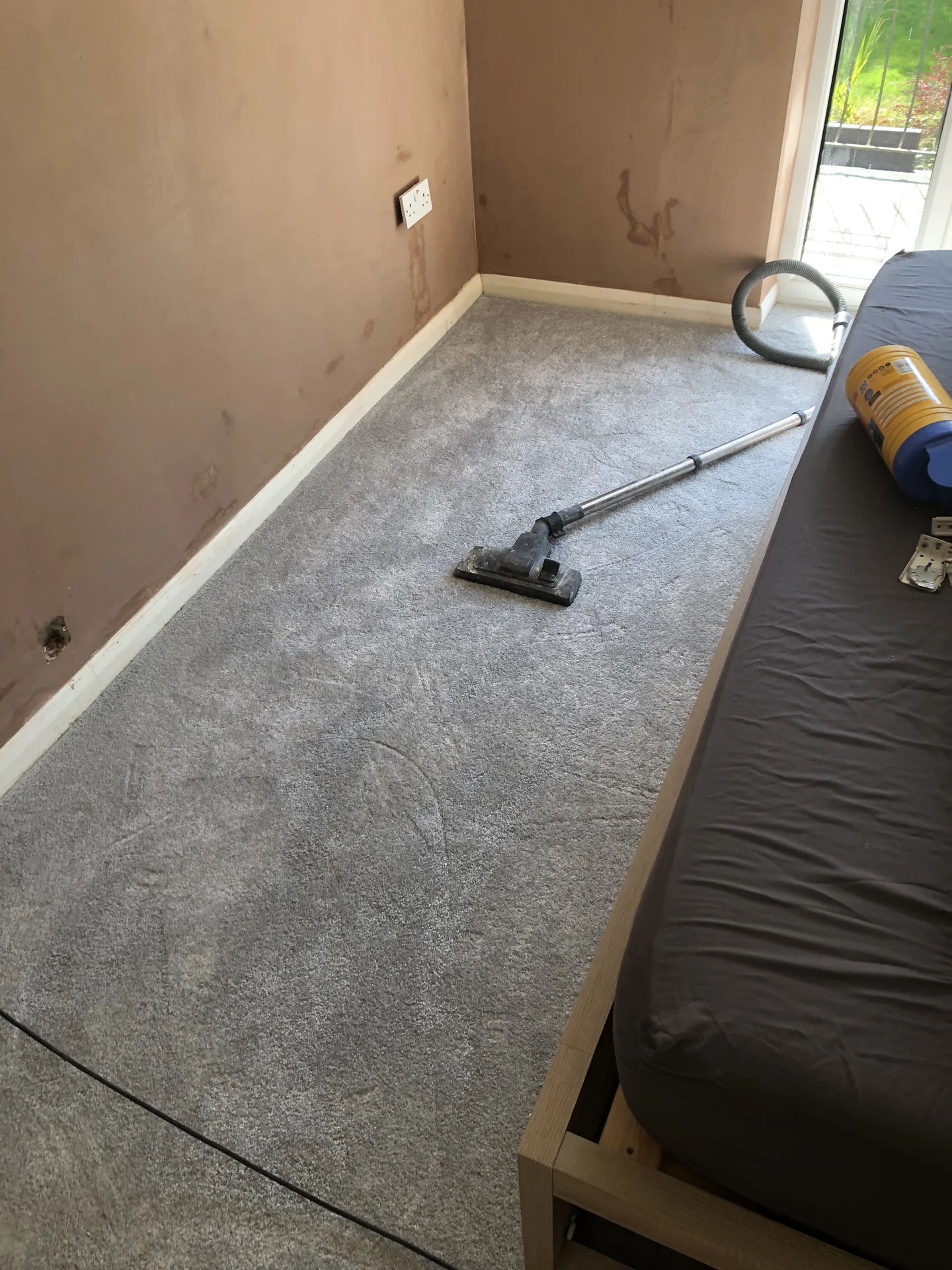
What normal drying looks like
New plaster goes on dark and gradually turns a pale, even pink or light brown as the water evaporates. It rarely dries at the same speed all over. Corners, the area behind furniture, the lower part of walls and any wall facing outside often stay darker for longer. Thicker coats, such as a full replaster or a backing coat on bare brick, take much longer than a thin skim.
During this stage you might notice the room feels humid and windows steam up. That is the water leaving the walls. Good ventilation, gentle background heat and patience are all that is needed. Blasting heaters close to the wall or sealing the room up tends to cause problems rather than speed things along.
Signs that it is real damp
A patch that is still dark when the rest of the wall has been pale for a while is the first clue. Others include a tide mark low on the wall, white fluffy or powdery deposits, plaster that sounds hollow or crumbles, paint that bubbles soon after decorating and black mould spots. A musty smell that does not fade is another sign.
Location helps. Damp low on a ground floor wall points towards rising or penetrating moisture at the base. Damp below a window or high on an outside wall suggests rain getting in. Patches near a bathroom, a radiator or kitchen pipework can mean a leak. Damp on cold outside walls, worse in winter, often turns out to be condensation.
Common causes
Penetrating damp comes from outside: blocked gutters, cracked render, failed pointing, poor window seals or ground levels raised above the floor inside. Rising damp is moisture drawn up from the ground, usually where a damp proof course has failed or been bridged. Leaks from plumbing, heating pipes or a shower are often overlooked and can soak a large area. Condensation forms when warm moist air meets a cold surface, and it is common in kitchens, bathrooms and bedrooms with poor airflow.
Salts deserve a mention. Walls that have been damp for a long time collect salts from the masonry. These can draw moisture from the air and push through new plaster even after the original leak is fixed, which is why the old salt contaminated plaster is usually removed rather than simply skimmed over.
Why plastering over damp fails
Plaster is not a damp cure. A fresh skim over a wet or salty wall may look fine for a few weeks, then the same marks return, the paint lifts and the work has to be redone. The moisture source must be found and fixed first, and the wall given time to dry before new plaster goes on.
Once the cause is dealt with, the affected plaster can be removed, the wall allowed to dry and then replastered with a suitable system. On older solid walls, a breathable approach is often recommended, and specialist damp advice may be worth getting before the plasterer starts.
What to do before decorating
Wait until the plaster is an even pale colour all over before painting. Apply a mist coat, which is watered down emulsion, so the first layer soaks in and bonds well. Avoid vinyl or wipe clean paints for that first coat, as they can trap moisture still in the wall.
If a patch is still dark after the rest has dried, do not paint over it to hide it. Keep watching it for another week or two with the room ventilated. If it does not change, look for the cause or ask for advice before going further.
Mistakes to avoid
Painting too early, using heaters pressed against the wall, plastering over walls that have just had a leak, and skimming over old salty plaster are the most common causes of trouble. Another is decorating a kitchen or bathroom without improving extraction, then blaming the new plaster for condensation mould.
When to call a professional
If marks keep coming back, the plaster is soft or the problem started after a leak, it is time for a proper look. A roofer, plumber or damp specialist may be needed to fix the cause, and a plasterer then puts the walls right. Stephen O’Brien plasters damp and salt damaged walls once the source of the moisture has been dealt with, and he works for homeowners within up to 25 miles of Headcorn. Call 07852 191811, Monday to Saturday from 7:30am to 6:30pm, or send photos through the free quote form.
More about this topic
Is it normal for new plaster to look patchy?
Yes. New plaster dries unevenly, so dark patches are normal at first. It should turn an even pale colour as it dries.
How can I tell damp from drying plaster?
Drying patches shrink and lighten over time. Damp patches stay dark, return after drying or come with salts, mould, soft plaster or a musty smell.
Can you plaster over a damp wall?
It is not a good idea. The cause should be fixed and the wall allowed to dry first, otherwise the damp marks usually come back through the new plaster.
What is the white powder on my new plaster?
White fluffy or powdery deposits are usually salts carried out of the wall by moisture. They suggest the wall has had damp for some time.
When can I paint new plaster safely?
Once it is an even pale colour all over. Start with a mist coat of watered down emulsion rather than a vinyl paint.