Keep everyone away from the fallen ceiling
Keep people and pets out of the affected room. A partial fall can leave unsupported edges and loose material nearby. Do not stand beneath them, poke the remaining ceiling or enter the loft above to investigate.
If a leak caused the collapse, turn off the water supply and isolate electricity to the affected area only if you can reach the controls safely from outside it. Stay away from wet switches and fittings. Get a plumber or roofer for the water source and an electrician for affected wiring; call emergency services if there is immediate danger.
Find the cause before covering the opening
Water can weaken boards or older plaster until they give way. In a lath and plaster ceiling, the plaster can lose the grip that holds it behind the timber strips. Excessive loads in a loft can also contribute to failure, particularly where weight bears on parts never intended to carry it.
Those are possible causes, not a diagnosis from the shape of the hole. Suspected timber damage, movement or overloading needs the appropriate builder or structural specialist. Replastering comes after the underlying problem is resolved.
Making safe and planning clearance
Remaining loose material needs controlled removal, and the repair boundary must reach secure edges and suitable fixing points. Agree who will make the area safe, clear the debris and take waste away before arranging the finishing work.
Old dust and broken plaster can spread beyond the room, so protected access and separation from occupied areas need planning. Older textured coatings may contain asbestos. Before anyone disturbs a suspect coating, a sample can be tested by an accredited specialist; do not sweep, scrape or drill it yourself.
Rebuilding the missing section
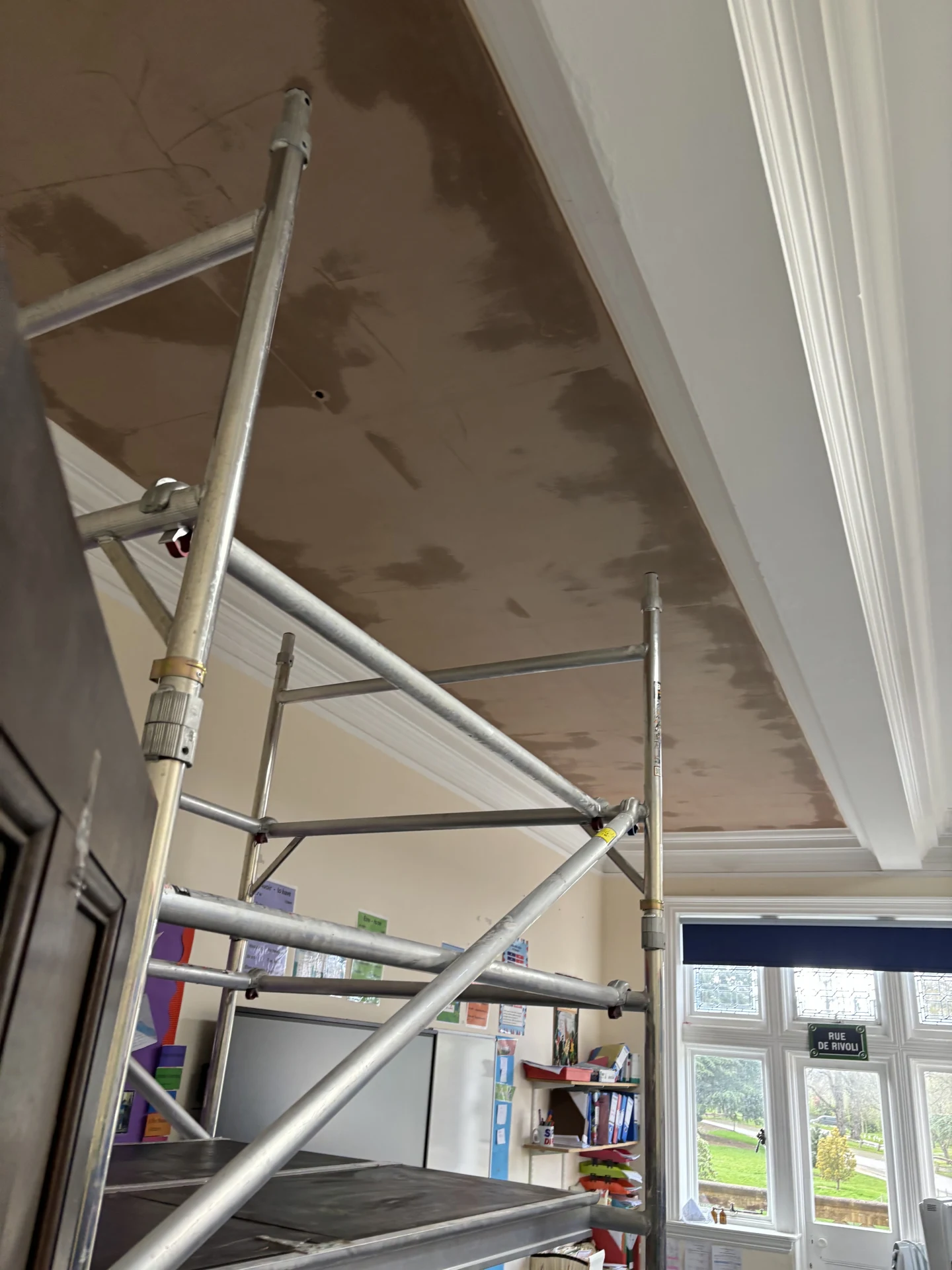
Once access is safe, the cause is fixed and the supporting construction is suitable, new plasterboard can form the replacement section. Boards need secure fixings and support around their edges. The opening left after preparation may be larger than the piece that originally fell because weak neighbouring material cannot provide a reliable boundary.
The board joints are prepared before the skim is applied. Where electrical fittings or other services cross the repair, arrange the relevant trade’s work before those areas are closed.
Joining the repair to what remains
A local rebuild is only sensible if the retained ceiling is secure. Stephen can discuss the plastering boundary and whether finishing a broader area would give a more consistent surface than stopping tightly around the opening.
If the remaining ceiling is also failing, the conversation changes to wider replacement.
Drying, decorating and getting in touch
Allow any moisture from the original incident to be dealt with before rebuilding, then let the fresh plaster dry before painting. Its darker colour gradually lightens, with progress affected by thickness, background, heating and ventilation.
Prepare the dry repair for paint as directed by the paint manufacturer. Decorating across the ceiling rather than just the patch can help avoid differences in colour and sheen. Contact Stephen on 07852 191811 for a free quote once safe access can be arranged; WhatsApp photos can start the discussion without entering the damaged room.
Questions homeowners ask
Is it safe to sleep in the room after only a small piece has fallen?
Do not use the room until the remaining ceiling has been made safe. The size of the fallen piece does not establish whether adjacent material is secure.
Should I bag the fallen plaster before anyone visits?
Do not enter an unsafe room to clear it. Agree clearance after the overhead risk and any suspect materials have been assessed, rather than disturbing debris immediately.
Who should check exposed cables after a ceiling fall?
An electrician should check affected electrical services and decide when they can be used again. Do not reconnect a light merely because the surrounding area appears dry.
What should I tell Stephen if the opening has already been made safe?
Explain who dealt with it, what caused the fall and which repairs to the cause are complete. Include safe photographs and mention any remaining access restrictions.