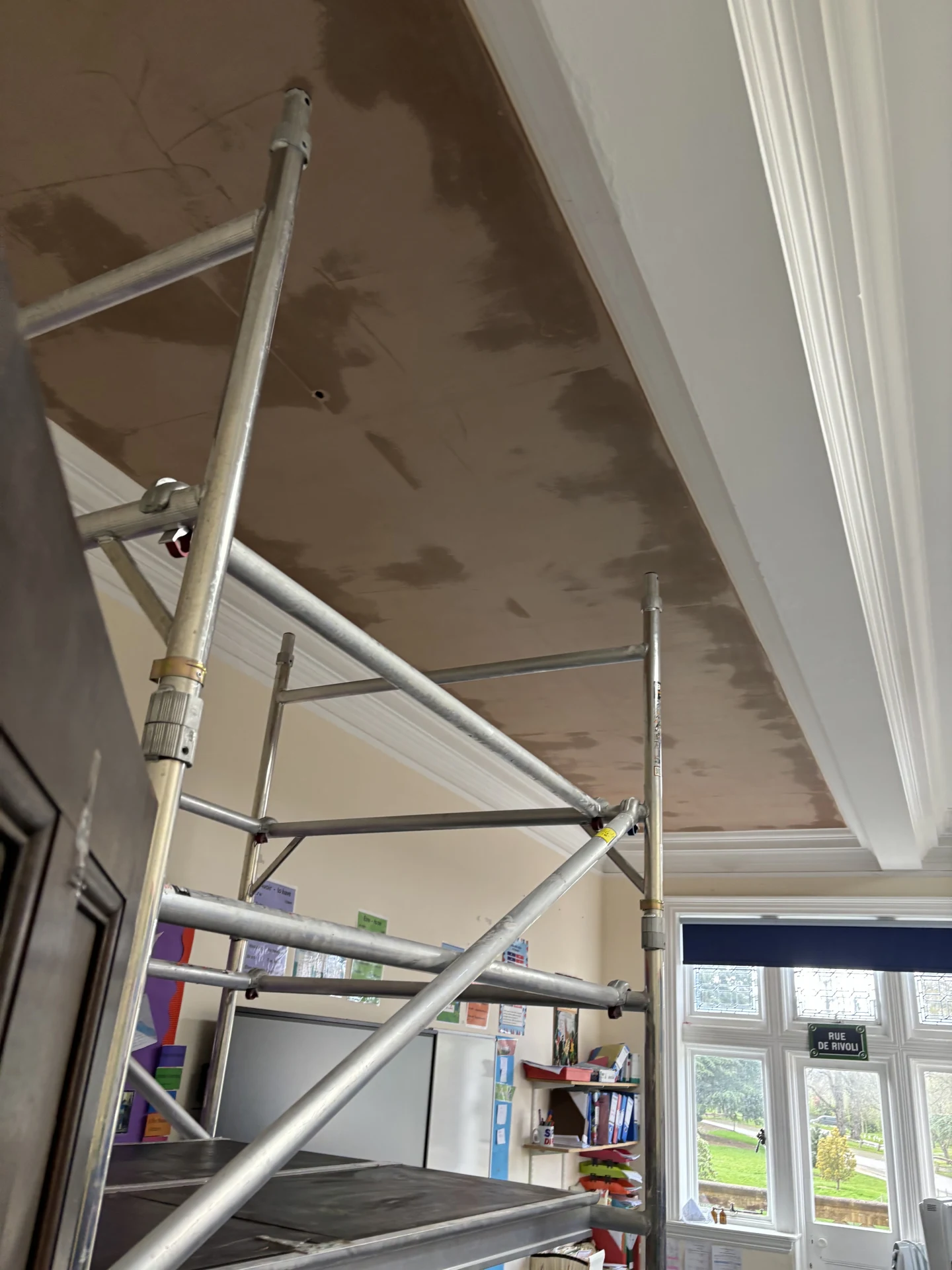
First steps after a leak
The priority is stopping the water. Turn off the supply at the stopcock if a pipe is to blame, or call a plumber or roofer to find and fix the source. Water and electricity are a dangerous mix, so if water has come through near a light fitting or switch, turn the power to that circuit off at the consumer unit and keep away from the fitting until an electrician has checked it.
If the ceiling is bulging with trapped water, keep people out of the room underneath and move valuables if you can do so safely. Once the leak is fixed, open windows and keep the room ventilated so the ceiling and the void above can begin to dry. Repairs should not start until the source of the water has been dealt with; plastering over an active leak simply means doing the job twice.
Staining, bowing and soft plaster: judging the damage
How far the damage goes decides the repair. A dry, firm ceiling with only a tide mark or brown ring has often survived well and may need little more than sealing and redecorating. A ceiling that feels soft, crumbles at the edges of the stain, or shows blistering paint has absorbed more water and the plaster may have weakened.
Bowing is the clearest warning sign. Plasterboard that has been soaked can lose strength and sag between the joists, and old lath and plaster can lose its key and pull away. Look along the ceiling from a low angle with a torch held flat to the surface; dips and bulges show up clearly. Also check for a musty smell or dark spotting, which can suggest damp has lingered in the void. Stephen will look at the ceiling in person and explain what he finds.
Patch, overboard or replace the section
Where the damage is confined to one area and the rest of the ceiling is sound, the affected section can be cut out back to firm material, a new piece of plasterboard fitted to the joists and the area skimmed so it blends with the surrounding surface. This is often the most practical repair after a single, quickly fixed leak.
If the stain covers a large area, or the ceiling around it has old cracks and repairs, overboarding the whole ceiling and applying a new skim can give a better overall result than a single patch. When the ceiling has bowed badly, broken up or stayed wet for some time, taking it down and fitting a new one may be the sensible choice. The ceiling replacement page covers that process in more detail.
Drying times before plastering and painting
Patience matters after a leak. Plaster and boards need to be properly dry before repairs begin, and the joists and insulation above may hold water for longer than the visible surface suggests. Heating the room gently and keeping air moving helps, but forcing it with intense heat can cause cracking.
After the repair, the new plaster also needs time to dry before you decorate. Stains from the original leak can bleed through ordinary emulsion, so remaining marked areas usually need a stain-blocking primer first. Our guide on how long plaster takes to dry explains the factors that affect drying, such as temperature, ventilation and the thickness of the material.
Working alongside your plumber or roofer, and insurance
Ceiling repairs fit into a sequence. The plumber or roofer fixes the cause, the area dries, any electrical checks are done, then the ceiling is repaired and finally decorated. Letting Stephen know when the leak was fixed and what caused it helps him plan the work and judge whether the void has had time to dry.
If you have home insurance, tell your insurer about the leak early and follow their process before repairs start. Insurers often ask for photographs of the damage, so take your own pictures of the ceiling, the stain and any affected belongings as soon as it is safe. Keep a note of dates and any contractor invoices for the source repair.
Book a visit
When the leak is fixed and the ceiling has had a chance to dry, get in touch to arrange a look. A couple of photos of the damaged area and the wider ceiling help Stephen understand the job before he visits.
Stephen O’Brien Plastering Ltd is based in Headcorn and covers homes up to 25 miles away, including Maidstone and Ashford. Stephen has 25 years’ experience and is Level 2 qualified in solid plastering. Call 07852 191811, Monday to Saturday from 7:30am to 6:30pm, or send the quote form.
Questions homeowners ask
How long should a ceiling dry after a leak before repair?
There is no single answer: it depends on how much water came through, how long it lasted and how well the room is ventilated. The surface and the void above should both be dry and firm, and the water source must be fixed first.
Can a water stain just be painted over?
If the ceiling is dry and firm, a stain can often be sealed with a stain-blocking primer and repainted. Ordinary emulsion alone tends to let the mark show through. If the plaster is soft or bowed, it needs repairing first.
Does a bowed ceiling need replacing?
Not always, but a bowed ceiling has usually lost strength. Depending on how far the bowing goes, the section may be cut out and replaced, the ceiling overboarded, or the whole ceiling taken down. Keep clear of it until it has been checked.
Can you repair just the damaged section?
Often, yes. Where the rest of the ceiling is sound, the damaged area can be cut back, reboarded and skimmed to blend in. If the surrounding ceiling is also in poor condition, a full overboard and skim may look better.
Should I fix the leak before booking a plasterer?
Yes. Get the leak repaired by a plumber or roofer first, then let the area dry. You can still contact Stephen early with photos so he can advise on what the repair is likely to involve.